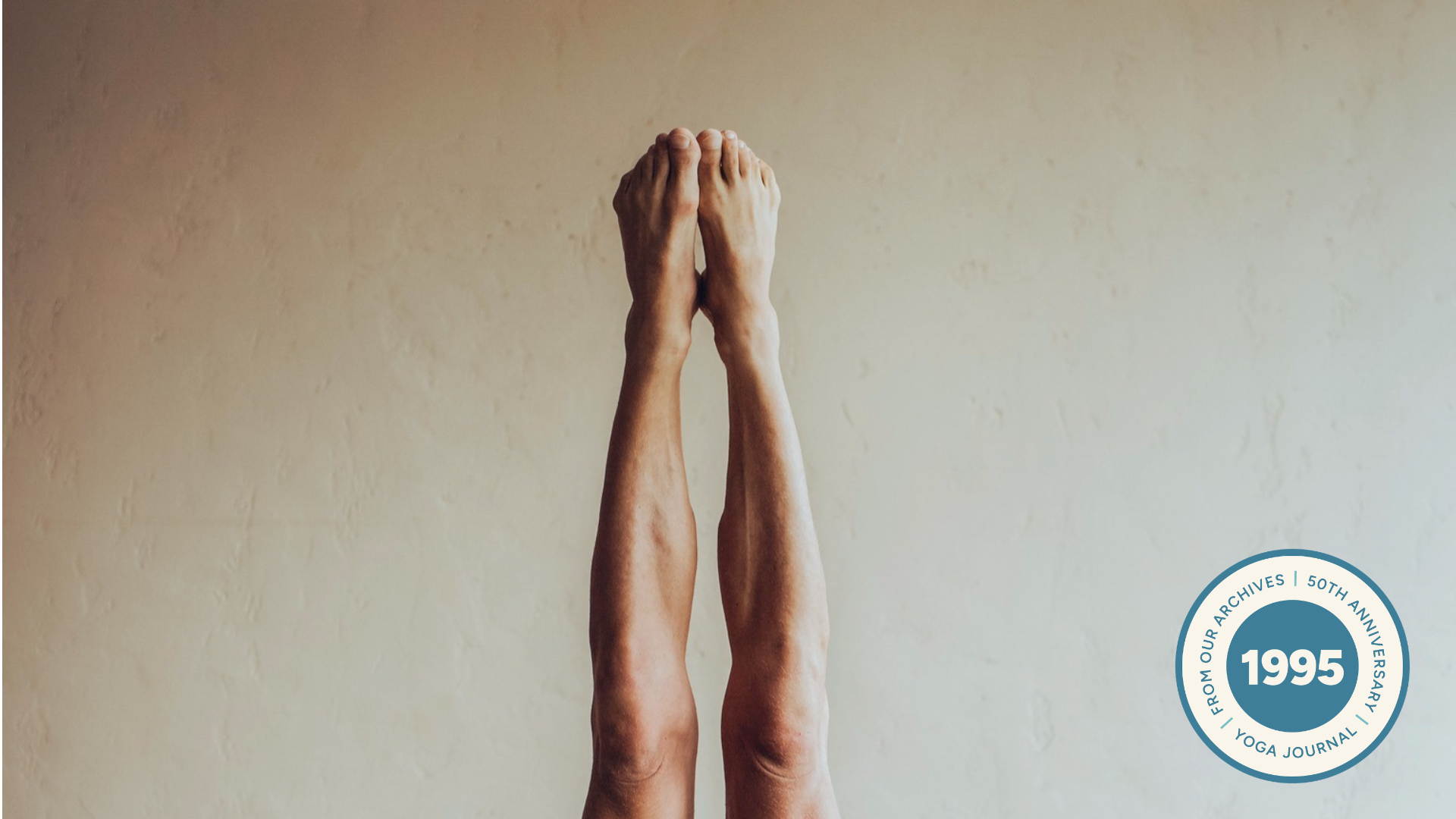
Yoga Journal Details Parsva Sarvangasana Technique and Blanket Support
Side Shoulderstand, or Parsva Sarvangasana, is an advanced yoga variation that requires significant core and shoulder stability. First detailed in the September-October 1995 issue of Yoga Journal, the posture challenges practitioners by altering the traditional alignment of the classic Shoulderstand, testing both physical balance and spatial orientation.
Benefits and Physical Requirements
The posture serves as a variation of the standard Salamba Sarvangasana I. Like the traditional pose, it acts as a neutralizing movement that can calm an agitated state or stimulate a fatigued one, while also providing a stretch for the neck and chest muscles, Yoga Journal reported. The variation also strengthens the wrists.
Practitioners face specific challenges when attempting this shape. The posture involves a complex, inverted twist that can disorient a beginner’s internal sense of direction. Because the position is difficult to maintain as the legs move parallel to the floor, the publication suggests beginners start by practicing the standard Shoulderstand at a wall.
Supporting the Body with Props
Using proper support is essential for safety, particularly due to the strain the posture can place on the neck and shoulders. Most students require a minimum of three blankets for elevation, though some may prefer five or six to keep the shoulders roughly five or six inches off the floor, according to Yoga Journal.
When arranging these supports, the folded edges should be stacked together with the higher blankets staggered slightly inward from those below. This creates a firm foundation for the neck. If a student’s neck curve is flat, the neck should remain unsupported; if the neck is short and tight, it should rest on the blankets.
Practicing the Preliminary Movement
To prepare for the full Side Shoulderstand, students can use a block measuring 9 inches by 5 inches by 3 inches to simulate the torso’s curved shape. This exercise, often called the Bridge variation of Shoulderstand or Setu Bandha Sarvangasana, involves placing the block beneath the sacrum.
| Exercise Phase | Recommended Action |
|---|---|
| Pelvis Support | Use a standard yoga block (about 9 inches by 5 inches by 3 inches) |
| Leg Extension | Lower legs to 45 degrees or parallel to the floor |
| Hold Duration | 10 to 30 seconds per side |
While performing these movements, if a student feels symptoms of overload—such as a clenched throat or labored breathing—the publication recommends using the thumbs to push against the block. This action helps engage the triceps and shoulder blades, providing the necessary stability to keep the shoulders anchored during the side-to-side transition.
“If you don’t have access to a qualified teacher who can explain the dos and don’ts of this posture and tune up your position, please consult a yoga manual,” the magazine advised.