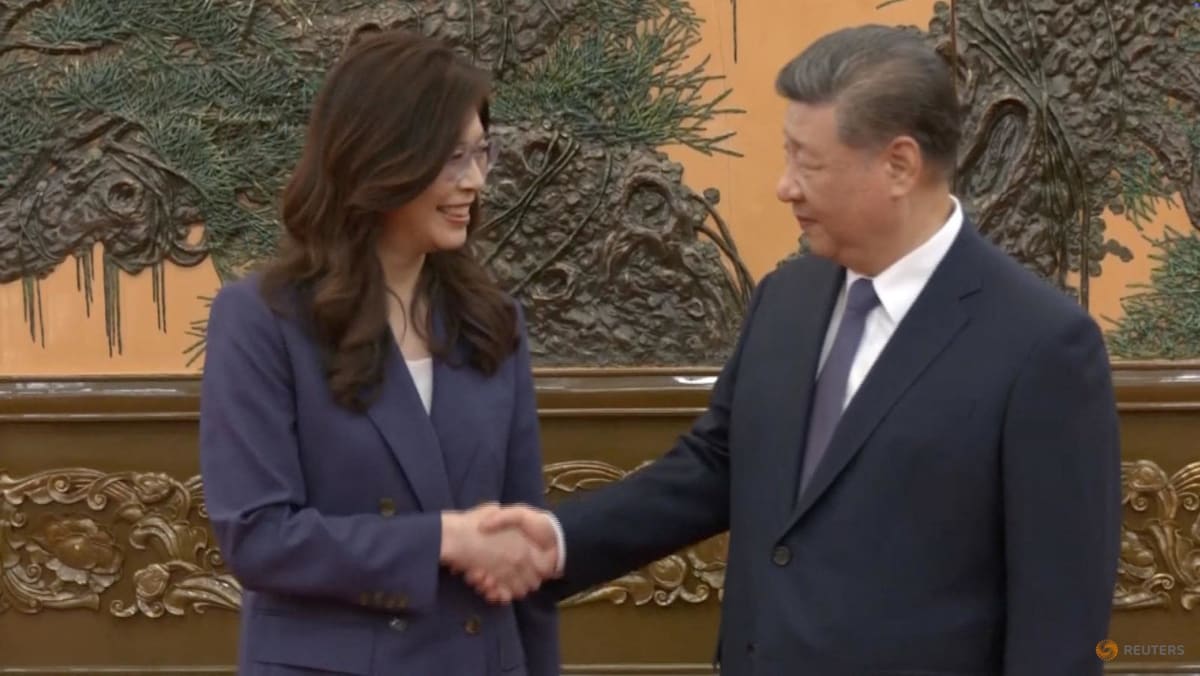
Xi Jinping Meets Taiwan Opposition Leader Amid Cross-Strait Tensions
President Xi Jinping met with Kuomintang (KMT) Chairman Eric Chu in Beijing, marking the first time in a decade that the Chinese leadership has held formal talks with the leader of Taiwan’s main opposition party.
During the meeting, President Xi emphasized that the future of cross-strait relations must remain “in Chinese hands,” framing the relationship as “one family.” The Chinese leader explicitly invoked the threat of Taiwan independence, characterizing it as a red line that cannot be crossed even as urging the KMT to maintain a commitment to the “one China” principle.
Strategic Messaging and U.S. Relations
The timing of the meeting coincides with a transition in United States leadership. Analysts suggest the engagement serves as a signal to the incoming administration of Donald Trump, demonstrating Beijing’s willingness to engage with political factions in Taiwan that are more amenable to dialogue than the current Democratic Progressive Party (DPP) government in Taipei.
By hosting the KMT chairman, Beijing is leveraging a channel of communication that bypasses the official administration of President Lai Ching-te, whose stance on sovereignty has remained a primary point of contention between the two sides of the strait.
KMT Positioning and Domestic Constraints
Chairman Eric Chu utilized the visit to advocate for a reduction in tensions and the restoration of functional communication. Still, the KMT’s efforts to find a breakthrough in cross-strait relations face significant hurdles within Taiwan’s domestic political landscape.
Despite the KMT’s preference for engagement, public sentiment in Taiwan remains wary of Beijing’s intentions. The party must balance its desire for stability and economic ties with China against a domestic electorate that is increasingly sensitive to perceived concessions on sovereignty.
Diplomatic Outlook
While the meeting represents a symbolic reopening of a dormant channel, the fundamental disagreement over the status of Taiwan remains unresolved. Beijing continues to insist on a framework of eventual unification, while the KMT seeks a pragmatic approach that preserves the status quo and avoids military escalation.
The outcome of these overtures remains uncertain, as the KMT lacks the executive power to implement policy changes and Beijing has not offered concrete concessions beyond the restoration of high-level party-to-party talks.
The KMT delegation has concluded its visit, leaving the next steps of the dialogue dependent on further coordination between the party leadership and Chinese officials.