
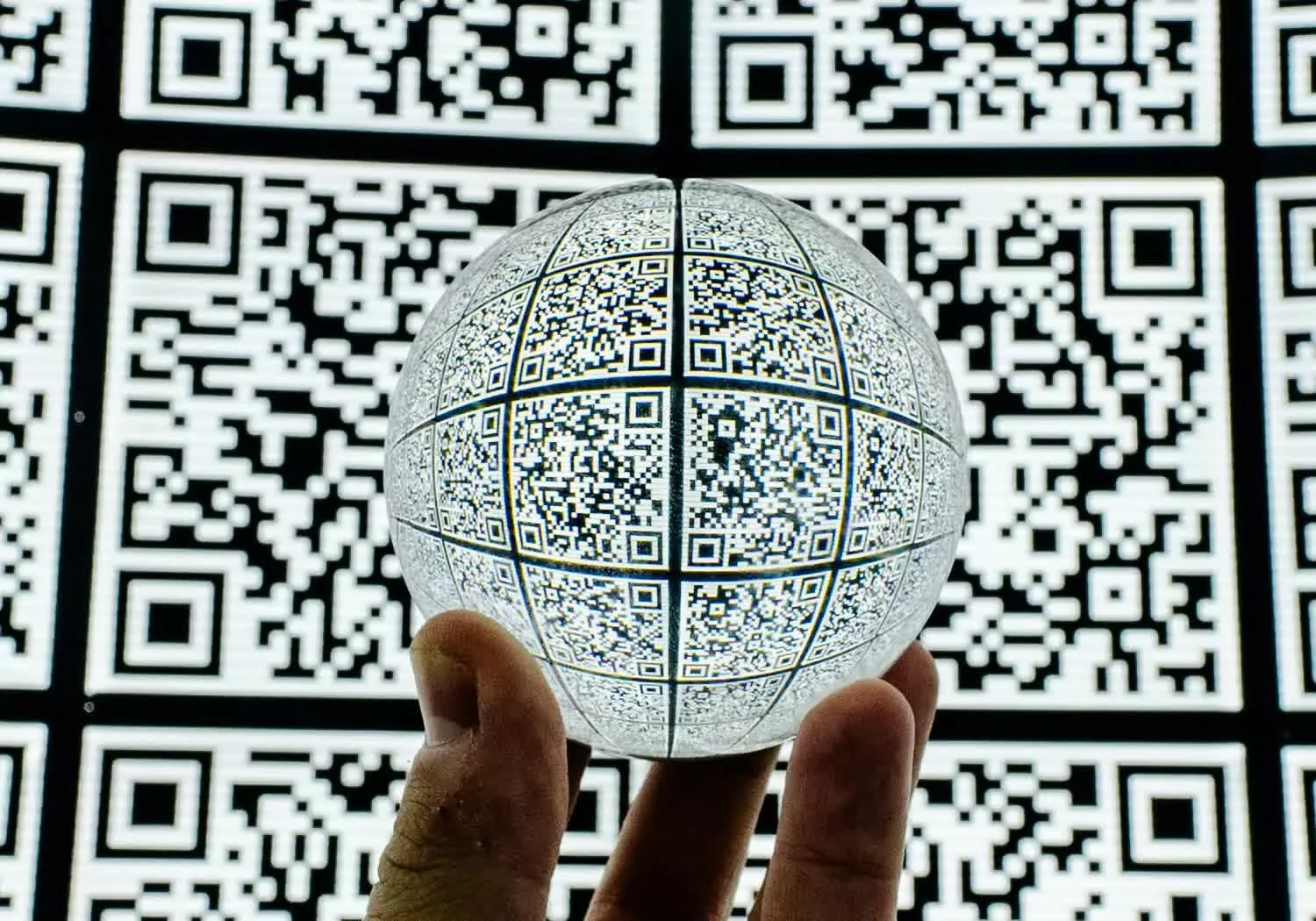
Vienna, Austria – Researchers at the Technical University of Vienna (TU Wien) and its industry partner Cerabyte have achieved a new world record by creating the smallest QR code ever produced, a feat officially recognized by the Guinness Book of Records on February 16, 2026. The QR code, measuring just 1.98 square micrometers, is so diminutive it requires an electron microscope to be viewed.
The breakthrough, announced by TU Wien, centers on a novel approach to data storage utilizing ceramic materials. Conventional data storage methods, such as magnetic or electronic systems, typically have limited lifespans, often lasting only a few years. Cerabyte’s technology aims to overcome this limitation by encoding information into ceramic films, potentially preserving data for centuries or even millennia.
“The structure we have created here is so fine that it cannot be seen with optical microscopes at all,” explained Professor Paul Mayrhofer from the Institute of Materials Science and Technology at TU Wien. “But that is not even the truly remarkable part. Structures on the micrometer scale are nothing unusual today — It’s even possible to fabricate patterns made of individual atoms. However, that alone does not result in a stable, readable code.”
The challenge, according to researchers, lies in creating a code that is not only incredibly small but also durable and reliably readable. While manipulating individual atoms is possible, these structures are prone to instability as atoms can diffuse and disrupt the encoded information. The TU Wien team overcame this obstacle by utilizing focused ion beams to mill the QR code into a ceramic layer, creating pixels approximately 49 nanometers in width – ten times smaller than the wavelength of visible light.
This new QR code is 37% smaller than the previous record holder, marking a significant advancement in the field of data storage. The ceramic films used in the process are similar to those employed in high-performance cutting tools, offering exceptional resistance to heat and pressure. The stability of the ceramic material ensures the longevity of the encoded data.
The potential applications of this technology extend beyond simply shrinking QR codes. The high-density, low-energy requirements of ceramic-based data storage could revolutionize how information is preserved and accessed, offering a viable alternative to existing storage solutions. The team has not yet publicly detailed specific applications beyond long-term data archiving.
Cerabyte, the industry partner involved in the project, has not yet responded to requests for comment regarding the commercialization timeline or potential partnerships for implementing this technology. Further research is planned to explore the scalability and cost-effectiveness of producing these nano-scale QR codes.
