World’s First Human Spinal Cord Transplant: Scientists Question Recovery Potential
“A patient who was threatened with complete immobility had a chance to recover. Now he feels good,” Moscow Mayor Sergei Sobyanin wrote in an announcement regarding a complex medical procedure performed in Russia.
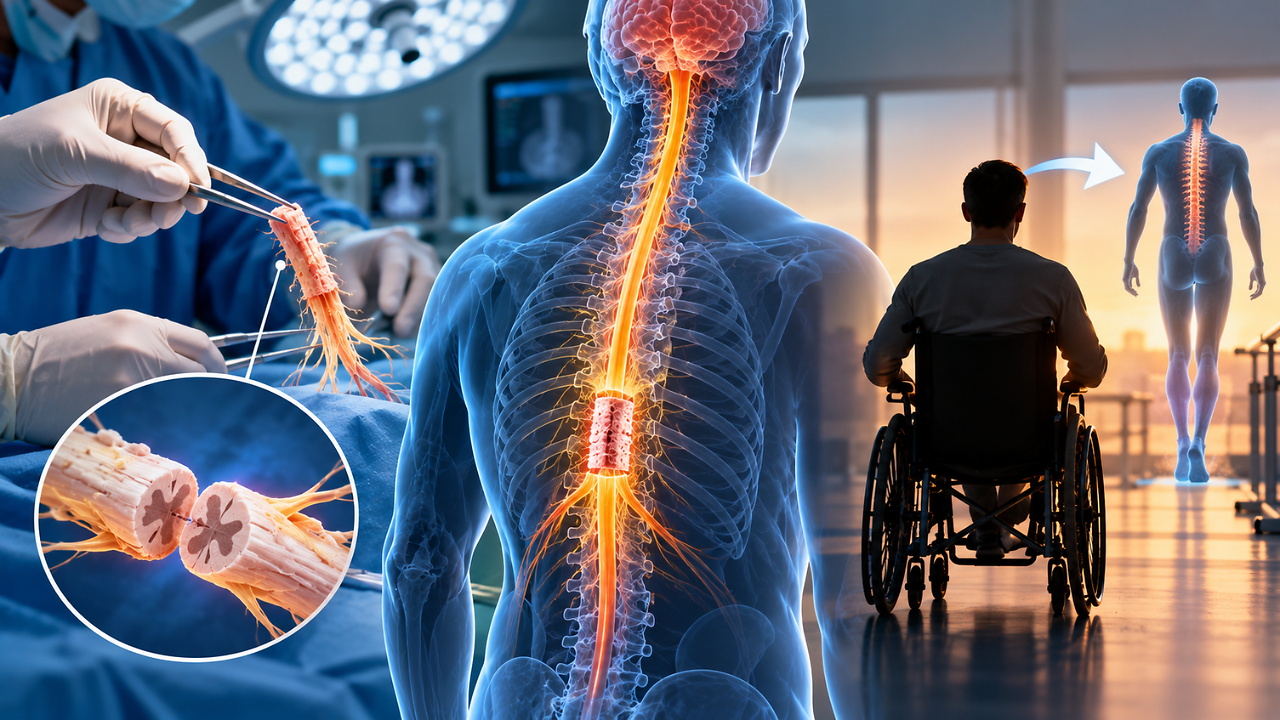
A surgical team composed of Chinese and Russian specialists has performed what is reported as the world’s first human spinal cord transplant, replacing a damaged section of a paralysed patient’s spinal cord with tissue from a brain-dead donor. Chinese surgeon Ren Xiaoping, a participant in the procedure, stated that the surgical intervention lasted 12 hours and was conducted on October 14–15 at the Sklifosovsky Research Institute for Emergency Medicine in Moscow.
-
Key Clinical Takeaways:
- Surgeons at the Sklifosovsky Research Institute replaced a damaged spinal cord section with donor tissue using microsurgery and polyethylene glycol.
- Independent scientists have questioned whether the procedure can restore movement, noting a lack of published neurological evidence or peer-reviewed clinical reports.
- The recipient sustained a severe spinal injury three years prior, presenting different challenges compared to acute trauma cases.
The Surgical Procedure and Technique at Sklifosovsky Research Institute
The patient involved in the operation had sustained a severe spinal cord injury three years ago. According to details shared by Ren Xiaoping to the South China Morning Post, the intervention involved a collaboration between the Guangxi University of Chinese Medicine Second Affiliated Hospital and the Russian medical team. Surgeons removed the damaged section of the patient’s spinal cord and substituted it with tissue obtained from a brain-dead donor.
To join the living neural tissues, the medical team utilised microsurgery alongside polyethylene glycol (PEG). PEG is a chemical substance known for its capacity to facilitate the fusion of cell membranes. This technique targets the core mechanical hurdle of severe spinal trauma. The spinal cord acts as the primary conduit for electrical signals traveling between the brain and the peripheral anatomy. When this structure suffers deep structural disruption, signaling ceases below the lesion site, inducing paralysis and sensory deficits.
Scientific Skepticism and the Demand for Clinical Evidence
Despite the successful completion of the 12-hour surgery and reports that the patient feels good post-operatively, independent researchers have voiced skepticism regarding the treatment’s capacity to reverse paralysis. New Atlas noted that University of Southampton neuroscientist Melissa Andrews raised doubts concerning the caliber of animal studies backing the method, while also cautioning against the inherent medical dangers. While experimental applications of polyethylene glycol have shown some promise in animal models, scientists emphasize that laboratory trials do not guarantee successful neural reconnection or functional motor recovery in human patients.
Critical clinical details remain undisclosed. The surgical team has not released formal records regarding the precise anatomical location of the transplant, comprehensive neurological examinations, or documented changes in movement and sensation. No peer-reviewed clinical report documenting the operation and its measurable outcomes has been published in scientific literature.
Contrasting Acute Repair with Chronic Injury Interventions
Medical experts note a distinct pathophysiological boundary between repairing a freshly severed spinal cord and attempting tissue replacement in a patient whose injury is three years old. Reestablishing functional continuity requires more than simply fusing adjacent tissue segments. Regenerating nerve fibres must successfully establish active working connections across the lesion site, the transplanted graft must secure a blood supply, and clinicians must manage the recipient’s immune response to prevent tissue rejection from the donor segment.

Ren told New Atlas that the patient was informed of every potential risk and surgical outcome, maintaining that the individual’s current condition is good. The procedure remains classified as a highly experimental treatment rather than established proof that human spinal cord transplantation can restore motor function. Assessing any future recovery will depend on long-term patient follow-up, formal neurological tracking, and independent verification of whether functional neural communication can bridge the damaged region.
Disclaimer: The information provided in this article is for educational and scientific communication purposes only and does not constitute medical advice. Always consult with a qualified healthcare provider regarding any medical condition, diagnosis, or treatment plan.