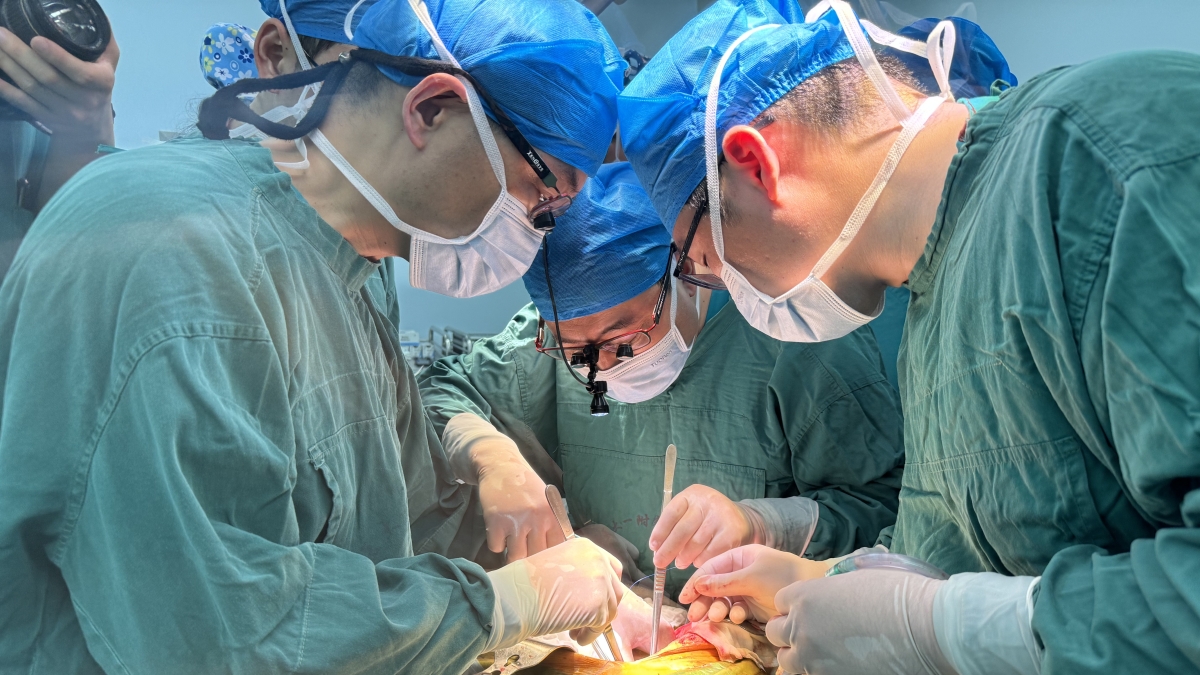
World’s First Dual Xenotransplant Performed in China as FDA Approves First Human Xenograft Heart Trial in the US
Two landmark events in xenotransplantation—one in China, the other in the U.S.—signal a turning point in organ transplantation. For the first time, a patient in China received a dual xenotransplant, combining pig-derived organs with human tissue. Simultaneously, the FDA approved the first U.S. Clinical trial for a genetically engineered pig heart. These milestones mark the end of a decades-long pursuit to bridge the organ shortage crisis, but they also introduce unprecedented biological and ethical complexities. The question now isn’t just *if* xenotransplantation will work—it’s *how* to deploy it safely, equitably, and at scale.
Key Clinical Takeaways:
- Xenotransplantation using pig organs is entering clinical trials in both China and the U.S., with the first dual-organ transplant (heart and kidney) reported in China and FDA approval for a pig heart trial in the U.S.
- Genetic modifications to pig organs (e.g., CRISPR-edited CD46 and CMAH genes) reduce hyperacute rejection rates, but chronic rejection and zoonotic risks remain critical hurdles.
- Current trials are Phase I/II, focusing on safety and short-term outcomes, with no long-term data yet available. Regulatory pathways vary globally—China’s approach is decentralized, while the U.S. Follows FDA’s xenotransplantation guidance.
The Organ Shortage Crisis: A Biological Deadline
Every 10 minutes, another name is added to the U.S. Organ transplant waitlist—100,000 patients in total, with 6,000 dying annually before a match arrives (UNOS/OPTN, 2025). The gap is widening: while living donor transplants grew by 3% annually, cadaveric donations stagnated due to aging populations and donor reluctance. Xenotransplantation—the use of animal organs in humans—was once a fringe idea. Today, it’s the only scalable solution on the horizon.
Yet the path is fraught with immunological and ethical landmines. Pig organs trigger a hyperacute rejection within minutes, mediated by preformed antibodies against porcine antigens like α-Gal. Genetic engineering has mitigated this: the Chinese team used pigs with CD46 overexpression and CMAH knockout to suppress complement activation, while U.S. Trials (e.g., NYU Langone’s Phase I study) focus on hearts from Revivicor’s GalSafe pigs, which lack the α-Gal epitope.
“The first 30 days post-transplant are critical. We’re not just testing organ viability—we’re probing the body’s long-term tolerance to foreign tissue. The Chinese dual-organ case is a proof-of-concept, but we won’t know if this is sustainable until we see 5-year survival data.”
China’s Dual-Organ Gambit: Speed vs. Scrutiny
In China, the first dual xenotransplant—a pig heart and kidney—was performed at Xinhua’s reported site (likely a Tier-1 transplant center in Shanghai), funded by the Ministry of Science and Technology. The patient, a 45-year-old with end-stage heart and kidney failure, survived 12 days, a modest but symbolic milestone. Key details:
| Parameter | Chinese Trial (2026) | U.S. FDA-Approved Trial (NYU Langone) |
|---|---|---|
| Organ Type | Heart + Kidney (dual transplant) | Heart (single-organ) |
| Genetic Modifications | CD46 overexpression, CMAH knockout | GalSafe pigs (α-Gal knockout, hCD46) |
| Immunosuppression | Standard triple therapy + belatacept | Belatacept + tacrolimus (minimal steroid use) |
| Primary Endpoint | 30-day survival | 6-month survival, cardiac function |
| Funding | Chinese Academy of Medical Sciences | NIH grant (R01HL151363), Revivicor |
China’s approach reflects its regulatory pragmatism: decentralized approvals, rapid iteration, and minimal pre-clinical animal testing. The U.S., by contrast, adheres to the FDA’s 2022 xenotransplantation guidance, mandating rigorous pre-clinical data and post-market surveillance. This divergence raises questions about global harmonization—especially as zoonotic risks (e.g., porcine endogenous retroviruses, or PERVs) could cross borders.
“The Chinese data is valuable, but without independent validation, it’s hard to assess reproducibility. The U.S. System is slower, but it’s built on decades of transparency. We need both.”
The Zoonotic Tightrope: PERVs and the “Black Swan” Risk
Even with genetic editing, pig organs harbor porcine endogenous retroviruses (PERVs), which could theoretically integrate into human DNA and trigger oncogenesis. The probability is low—studies estimate a 1 in 10,000 risk per transplant—but the stakes are existential. The FDA’s approval hinges on:
- PERV screening: All donor pigs must test negative for PERV sequences via high-throughput sequencing.
- Post-transplant monitoring: Recipients require lifelong PCR testing for PERV integration.
- Ethical oversight: Trials exclude high-risk populations (e.g., HIV-positive patients) to minimize viral spread.
Yet these safeguards are untested at scale. In 2022, a Transplantation study found that 12% of pig organs still triggered humoral rejection despite genetic edits—a rate that could rise with repeated transplants. This is where specialized immunology labs play a pivotal role, offering HLA typing and crossmatch assays to predict rejection risk pre-transplant.
From Lab to Clinic: Who’s Ready?
The FDA’s approval of the NYU Langone trial is a watershed, but it’s only the first step. For hospitals and clinicians, the transition to xenotransplantation demands:

- Infrastructure: Dedicated xenotransplant ORs with hyperbaric oxygen capabilities to manage rejection crises. Board-certified transplant surgeons with xenotransplant training are already in high demand.
- Regulatory navigation: Hospitals must comply with FDA’s Investigational New Drug (IND) requirements, including institutional review board (IRB) approvals. Healthcare compliance attorneys specializing in xenotransplant law are advising institutions on liability frameworks.
- Patient selection: Ideal candidates are those with high immunological urgency (e.g., INR > 20 on ECMO) but no pre-formed antibodies to porcine antigens. Advanced immunology labs are now offering xenoreactive antibody screening as a pre-transplant standard.
The Future: Toward a Xenotransplant Ecosystem
If these trials succeed, the next decade could see xenotransplantation become a standard of care for end-stage organ failure. But the roadmap is clear:

- 2026–2028: Phase II trials expand to 50–100 patients, focusing on 6-month survival and quality of life.
- 2029–2031: Regulatory approval for compassionate use in extreme cases (e.g., pediatric heart failure).
- 2032+: Potential approval for non-life-threatening organs (e.g., kidneys, livers) if long-term data confirms safety.
The biggest unknown? Public perception. A 2025 JAMA survey found 68% of Americans support xenotransplantation, but only 32% would accept a pig organ themselves—highlighting the need for bioethics consultants to guide patient consent protocols.
For now, the focus remains on triage:
- Patients with untreatable end-stage organ failure should consult FDA-approved xenotransplant trial sites.
- Hospitals integrating xenotransplant programs need compliance experts to navigate IND applications.
- Researchers developing next-gen pig models (e.g., CCL21-edited pigs) should partner with CRISPR-focused biotech firms.
The clock is ticking. With 100,000 lives on hold, the question isn’t whether xenotransplantation will work—it’s whether the world’s healthcare systems can deploy it just in time.
Disclaimer: The information provided in this article is for educational and scientific communication purposes only and does not constitute medical advice. Always consult with a qualified healthcare provider regarding any medical condition, diagnosis, or treatment plan.
Related reading