
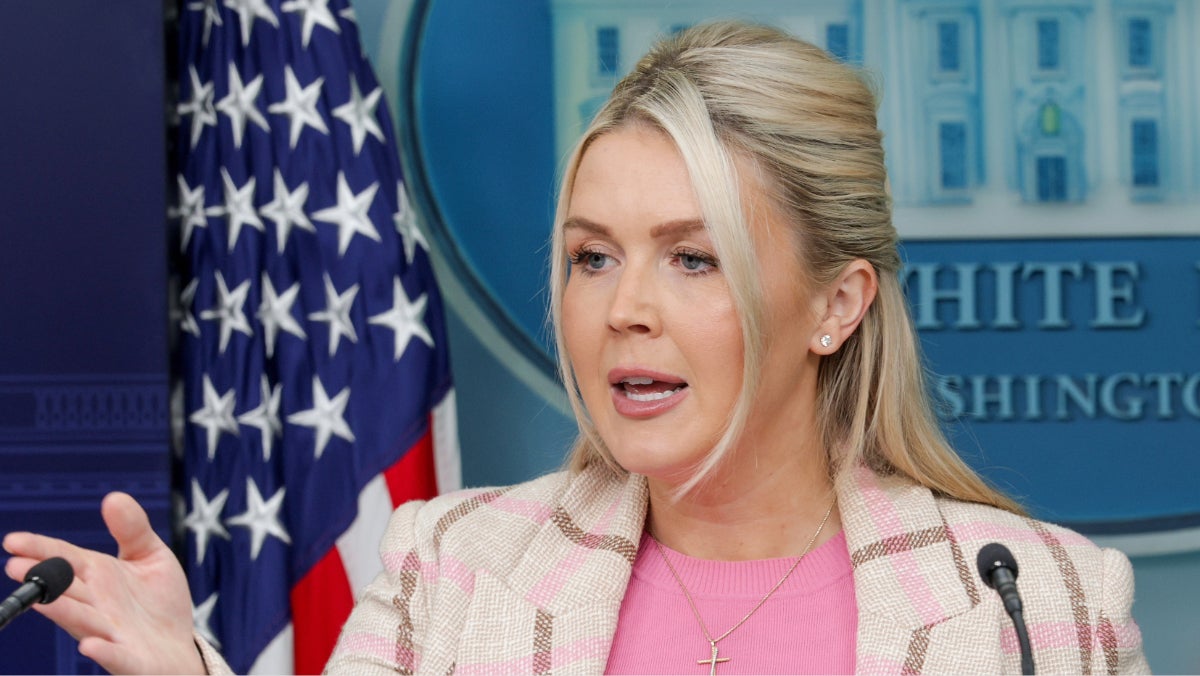
Wire Service Takes Down Karoline Leavitt Pic After White House Complaints
AFP and Getty Images withdrew a November press briefing photo of White House Press Secretary Karoline Leavitt following administration complaints. While agency leadership cites editorial quality standards, the removal signals escalating tensions between government entities and wire services regarding image control and brand management. This incident underscores the fragility of editorial independence when faced with high-level political pressure.
In the high-stakes arena of Washington media relations, a photograph is never just a photograph. It is an asset, a liability, and often, a bargaining chip. The recent decision by Agence France-Presse (AFP) to scrub an image of Press Secretary Karoline Leavitt from its wire service and partner libraries reveals a friction point that extends far beyond a single unflattering angle. As the industry navigates the complexities of the 2026 news cycle, where digital permanence clashes with real-time reputation management, the removal of this asset raises critical questions about editorial integrity and the growing influence of crisis communication firms in shaping public records.
The Business of Image Control
Wire services operate on a model of trust, and volume. Getty Images, acting as a distribution partner for AFP, relies on the consistent flow of verified imagery to maintain its brand equity with subscribers ranging from major networks to local affiliates. When an image vanishes from the library post-publication, it disrupts the syndication chain. According to Grégoire Lemarchand, AFP’s director of brand and communications, the decision was internal, driven by editorial standards rather than external pressure. He noted that upon review, the editor-in-chief determined the image did not meet production quality metrics due to poor angles and the availability of superior alternatives from the same event.

However, the timing suggests a more nuanced negotiation. The White House’s expressed displeasure coincided with the removal, creating a perception of capitulation that media lawyers watch closely. Anne Flanagan, Getty Images’ vice president of brand and communications, reinforced that AFP maintains full editorial control, yet the optics remain damaging. In an era where intellectual property disputes often hinge on usage rights and modifications, the voluntary removal of content following a complaint sets a precarious precedent for press freedom.
“When a government entity signals dissatisfaction with press materials, the immediate reflex for any agency should be to consult legal counsel regarding prior restraint implications. Voluntarily removing content based on subjective ‘quality’ reviews after a complaint invites scrutiny on editorial independence.”
This sentiment echoes across media law circles, where senior counsel often warn that soft censorship can be more damaging than overt bans. The incident mirrors a situation from earlier in March 2026, where the Pentagon reportedly blocked photojournalists from briefings following unflattering coverage of Defense Secretary Pete Hegseth. In that instance, access was eventually restored, but the initial blockade highlighted the leverage executive branches hold over media platforms. For wire services, balancing access with integrity is a constant logistical challenge.
Crisis Management and Brand Protection
From a business perspective, the White House’s intervention is a classic reputation management play. In the current political climate, controlling the visual narrative is as vital as controlling the transcript. A single image circulating on social media can define a press secretary’s tenure more than a hundred briefings. This represents where the ecosystem of reputation management services becomes critical. Organizations facing similar scrutiny often deploy specialized teams to monitor wire services and negotiate takedowns under the guise of copyright or quality issues, effectively sanitizing the historical record without issuing formal censorship orders.
For the agencies involved, the risk lies in subscriber trust. If news organizations believe that wire libraries are being curated to protect political figures rather than inform the public, the value proposition of the service diminishes. This is particularly relevant as streaming news platforms and digital aggregates rely heavily on these feeds for content. The economic impact is subtle but measurable; reduced trust leads to reduced licensing revenue. Industry analysts suggest that transparency in editorial decisions is the only hedge against this erosion.
- Editorial Transparency: Agencies must document quality control decisions independently of external complaints to maintain credibility.
- Legal Safeguards: Media organizations should establish clear protocols with media and entertainment law specialists to handle government pressure without compromising access.
- Archival Integrity: Removing images from searchable libraries alters the historical record, potentially leading to long-term liability regarding accurate reporting.
The Broader Industry Implications
The Leavitt photo incident occurs against a backdrop of significant leadership shifts in the broader entertainment and media conglomerates. Just weeks prior, major studios like Disney were restructuring their executive teams to better align film, TV, and streaming divisions under unified creative leadership. These corporate reshuffles often prioritize brand safety and streamlined messaging, trickling down to how news divisions within these conglomerates handle sensitive political content. When corporate parents prioritize brand safety, newsrooms often face implicit pressure to avoid friction with powerful entities.

the rise of AI-generated imagery and deepfakes in 2026 has made the verification of authentic press photos even more critical. When authentic photos are removed due to political pressure, it creates a vacuum that can be filled by manipulated media. This complicates the work of fact-checkers and increases the reliance on verified wire services. The decision to pull the Leavitt photo, regardless of the stated reason, removes a verified asset from the public domain, potentially aiding misinformation narratives that claim the image was suppressed due to its content rather than its quality.
the removal of the image serves as a case study for modern media relations. It demonstrates that the battle for narrative control has moved beyond press releases and into the metadata of image libraries. For public relations professionals and media executives, the lesson is clear: maintaining editorial independence requires robust legal frameworks and a willingness to withstand administrative friction. As the industry moves forward, the collaboration between newsrooms and crisis communication firms will likely evolve from reactive damage control to proactive infrastructure protection, ensuring that the historical record remains intact regardless of political weather.
The next time a photo vanishes from a wire service, the question won’t just be about the angle or the lighting. It will be about who decided it should disappear, and what professional services were engaged to make sure it stayed gone. In the business of news, visibility is currency, and invisibility is often the most expensive transaction of all.
Disclaimer: The views and cultural analyses presented in this article are for informational and entertainment purposes only. Information regarding legal disputes or financial data is based on available public records.