
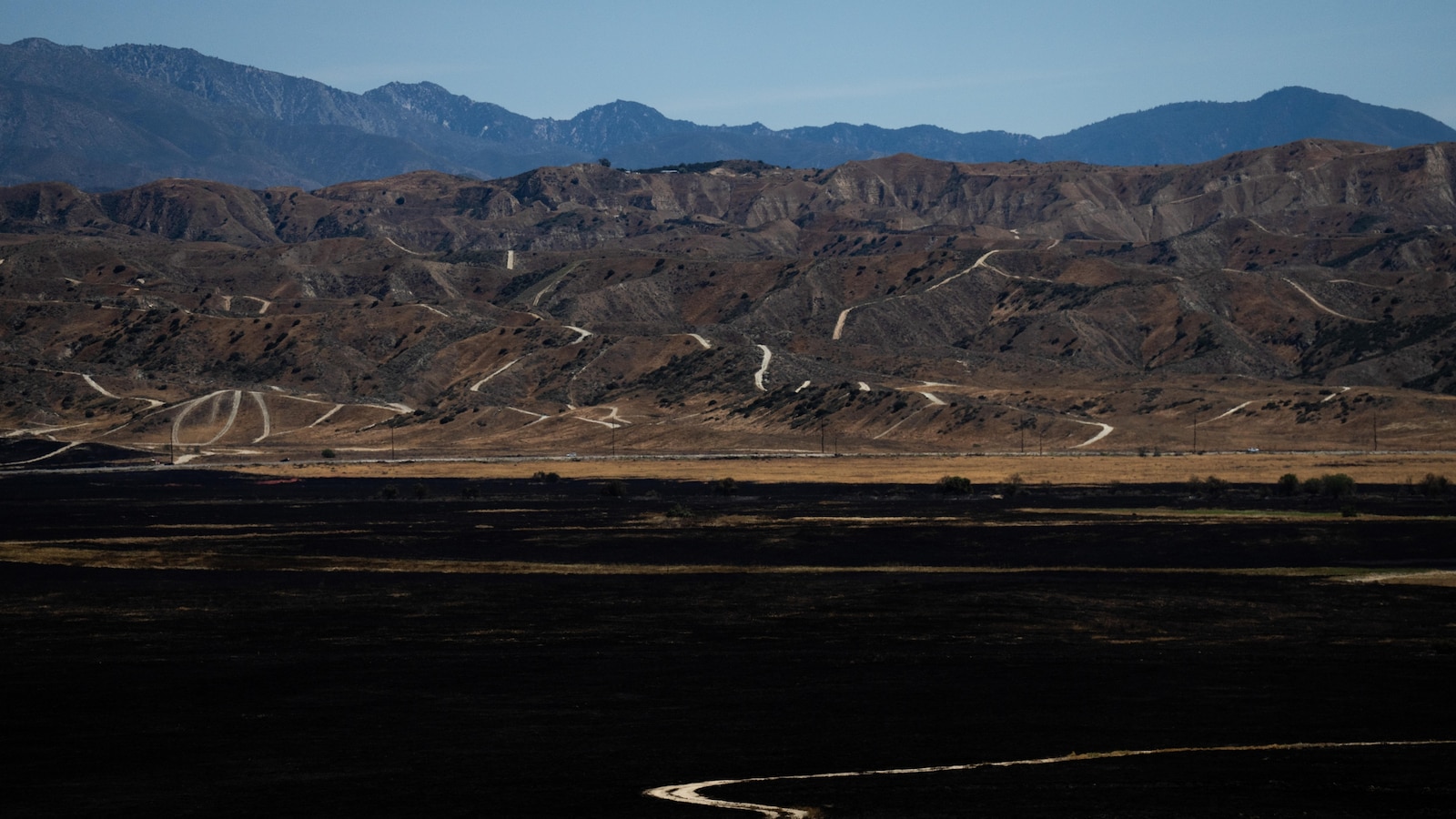
Winds Ease to Aid Firefighting Efforts
Southern California fire crews are making significant progress containing the Springs Fire in Moreno Valley, Riverside County. Breaking out Friday morning, the blaze has reached at least 45% containment, encompassing roughly 6.3 square miles. While mandatory evacuations persist in limited zones, no structures have been destroyed as winds dissipate.
In the high-stakes environment of the Southern California production corridor, a wildfire is never just a natural disaster; This proves a logistical threat to the region’s brand equity. When the Santa Ana winds fuel a blaze like the Springs Fire, the immediate anxiety isn’t just about the flames, but about the potential for a complete shutdown of regional movement and the displacement of the creative workforce. This weekend’s volatility serves as a stark reminder of how fragile the infrastructure supporting the entertainment capital truly is.
The Anatomy of the Springs Fire
The crisis began around 11 a.m. Friday, when authorities were first alerted to a brush fire near 15900 Gilman Springs Road in Moreno Valley. For those who track the rhythmic volatility of the region, the timing was predictable. The blaze was fueled by the notorious Santa Ana winds, creating a fast-growing wildfire that demanded an immediate and massive response. By Friday, containment was sitting at a precarious 25%, leaving a significant portion of Riverside County—roughly 64 miles east of Los Angeles—vulnerable to the shifting wind patterns.
By Saturday, the narrative shifted toward recovery. The fire encompassed approximately 6.3 square miles, but the momentum began to swing in favor of the crews. The transition from 25% to 45% containment in twenty-four hours represents a critical pivot in the event’s trajectory, moving the situation from a chaotic expansion to a managed perimeter.
“We’re feeling confident. The winds have died down so it’s assisting us in making more progress,” stated Terra Fernandez, public safety information specialist for the Riverside County Fire Department.
The strategy employed was a textbook example of regional crisis management. About 260 personnel were deployed to battle the blaze, utilizing a combination of ground-based containment lines and aerial support. Early Saturday, crews began dropping water and retardant across the fire’s perimeter, a necessary move to stifle the fire’s appetite before it could reach residential structures.
Logistical Wins and Tactical Access
The success of the containment effort didn’t just rely on water drops; it relied on the existing geography of the Moreno Valley. Fernandez credited the presence of natural equestrian trails around the structures as a key factor in allowing firefighters to gain rapid access to the fire’s edge. This intersection of land use and emergency response highlights a recurring theme in the region: the environment is both the enemy and, occasionally, the only viable tool for defense.
As the humidity increased Saturday evening, the atmospheric conditions finally aligned with the efforts of the 260 battling personnel. While less than a dozen zones in the county remained under mandatory evacuation orders, the lifting of warnings in other areas suggests that the immediate threat to the local population has stabilized. For the luxury estates and production hubs that dot the landscape, this is the moment where the focus shifts from survival to reputation management.
When a regional crisis of this scale erupts, the immediate priority for high-net-worth individuals and production companies is the deployment of crisis communication firms and reputation managers. Whether it is managing the public image of a threatened estate or coordinating the safety messaging for a displaced crew, the business of disaster requires a level of precision that matches the firefighting efforts on the ground.
The Human Cost and Regional Instability
While the Springs Fire managed to avoid the destruction of structures, the weekend was not without tragedy. In a separate but equally harrowing event, fire crews responded to a late-night apartment fire on Friday. The result was a devastating scene that forced four people from their homes and claimed the lives of two pets. This secondary disaster underscores the pervasive danger of the current season, where multiple fronts of fire can stress regional resources to their breaking point.

The logistical strain of managing simultaneous fires—one a massive brush blaze and another a concentrated residential tragedy—requires a seamless coordination of regional event security and A/V production vendors who often provide the communication infrastructure needed during wide-scale evacuations. The ability to move people out of danger zones quickly is the only metric that matters when the wind shifts.
For the hospitality sector, these events create a volatile demand cycle. As mandatory evacuations are issued, the luxury hospitality sectors in neighboring safe zones often notice a sudden surge in occupancy, transforming a weekend of leisure into a makeshift sanctuary for the displaced elite of the entertainment industry.
The Industry Outlook
As the industry monitors these events through trades like Variety and The Hollywood Reporter, the overarching lesson is one of resilience and risk mitigation. The Springs Fire was a near-miss, but the narrow margin between a contained brush fire and a catastrophic loss of property is thinner than most production budgets can afford. The reliance on “natural equestrian trails” for access is a fortuitous detail, but it is not a sustainable strategy for a city built on the edge of a wilderness.
The future of production in Southern California will increasingly depend on the ability to predict and pivot. The shift from a 25% containment rate to 45% is a win, but it is a win bought with the exhaustion of 260 personnel and a bit of luck with the wind. For the studios and agencies that call this region home, the only real security is a vetted network of professionals who can handle the fallout when the atmosphere turns hostile.
Whether you are managing a talent’s public image during a crisis or securing a production’s logistical chain in a disaster zone, the World Today News Directory remains the definitive resource for connecting with the elite legal, PR, and logistical firms capable of navigating the volatility of the California coast.
Disclaimer: The views and cultural analyses presented in this article are for informational and entertainment purposes only. Information regarding legal disputes or financial data is based on available public records.