
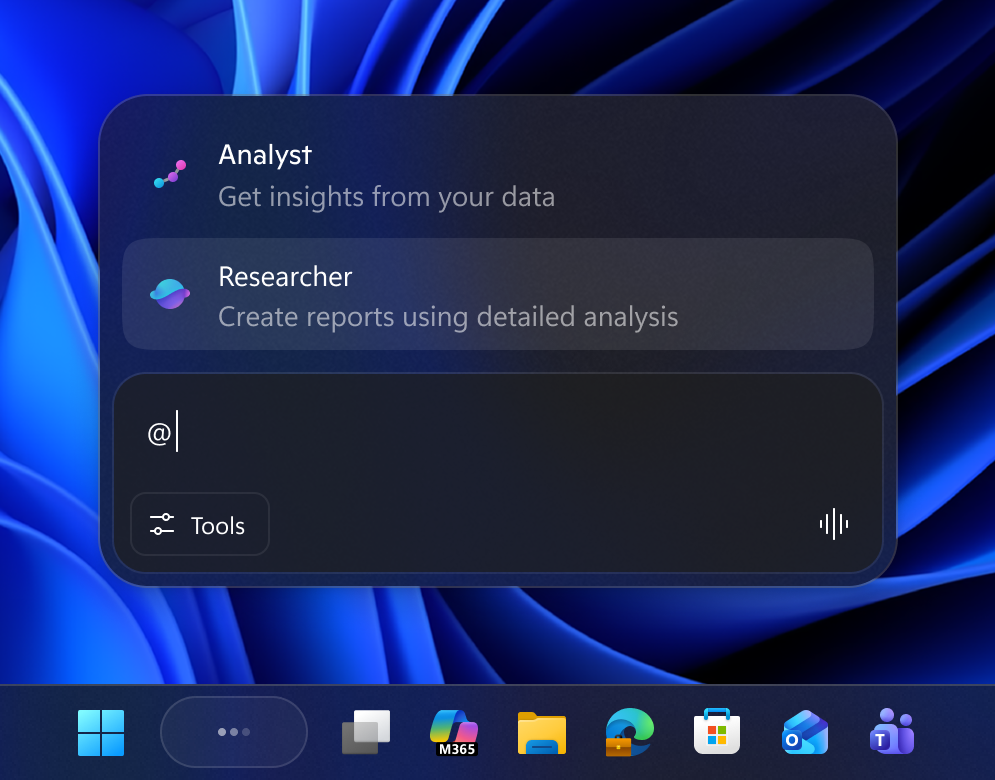
Microsoft’s Windows 11 taskbar is now at the center of a structural shift involving AI‑driven workflow integration. The immediate implication is a tighter coupling of operating‑system interfaces with enterprise AI services, reshaping user productivity and platform competition.
The Strategic context
Since the early 2020s, major cloud providers have pursued “AI‑first” strategies, embedding large‑language models into productivity suites, collaboration tools, and operating‑system layers. This trend reflects a broader structural dynamic: the convergence of cloud services, AI capabilities, and user‑interface design into a single value chain that blurs the line between software platforms and AI service providers. Microsoft’s earlier rollout of Microsoft 365 Copilot established a precedent for integrating generative AI into its flagship productivity applications. Extending that integration to the Windows 11 taskbar represents the next logical step in a platform‑centric approach, where the OS becomes the primary conduit for AI interactions across both consumer and enterprise environments.
Core Analysis: Incentives & Constraints
Source Signals: The latest Windows 11 Insider preview (build 26220.7523) introduces a “Researcher” AI agent that appears on the taskbar when assigned a task from Microsoft 365 Copilot. users can monitor progress via hover cues and receive completion notifications. The build also adds ”Agent Launchers,” a standardized framework for apps to expose interactive AI agents to Windows and other applications. The Ask Copilot experience, now in public testing, will support commercial customers with Microsoft 365 licenses, allowing unified access to Copilot, other AI agents, and Windows Search. Rollout begins with U.S.Insiders holding a Microsoft 365 Copilot license,with Microsoft experimenting on task‑display modalities.
WTN Interpretation: Microsoft’s timing aligns with intensifying competition from Google (Bard integration into Android) and Apple (AI features in iOS/macOS). By embedding AI agents directly in the taskbar, Microsoft leverages its dominant desktop OS market share to lock in enterprise users to its AI ecosystem, creating network effects that increase switching costs. The “Agent Launchers” framework serves as an open‑ended platform layer, encouraging third‑party developers to expose their AI services through Windows, potentially expanding Microsoft’s influence beyond its own Copilot offerings. Constraints include the need to maintain OS stability, address privacy and data‑governance concerns, and navigate regulatory scrutiny over AI transparency.Additionally, the phased U.S.-only rollout reflects a cautious approach to liability and compliance,especially given divergent global AI regulations.
WTN Strategic Insight
“Embedding AI agents in the OS taskbar transforms the desktop from a passive interface into an active AI orchestrator, cementing platform control over the emerging productivity‑AI value chain.”
Future outlook: Scenario Paths & Key Indicators
Baseline Path: If Microsoft’s phased rollout proceeds without major technical or regulatory setbacks, the taskbar AI integration will become a standard feature for enterprise Windows deployments. Third‑party developers will adopt the Agent launchers API, expanding the ecosystem of Windows‑hosted AI agents. This will reinforce Microsoft’s position as the primary conduit for enterprise AI, encouraging deeper subscription uptake of Microsoft 365 Copilot and related services.
risk Path: If heightened regulatory scrutiny-notably around AI transparency, data residency, or antitrust concerns-intensifies, Microsoft might potentially be forced to limit or redesign the taskbar AI experience. A notable security incident or performance degradation could also trigger enterprise pushback, prompting organizations to diversify toward competing OS platforms or to adopt browser‑based AI solutions, eroding Microsoft’s ecosystem advantage.
- Indicator 1: Publication of any new AI‑related regulatory guidance or enforcement actions in the United States, European Union, or major Asian jurisdictions within the next three months.
- Indicator 2: Adoption metrics for the Agent Launchers API reported in Microsoft’s quarterly developer ecosystem updates, especially the number of third‑party AI agents integrated into Windows.
