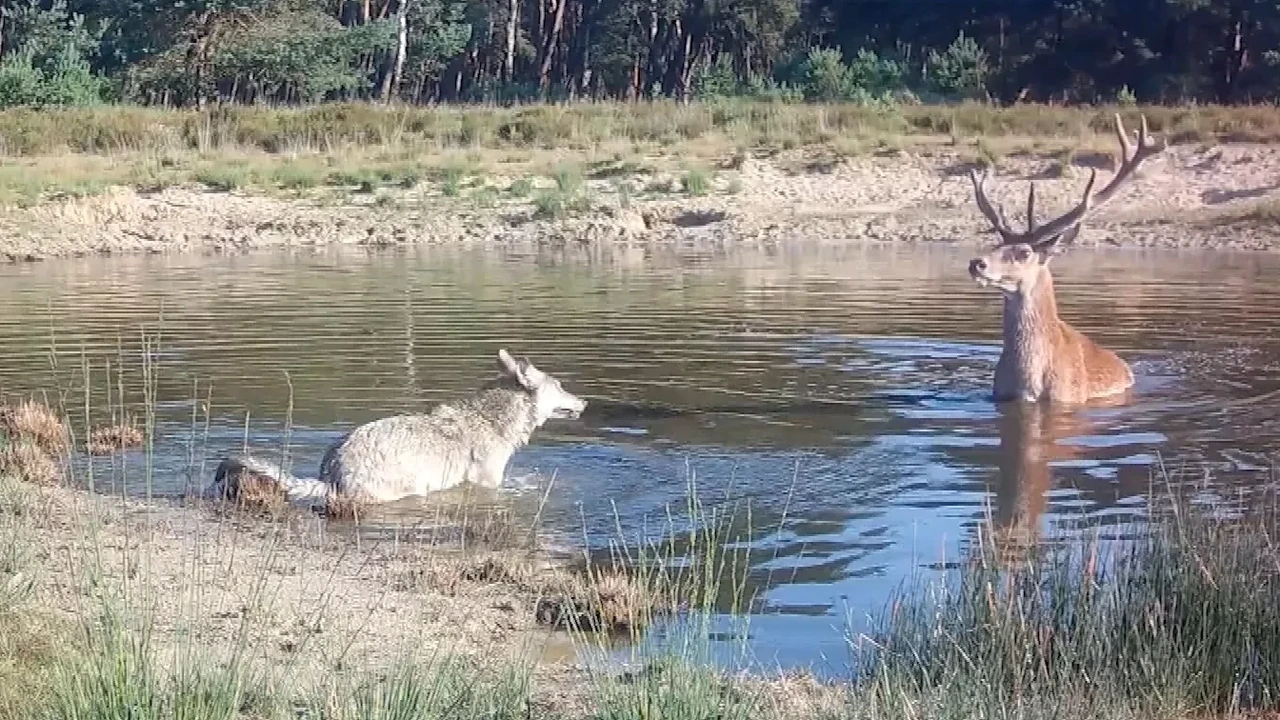
Wildlife on Veluwe adapted to wolves, says Faunabeheereenheid
Wild animals on the Netherlands’ Veluwe have adapted their behavior following the return of nearly a hundred wolves across multiple packs, according to monitoring data released by Faunabeheereenheid Gelderland.
Behavioral Changes in Wild Boar and Deer Populations
Wild boars now move in larger groups known as sounders and frequently seek protection near large grazers like Highland cattle. Larger boars have even been documented attacking wolves attempting to seize piglets. Meanwhile, roe deer have altered their grazing patterns. Before the arrival of the wolf, foresters could reliably predict where and when roe deer would graze. The animals now move more extensively across the region and show increased activity during evening and night hours. Forester Teunissen notes that prey animals now behave much more naturally, whereas previously there was little energy in them, stating: Nu er een vijand is zijn ze alert en scherp en actiever.
Floris Leyssius, chairman of Vereniging Het Edelhert, notes that red deer hinds have become significantly more cautious. In the initial weeks following birth, hinds now frequently hide their calves at the edge of the territory rather than deep inside, nursing them less often to avoid revealing the location to predators. Foresters like Frank Theunissen warn that calves left in the center of a wolf territory face a substantially higher risk of predation.

Impacts on Wildlife Management and Hunting Practices
Wildlife populations on the Veluwe are actively managed through culling to limit traffic collisions and allow young trees room to grow. Faunabeheereenheid Gelderland states that while wolves prey on young animals and slow the growth of wild boar populations, their presence is not sufficient to achieve target population sizes without continued culling.
Erik Koffeman of Faunabeheereenheid Gelderland, who coordinates provincial hunting operations, notes that the altered distribution and alertness of the animals make counting difficult. Managing the populations has also changed in practice. When wild boars travel in larger sounders, hunters may only be able to shoot a single animal in an evening before the entire group scatters.
Erik Koffeman calls the establishment of the wolf very positive for nature management, while acknowledging it presents an entirely different reality for agricultural areas.
Encounters and Safety Guidelines for Visitors
For visitors exploring the region during autumn, encounters with wildlife and predators require specific precautions. Natuurmonumenten reported that nature organizations advise the public against running away if a wolf is spotted, noting that predators react instinctively to movement. Glenn Lelieveld, an expert affiliated with the Mammal Society, explained previously that Roofdieren reageren op beweging
.
Experts recommend staying still, dismounting if riding a bicycle, and giving the animal ample space to retreat. Walking dogs on short leashes is mandatory in designated areas, and visitors are instructed never to follow or feed wolves. Anyone encountering a wolf remaining within thirty meters can contact emergency services or local park alarms, such as the direct line provided by De Hoge Veluwe at +31 (0)55-3788166, while reporting all observations to the official wildlife tracking desk, Wolvenmeldpunt by BIJ12. Visitors can also dial 0900-8844 if a wolf stays within thirty meters, or call 112 in case of emergency. After a forest walk, visitors also need to watch out for ticks.