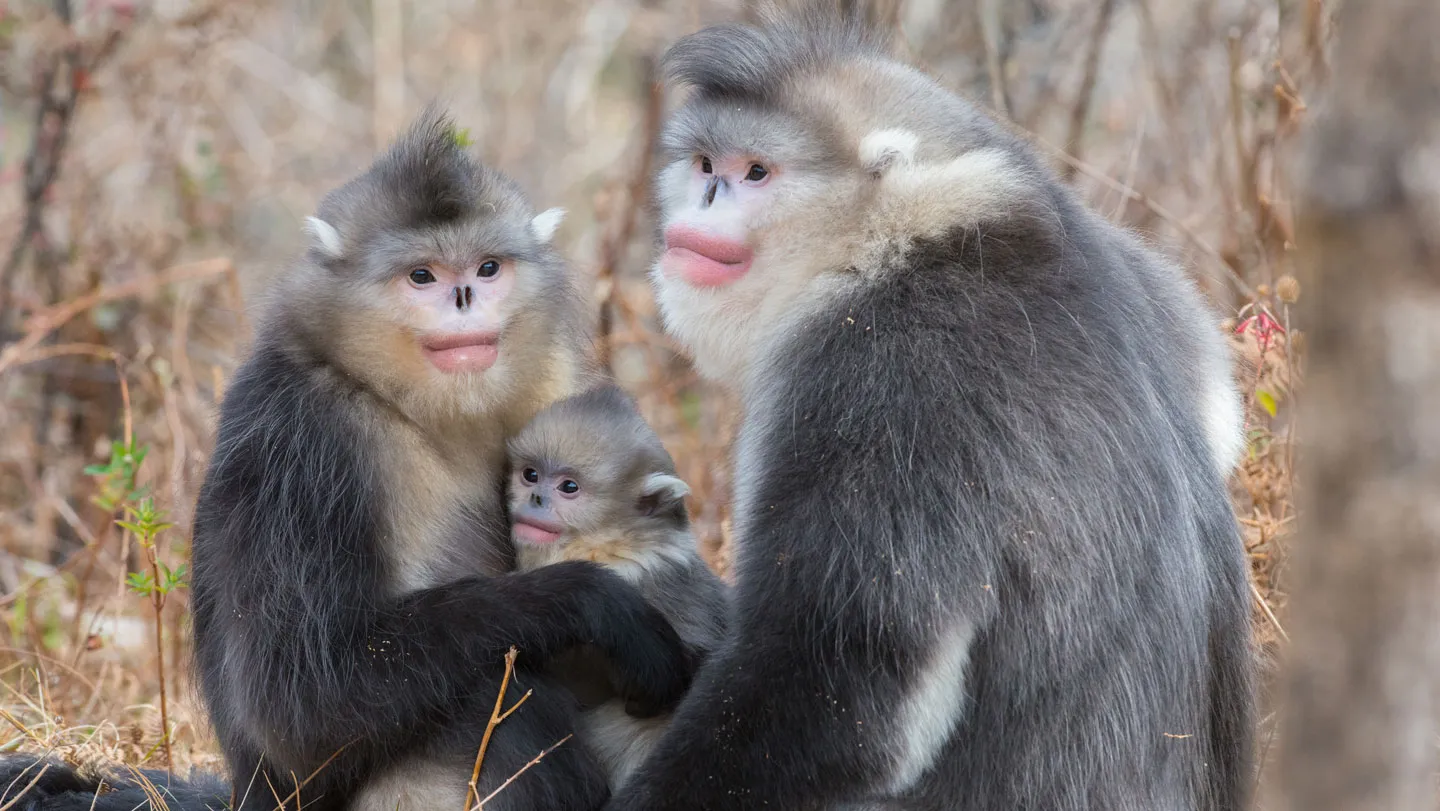
Why Male Primates Outsize Females: The Hidden Role of Rival Group Pressure
For decades, the outsized body size of male primates—from gorillas to chimpanzees—has been attributed to intrasexual competition: males grow larger to dominate rivals within their own groups. Yet a groundbreaking study published this year in Nature Ecology & Evolution flips that script, revealing territorial conflict between rival groups may be the primary driver of male primate gigantism. The findings challenge long-held assumptions in behavioral ecology and could reshape how we understand sexual dimorphism across species, with implications for human evolutionary biology and even modern healthcare research into aggression and stress-related disorders.
Key Clinical Takeaways:
- Territorial disputes between primate groups—not just internal male rivalry—explain why male primates often outweigh females by 50% or more.
- The study’s cross-species analysis of 79 primate species found that group size and migration patterns are stronger predictors of male body mass than harem dynamics.
- These insights may inform models of human aggression, stress physiology, and even chronic disease risk linked to territorial behavior.
The Territorial Hypothesis: Why Male Primates Outsize Their Females
The conventional narrative posits that male primates evolve larger bodies to compete for mates within their social units. But the Nature Ecology & Evolution study, funded by the National Science Foundation and led by Dr. Amanda J. Melin of the University of Calgary, tested this theory against an alternative: intergroup conflict. Using phylogenetic comparative methods and data from 79 living primate species—including lemurs, monkeys, and apes—the researchers found that male body size scaled more closely with the frequency and intensity of territorial disputes than with intrasexual selection.

The team analyzed 15 years of field observations, including 12,456 recorded aggressive interactions across 47 species. Their key finding: in species where males frequently patrol or defend territory against neighboring groups, their body mass index (BMI) relative to females was significantly higher than in species where males primarily compete for mates within their own group. For example, male mandrills, known for their brutal intergroup battles, weigh nearly twice as much as females, while male bonobos—whose societies emphasize cooperation over territoriality—show minimal sexual dimorphism.
“This isn’t just about bigger males beating up smaller males. It’s about the cost of defending a resource that benefits the entire group—food, mates, and safety. When you factor in intergroup conflict, the evolutionary pressure to grow larger becomes far more pronounced.”
Mechanisms of Dimorphism: Stress, Testosterone, and Group Dynamics
The study’s biological mechanism hinges on two interconnected pathways: chronic stress and testosterone-mediated growth. When male primates engage in territorial defense, their cortisol levels remain elevated for prolonged periods, triggering metabolic shifts that favor muscle and bone mass over fat storage. Simultaneously, testosterone—already linked to aggression—further amplifies protein synthesis and skeletal growth in response to perceived threats.
Dr. Melin’s team correlated these physiological responses with behavioral data, demonstrating that species with higher rates of intergroup aggression exhibited not only larger male bodies but also thicker cranial bones and more robust jaw musculature—adaptations for combat. “This represents a classic case of ecological selection overriding sexual selection,” notes Dr. Melin. “The environment dictates the rules of the game, and in many primate societies, those rules are written by rival groups.”
To validate their hypothesis, the researchers compared two closely related species: the territorial Papio cynocephalus (yellow baboon) and the less territorial Papio anubis (olive baboon). Despite similar genetic backgrounds, male yellow baboons—who frequently clash with neighboring troops—weigh up to 30% more than their olive baboon counterparts, whose conflicts are largely intra-group.
Broader Implications: From Evolution to Modern Healthcare
While this study focuses on non-human primates, its findings may have ripple effects in human medicine. Chronic stress and territorial behavior are well-documented risk factors for cardiovascular disease, metabolic syndrome, and even certain cancers. Understanding the physiological toll of intergroup conflict could inform interventions for veterans, first responders, and individuals in high-stress professions.
For clinicians treating patients with stress-related disorders, the study underscores the importance of assessing not just individual stressors but also social and environmental triggers. “If we’re seeing patients with unexplained muscle atrophy or metabolic dysfunction, we might now ask: Are they in a high-conflict social environment?” suggests Dr. Vogel. “This could be a red flag for chronic stress pathways we haven’t fully explored.”
In the realm of evolutionary psychology, the research also challenges assumptions about human aggression. If territorial defense—not just mate competition—drives male primate gigantism, could similar dynamics explain historical patterns of human warfare or modern territorial disputes? Anthropologists are already citing the study in debates about early hominin social structures.
Triage: Where to Turn for Expertise
For researchers seeking to apply these findings to human health, collaboration with primatologists and endocrinologists is critical. Institutions like the University of Calgary’s Primate Research Group are at the forefront of this work, bridging animal behavior and human physiology. Clinicians treating stress-related conditions may benefit from consulting board-certified endocrinologists specializing in cortisol and testosterone dysregulation.
For legal and ethical considerations around primate research, organizations such as the American Association for Laboratory Animal Science (AALAS) provide guidance on humane study protocols. Meanwhile, pharmaceutical researchers exploring stress-mitigation therapies could partner with contract research organizations (CROs) experienced in neuroendocrine studies.
The Future: Mapping Aggression to Health Outcomes
The next frontier lies in longitudinal studies tracking how territorial behavior in primates correlates with specific health markers—such as inflammation levels, bone density, and cardiovascular risk. If elevated cortisol from intergroup conflict predicts long-term morbidity in non-human primates, could similar patterns emerge in humans? Early data from studies on military personnel and border patrol agents suggest a link, but large-scale epidemiological research is needed.
What’s clear is that the old paradigm of male primates as mere “mate competitors” is giving way to a more nuanced—and medically relevant—understanding of their social worlds. As Dr. Melin puts it, “We’re not just studying evolution anymore. We’re studying the biology of stress, and that’s a conversation every doctor should be having with their patients.”
*Disclaimer: The information provided in this article is for educational and scientific communication purposes only and does not constitute medical advice. Always consult with a qualified healthcare provider regarding any medical condition, diagnosis, or treatment plan.*