Why Liverpool Haven’t Replaced Mohamed Salah Yet
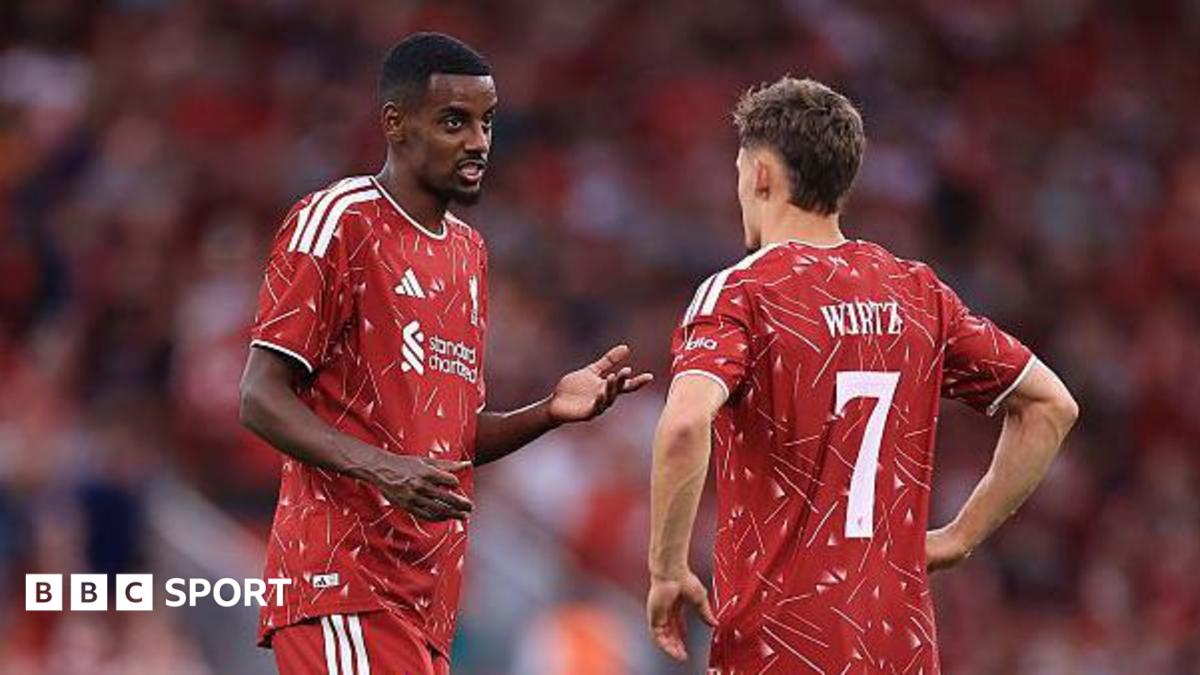
Liverpool Football Club enters the 2026-2027 season facing a definitive tactical and financial pivot as they navigate their first campaign in a decade without Mohamed Salah. With the Egyptian forward’s departure, the club must now rely on the creative output of Alexander Isak and Florian Wirtz to fill a massive void in expected goals (xG) and marketability, as the Premier League title race accelerates into its early autumn phase.
The Statistical Void Left by Salah’s Departure
For ten seasons, Mohamed Salah provided a consistent floor for Liverpool’s offensive production. According to historical Premier League performance data, Salah consistently ranked in the 99th percentile for non-penalty expected goals (npxg) and shot-creating actions. Replacing this output is not merely a personnel decision; it is a fundamental shift in the club’s tactical framework. Without a designated winger capable of drawing double-coverage, the burden of progression shifts to Alexander Isak and the playmaking vision of Florian Wirtz.
The transition is particularly acute given the current economic climate of the league. Following the latest updates to the UEFA Financial Sustainability Regulations, clubs are under intense pressure to maintain a squad cost ratio that balances competitive wages with amortization schedules. Liverpool’s inability to secure a direct positional replacement during the summer window suggests a strategic bet on internal evolution rather than external acquisition. This decision forces a change in periodization for the squad, as the coaching staff adjusts training loads to accommodate a more fluid, inverted attacking structure rather than the traditional wide-threat approach.
Tactical Integration: Isak and Wirtz as the New Engine
The weight of expectation now rests on the synergy between Isak’s movement in the final third and Wirtz’s ability to operate in the half-spaces. Tactical analysis from the Professional Football Scouts Association (PFSA) indicates that while Isak provides the necessary verticality to stretch defensive lines, Wirtz serves as the primary pivot for transition play. Their success depends on their ability to replicate Salah’s efficiency in high-leverage situations.
“The modern game is moving away from the singular star-dependent model toward collective tactical interchangeability. When you lose a player of that magnitude, you don’t look for a mirror image; you look for a new geometry that forces the defense to defend the entire width of the pitch,” notes a senior tactical consultant at the Global Football Analytics Institute.
For elite athletes operating at this level, the physical toll of such a transition is significant. Clubs often employ high-level sports medicine to monitor the increased workload on players tasked with filling these gaps. Similar to how elite players utilize specialized sports medicine clinics to manage recovery and peak performance, the Liverpool medical staff must now prioritize load management for Isak and Wirtz to prevent soft-tissue injuries during this high-intensity adaptation period.
Local Economic and Infrastructure Impact
The departure of a marquee name like Salah carries immediate implications for the city of Liverpool, specifically regarding match-day revenue and commercial partnerships. Historically, the presence of a global icon drives tourism, merchandise sales, and regional broadcast viewership. As the club recalibrates, local businesses—from hospitality vendors to stadium security providers—must brace for a potential shift in the “Salah effect.”

This logistical vacuum creates opportunities for regional service providers. Just as professional event management firms are required to handle the complex requirements of Premier League match-days, the club is currently realigning its commercial outreach to maintain the stadium’s status as a premier economic anchor for the region. The financial success of the stadium infrastructure relies on maintaining high attendance and premium hospitality occupancy throughout the season, regardless of the roster’s composition.
Managing the Transition for Future Competitiveness
The 2026 season acts as a trial for Liverpool’s long-term sustainability. If Isak and Wirtz fail to reach the necessary metrics for goal contribution, the club may face a difficult arbitration process regarding future contract incentives or be forced into a more aggressive transfer window in the winter. For those in the sports business sector, this period highlights the importance of robust contract law and talent management.
Just as professional athletes rely on expert sports contract lawyers to navigate the nuances of performance-based clauses and release conditions, Liverpool’s front office is essentially betting on their internal development pipeline. The goal is to avoid a “dead-cap” scenario where heavy wages are tied to underperforming assets. The coming months will demonstrate whether this tactical pivot leads to a new era of dominance or a period of necessary organizational restructuring.
Disclaimer: The insights provided in this article are for informational and entertainment purposes only and do not constitute medical advice or sports betting recommendations.