
Strikes on Iran’s Nuclear Sites: Calculated Restraint?
US and Israeli Actions Hint at Deliberate Limits to Avoid Catastrophe
Recent strikes targeting Iranian nuclear facilities may have been intentionally limited, potentially to avert widespread radioactive contamination. This approach, according to analysis, suggests a strategic effort to balance military objectives with the avoidance of potentially devastating consequences and international condemnation.
Target Selection and Potential Avoidance
The aim of the attacks, according to reports, was to prevent Iran from developing nuclear weapons, thereby reducing threats in the Middle East. Seven key facilities linked to Iran’s nuclear program were targeted by US and Israeli forces. However, the attacks were not comprehensive, with at least ten other sites seemingly untouched. Some were likely spared because they were not perceived as immediate threats.
One example is the Lashkar Ab’ad nuclear enrichment plant. A decade ago, this facility was involved in uranium enrichment via lasers, which is technically complex. Iran has since invested more into the more conventional centrifuge method, which may have rendered Lashkar Ab’ad less of a priority for attack.
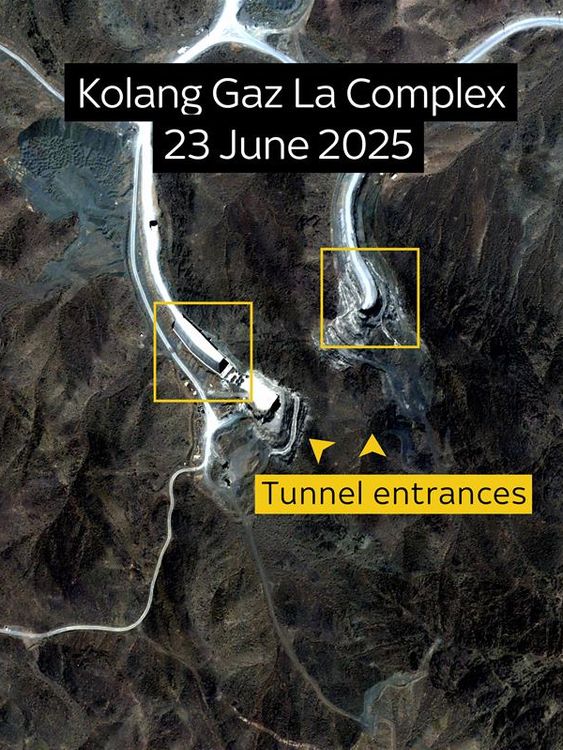
Another area of interest is the Mt. Kolang Gaz La complex. Based on satellite images, the underground complex, close to the Natanz facility, was also not attacked. Its current construction status could be a factor. If finished, and if Iran’s enriched uranium survived the attacks, this complex could provide a safe hiding place.
Strategic Considerations and Risks
The mountain of Kolang Gaz La is higher than the one shielding the Fordow facility, recently struck by Israeli forces. Once the tunnel is completed, the complex could be a much more challenging target for powerful bombs. Other locations might have been spared to prevent a widespread nuclear disaster.
Nearly all sites hit were involved in Uranium enrichment. The enrichment facilities at Natanz and Fordow are examples. Uranium is radioactive, but targeting them does not pose the same radioactive risk as other processes. Even if hoisted into the air, it quickly falls to the ground.
“If you were to expose uranium hexafluoride to the atmosphere, then it reacts with the water and the uranium drops out,”
—Prof Laurence Williams, former UK chief inspector of nuclear installations
Nuclear reactors are a completely different situation. Reactors contain radioactive elements, some of which are light and volatile. If they escape, they can enter the atmosphere. Bombing a reactor could trigger widespread contamination, potentially spreading beyond Iran’s borders.
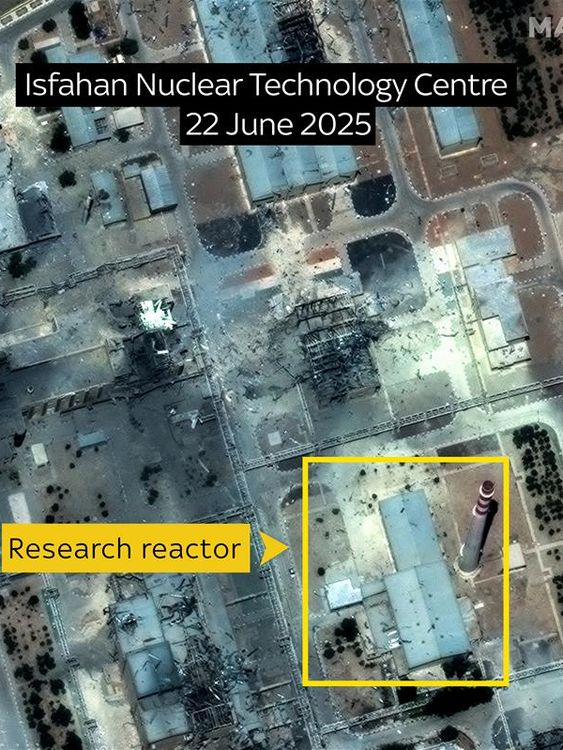
At Isfahan, multiple buildings associated with Uranium enrichment were struck. The research reactors on site, however, were not targeted. This approach also applies to the Bushehr Nuclear Power Plant and the Tehran Nuclear Research Reactor. These reactors are crucial to Iran if they seek to create nuclear weapons. Plutonium, vital for bombs, is produced as a by-product during their operation.
Making plutonium in a reactor is faster than enriching uranium using centrifuges. The recent strikes on Iran’s Arak Heavy Water Reactor could be related to its capacity to create nine kilograms of plutonium annually. The reason for the attack likely lies in the reactor’s rebuilding process and the lack of fuel at the time, thus minimizing any nuclear disaster risk.
The UN nuclear watchdog, the International Atomic Energy Agency, cautioned the involved parties about the risks associated with targeting nuclear sites. The US and Israel, while perhaps desiring to eliminate Iran’s nuclear ambitions, may have opted for a more cautious approach. This measured response acknowledges the risks of civilian casualties from radioactive fallout and the possible international repercussions.
