
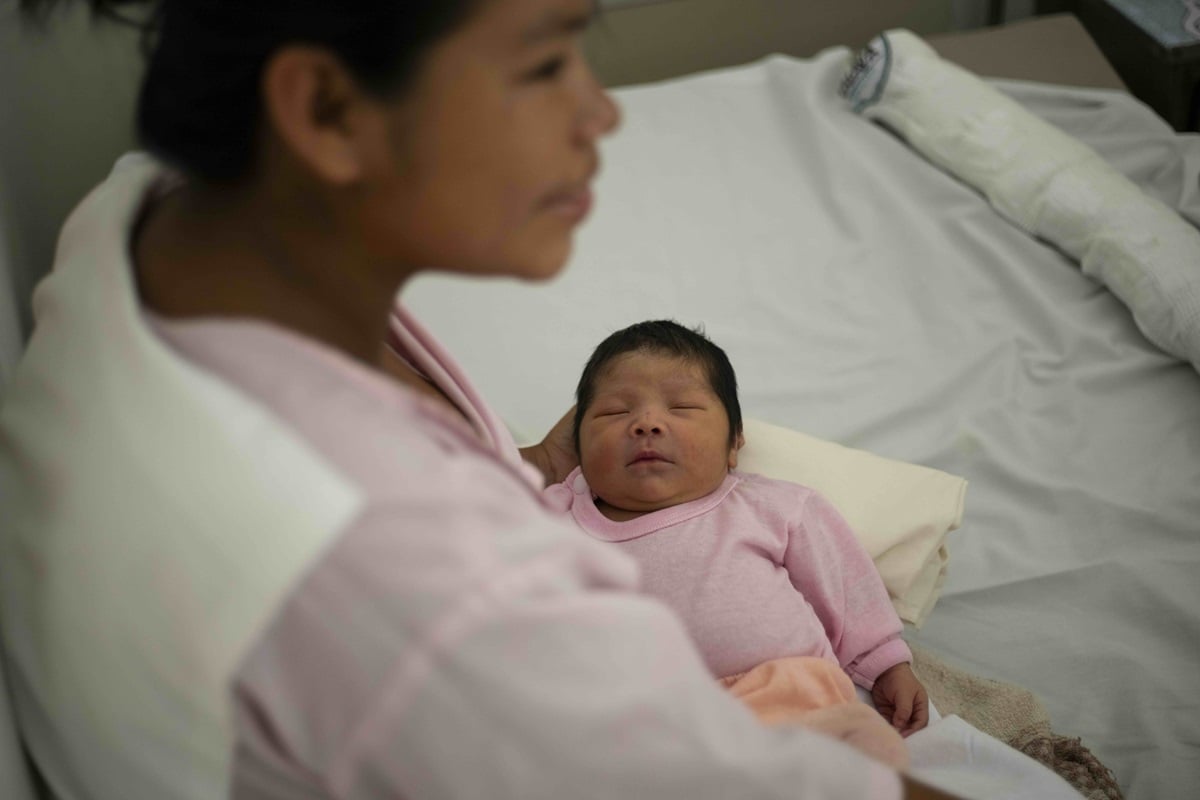
Brazil is now at the center of a structural shift involving the elimination of mother‑to‑child HIV transmission. The immediate implication is a demonstrable proof point for worldwide health‑system capacity that can be leveraged by both domestic political actors and international health institutions.
The Strategic Context
Brazil’s Unified Health System (SUS) has, for decades, pursued universal, free access to primary care-a model that contrasts with the fragmented, insurance‑driven systems of many large economies. the regional push for EMTCT (Elimination of Mother‑to‑Child Transmission) aligns with a broader global health agenda that emphasizes disease‑specific targets as proxies for health‑system strengthening.Within the multipolar landscape of global health governance, the World Health Organization (WHO) and the Pan‑American Health Organization (PAHO) seek credible success stories to sustain donor confidence and to counter narratives that universal health coverage is financially untenable for middle‑income nations. Brazil’s achievement therefore sits at the intersection of domestic social policy, regional health diplomacy, and the strategic positioning of multilateral health bodies.
Core Analysis: Incentives & Constraints
Source Signals: The WHO has validated Brazil’s elimination of mother‑to‑child HIV transmission, confirming sub‑2% vertical transmission rates and >95% coverage of prenatal HIV testing and treatment. The validation ceremony featured President Luiz Inácio Lula da Silva, Health Minister Alexandre Padilha, PAHO Director Jarbas Barbosa, and UNAIDS representatives. Brazil employed a sub‑national certification approach, adapting PAHO/WHO methodology while maintaining national coherence. The success is framed as part of the EMTCT Plus Initiative, a collaborative effort with UNICEF and UNAIDS aimed at broader disease elimination by 2030.
WTN Interpretation:
The Lula administration leverages this health milestone to reinforce its narrative of inclusive progress and to counter right‑wing critiques that portray expansive public spending as unsustainable. By showcasing SUS’s capacity, the government strengthens its domestic legitimacy and creates diplomatic capital for South‑South health cooperation. WHO and PAHO, simultaneously occurring, use Brazil’s validation to illustrate the efficacy of their technical standards and to justify continued funding streams, especially as donor fatigue grows in other regions. Civil society and community health workers gain heightened visibility, which can translate into stronger advocacy positions and potential influence over future health‑policy budgeting. Constraints include Brazil’s fiscal pressures from a slowing economy, competing priorities such as pension reform, and the risk of political backlash if health outcomes falter in other domains. Supply‑chain vulnerabilities for antiretroviral drugs and the need for sustained laboratory capacity also pose operational limits.
WTN Strategic Insight
”Brazil’s EMTCT success shows that a well‑funded universal health system can become a strategic asset,delivering both domestic political legitimacy and international soft‑power leverage for emerging economies.”
Future Outlook: Scenario Paths & Key Indicators
Baseline path: If Brazil’s fiscal trajectory remains stable and the current political coalition continues to prioritize SUS funding, the health system will consolidate its EMTCT gains, expand the EMTCT plus framework to other vertical diseases, and serve as a regional exemplar. WHO and PAHO will cite Brazil in future policy guidance, potentially attracting additional technical assistance and reinforcing multilateral health initiatives in Latin America.
Risk Path: If economic slowdown intensifies or a right‑wing shift curtails health‑budget allocations, SUS may experience funding gaps that erode surveillance and treatment continuity.This could lead to a resurgence of pediatric HIV cases,undermine Brazil’s credibility as a health‑policy model,and provide fodder for domestic opposition and external critics of universal health coverage.
- Indicator 1: Publication of Brazil’s federal health‑budget plan for the next fiscal year (expected Q1 2026). Increases or cuts in SUS allocations will signal the government’s commitment to sustaining EMTCT outcomes.
- Indicator 2: WHO/PAHO interim monitoring report on pediatric HIV incidence in Brazil (scheduled for mid‑2026). A rise in new cases would indicate strain on the health system, while stable or declining numbers would confirm baseline continuity.
