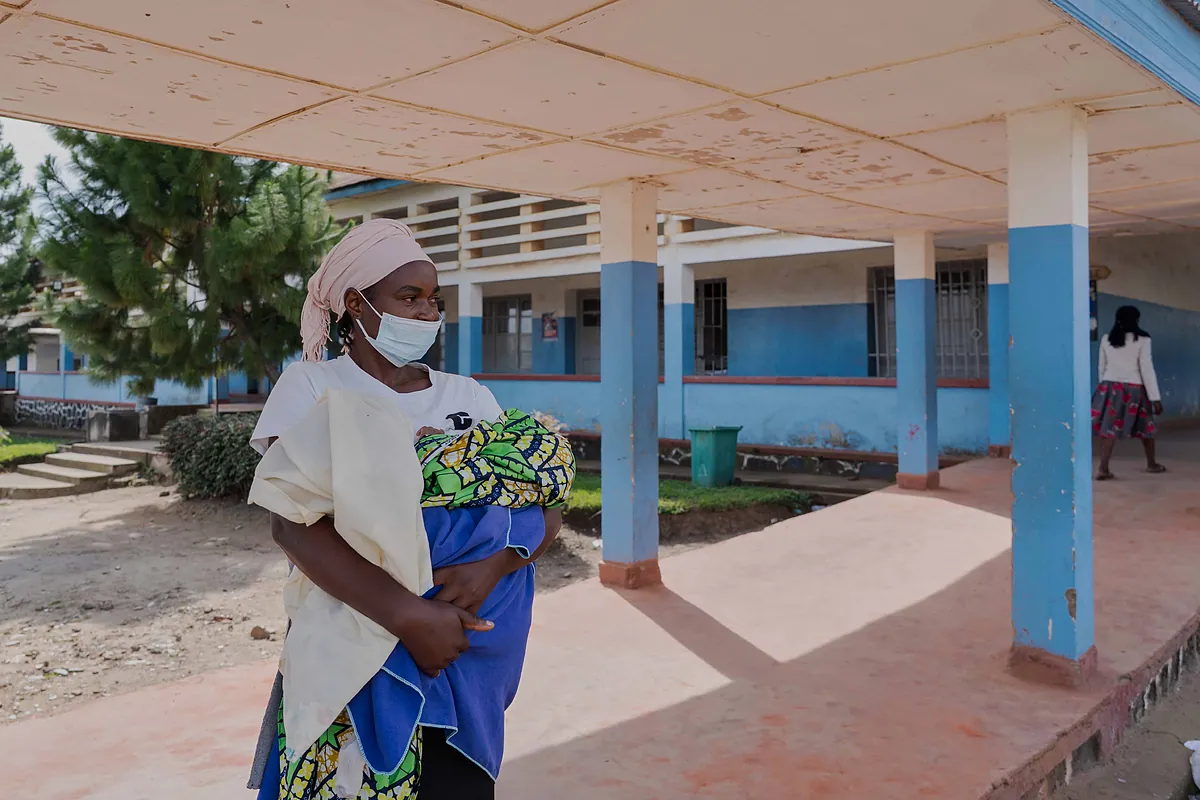
WHO Declares International Emergency Over Ebola Outbreak in Congo
The World Health Organization (WHO) declared the Ebola virus disease (EVD) outbreak in the Democratic Republic of the Congo (DRC) a Public Health Emergency of International Concern on May 17, 2026—a classification reserved for events posing a global risk. This time, the culprit is the Bundibugyo ebolavirus, a rare strain with a mortality rate hovering between 25% and 90%, and a critical complication: no licensed vaccine exists for this specific variant. The outbreak, concentrated in Ituri Province, has already claimed 80 suspected deaths among 246 cases, with healthcare workers among the hardest hit. The virus’s silent spread—undetected for over a month—exposes the fragility of surveillance in conflict zones, where insecurity and population mobility accelerate transmission. For clinicians, epidemiologists, and public health systems, this outbreak is a stress test of preparedness, diagnostics, and cross-border collaboration.
Key Clinical Takeaways:
- Strain-specific gap: The Bundibugyo ebolavirus lacks a licensed vaccine, forcing reliance on supportive care and experimental therapies like INMAZEB (atoltivimab/maftivimab/odesivimab), approved only for the Zaire ebolavirus.
- Silent transmission: Community deaths and delayed detection (over a month in some areas) highlight the need for rapid antigen testing and genomic sequencing in high-risk regions.
- Healthcare risk: Four deaths among healthcare workers signal breaches in infection control, demanding urgent training in PPE protocols and biosafety for frontline staff.
The Viral Threat: Why Bundibugyo Ebolavirus Demands Urgent Attention
The Bundibugyo ebolavirus (BDBV) is one of six known ebolaviruses, yet it accounts for fewer than 1% of global EVD cases since its discovery in Uganda in 2007 [PubMed: BDBV epidemiology]. Its pathogenesis mirrors other orthoebolaviruses: initial “dry” symptoms (fever, myalgia, headache) progress to “wet” manifestations (hemorrhage, organ failure) as viral load peaks in blood and secretions. What distinguishes BDBV is its lower case-fatality rate (~50%) compared to the Zaire ebolavirus (~80%), but this does not diminish its lethality in vulnerable populations.
“BDBV’s understudied nature means we’re flying blind in terms of treatment efficacy. The absence of a vaccine forces us to rely on contact tracing and supportive care—both of which are severely strained in active conflict zones.”
Diagnostic and Treatment Gaps: Where the System Fails
Per the WHO’s May 16, 2026, situation report, only eight of 13 samples from Ituri Province tested positive for BDBV via PCR, suggesting underdiagnosis. The outbreak’s complexity stems from:

- Limited diagnostic capacity: Real-time PCR requires specialized labs, many of which are inaccessible due to insecurity. Rapid antigen tests (e.g., CDC’s Ebola RT-PCR) are unavailable for BDBV.
- Therapeutic void: INMAZEB, the only FDA-approved Ebola treatment, targets the Zaire ebolavirus. Its efficacy against BDBV is unproven, though preclinical data suggests cross-reactivity may offer partial benefit [NEJM: INMAZEB mechanism].
- Vaccine absence: The rVSV-ZEBOV vaccine (Merck) protects only against the Zaire ebolavirus. Development of a BDBV-specific vaccine is stalled. the last trial (2017) was paused due to funding constraints [WHO: Ebola vaccine pipeline].
Public Health Infrastructure Under Siege
The DRC’s outbreak response is hampered by three critical factors:
| Challenge | Impact | Potential Solutions |
|---|---|---|
| Active conflict | Disrupted supply chains for PPE, diagnostics, and therapeutics. Healthcare workers in North Kivu and Ituri report shortages of gloves, gowns, and oral rehydration salts. | Airbridge logistics (vetted medical transport providers) and prepositioned stockpiles. |
| Cross-border mobility | Two confirmed cases in Uganda (linked to DRC travel) underscore the risk of regional spread. Porous borders in eastern Africa facilitate undetected transmission. | Enhanced surveillance at border health clinics with WHO’s GAR toolkit. |
| Misinformation | Community resistance to vaccination (even for Zaire ebolavirus) due to rumors of sterility or government coercion. Trust erosion delays contact tracing. | Local health communicators (culturally competent epidemiologists) with verified messaging channels. |
“The real emergency isn’t just the virus—it’s the collapse of trust. In Ituri, families hide sick relatives to avoid stigma. Without community buy-in, even the best diagnostics and drugs won’t stop this.”
Directory Bridge: Who Can Help Now
This outbreak exposes systemic gaps that require immediate, specialized intervention:
- For clinicians: Healthcare workers in high-risk zones need board-certified infectious disease physicians to optimize supportive care protocols (e.g., IV fluids, electrolyte management). The IDSA guidelines for EVD can serve as a framework, though BDBV-specific adaptations are urgent.
- For public health agencies: Cross-border coordination demands health law attorneys versed in the International Health Regulations (2005) to navigate quarantine protocols and data-sharing agreements.
- For diagnostic labs: Facilities equipped with CLIA-certified PCR capabilities should partner with specialized virology labs to accelerate BDBV identification. The Africa CDC is prioritizing sample-sharing for genomic surveillance.
The Path Forward: Vaccine Development and Global Readiness
The absence of a BDBV vaccine is not a permanent condition. Preclinical work at the NIAID (funded by the U.S. Department of Health and Human Services) has identified chAd3-BDBV, a recombinant adenovirus vector, as a promising candidate. Phase I trials in healthy volunteers (2019) demonstrated safety, but Phase II/III studies were halted due to budget reallocations. Reviving this pipeline—with $50 million in emergency funding—could yield a vaccine within 18–24 months, per NIAID’s timeline.

Until then, the global community must act on three fronts:
- Diagnostic expansion: Deploy portable PCR units (e.g., Thermo Fisher’s QuantStudio) to remote clinics, paired with AI-assisted triage tools to flag high-risk patients.
- Therapeutic repurposing: Clinical trials for INMAZEB in BDBV patients should commence immediately, with CROs like Parexel accelerating enrollment in DRC and Uganda.
- Surveillance innovation: Leverage WHO’s Ebola response tools to integrate mobile health (mHealth) alerts for suspected cases, reducing the “silent transmission” window.
The current outbreak is a wake-up call: the world’s Ebola response infrastructure is built for Zaire ebolavirus. For Bundibugyo and other rare strains, we must act as if every case is a zero-day threat. The question is no longer if another Ebola variant will emerge, but when. The time to prepare is now.
Disclaimer: The information provided in this article is for educational and scientific communication purposes only and does not constitute medical advice. Always consult with a qualified healthcare provider regarding any medical condition, diagnosis, or treatment plan.