Big Pharma turns to Chinese biotechs to replenish pipelines, says legrandcontinent.eu
As pharmaceutical patents representing more than $200 billion in sales approach expiration by the end of the decade, major drug developers are increasingly redirecting their capital toward Chinese biotechnology firms to replenish their pipelines, legrandcontinent.eu reported on October 6, 2026.
The Tech TL;DR:
- Chinese drug assets accounted for more than half of all capital committed by major pharmaceutical companies in licensing deals this year, according to Stifel investment banking data.
- The total announced value of cross-border licensing deals involving Chinese firms reached approximately $136 billion last year, more than double the volume recorded in 2024, per PharmCube metrics.
- Legislative proposals in the United States, including the BINSA bill introduced in June and August, seek to expand outbound investment controls into biotechnology.
Patent Cliffs Drive Capital Inflows to Chinese Biotech Assets
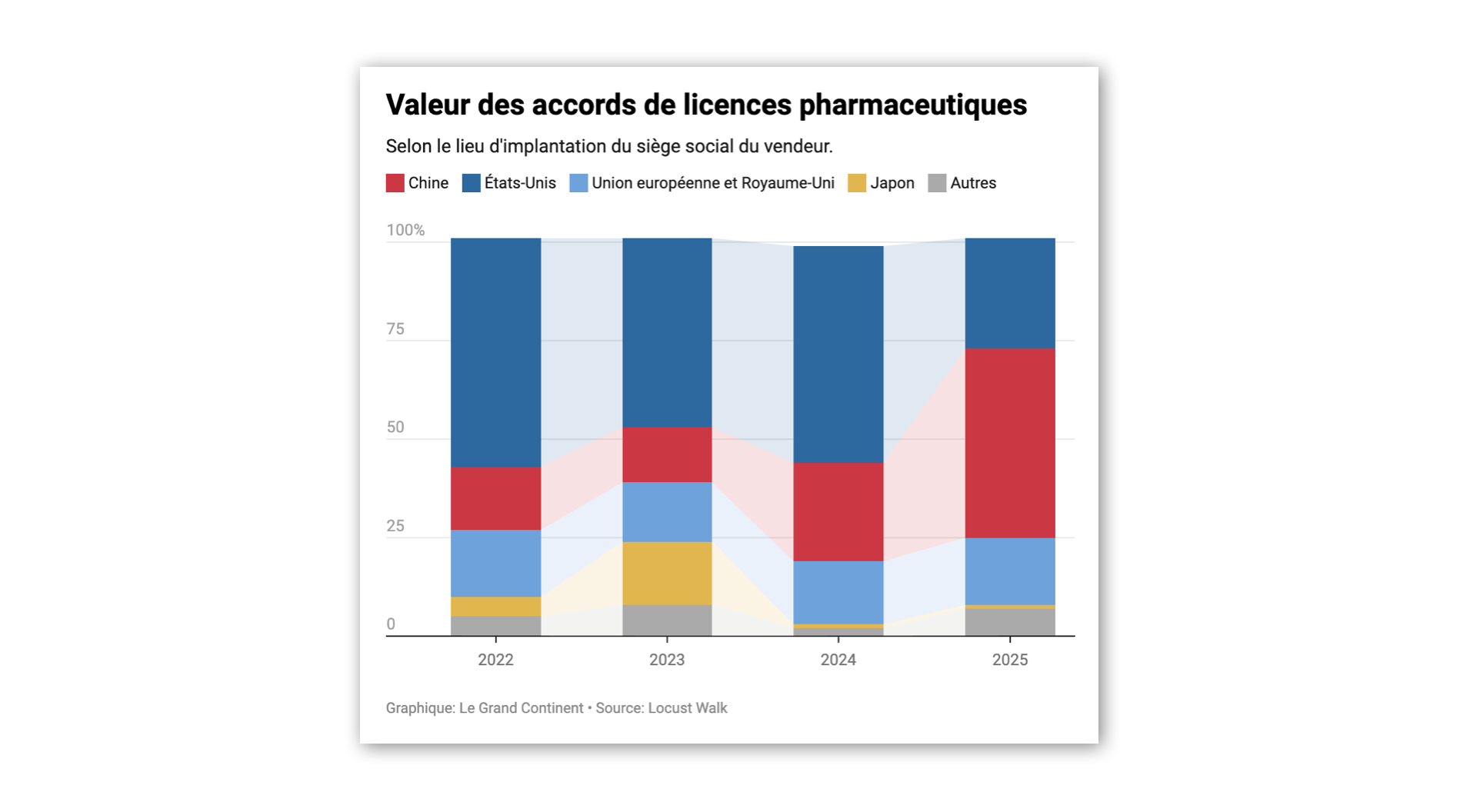
The impending expiration of core brand-name drug protections has accelerated deal-making velocity across the sector. Tim Opler, director of the Global Healthcare Group at investment bank Stifel, noted that Chinese compounds now represent the majority of capital deployed by large-scale pharmaceutical enterprises for external drug licensing. According to data tracked by Locust Walk, Chinese vendors captured nearly half of the total financial value generated across global pharmaceutical licensing agreements last year.
While assets originating from China currently account for approximately 8% of portfolios within the most heavily exposed major drug companies, industry analysts indicate this lagging indicator fails to capture the immediate acceleration of recent transactions. In China, the active pipeline of candidate drugs expanded by 36% over a single 12-month period, reaching a total of 7,105 candidates. By comparison, the United States maintained its lead with 12,800 candidate drugs in development, though that volume grew by only 0.6% over the same timeframe.
Research velocity in China has outpaced Western jurisdictions in early-phase development. European Federation of Pharmaceutical Industries and Associations figures show that out of 104 novel active substances launched globally last year, 46 originated from Chinese enterprises, compared to 28 from American firms and 16 from European developers.
This rapid execution stems from structural advantages in speed, cost efficiency, and manufacturing scale. Under Beijing’s 15th five-year plan spanning 2026 to 2030, biomedicine has been designated as a core developmental sector, prioritizing biofabrication as a foundational future industry. In December, the government launched a 100-billion-yuan ($13.3 billion) national venture capital fund dedicated to advanced technologies, designed to attract up to 1 trillion yuan in regional and private financing. At least 70% of these allocations target early-stage and startup enterprises.
Despite these gains, Western pharmaceutical entities retain dominant positions in first-in-class therapeutics, advanced clinical development, regulatory negotiations, global manufacturing, and commercialization. This operational split has fostered a distinct international division of labor, though critics raise concerns regarding long-term supply chain dependencies on an ecosystem tightly integrated with state-directed industrial policies.
Washington Seeks to Restrict Biotechnology Data and Investments
Meanwhile, European scientific output remains high, with researchers across Europe generating over one-fifth (21%) of baseline publications in biotechnology, matching the output shares of the United States and China.