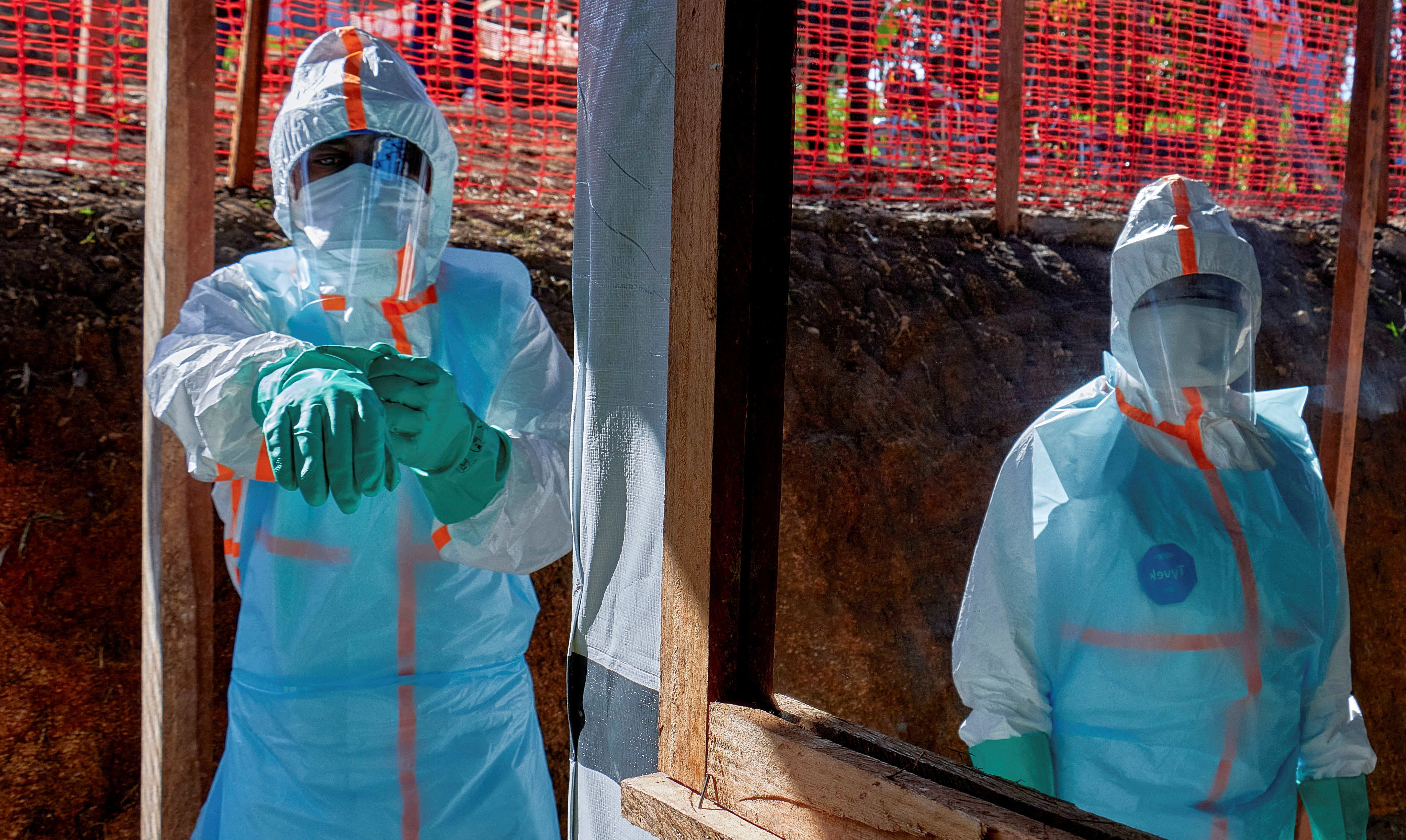
WHO and Africa CDC Unveil $518 Million Plan to Combat Ebola Outbreak in DRC
The World Health Organization (WHO) and the Africa Centres for Disease Control and Prevention (Africa CDC) have launched a $518 million emergency response plan to combat the escalating Bundibugyo Ebola outbreak in the Democratic Republic of the Congo (DRC) and neighboring Uganda. With over 450 confirmed cases and 82 deaths in the DRC alone, the outbreak—declared on May 15, 2026—represents one of the most severe in recent years, demanding urgent clinical intervention and public health coordination.
Key Clinical Takeaways:
- The Bundibugyo strain of Ebola, less common than the Sudan or Zaïre strains, has shown rapid community transmission in conflict zones, complicating containment efforts.
- Africa CDC and WHO’s six-month plan (June–November 2026) prioritizes emergency coordination, surveillance, and community engagement, with a focus on high-risk border regions.
- Healthcare providers in the DRC and Uganda face severe operational strains, requiring immediate support from global infectious disease specialists and diagnostic laboratories.
Why the Bundibugyo Strain Demands Immediate Attention
Ebola’s Bundibugyo variant, first identified in Uganda in 2007, is less studied than the more virulent Sudan or Zaïre strains but poses distinct challenges. According to the WHO’s 2023 Ebola Preparedness Report, the Bundibugyo strain exhibits a case fatality rate (CFR) of approximately 25–30%—lower than the Zaïre strain’s 70%, but still devastating in outbreak settings. The current DRC outbreak, confirmed by the WHO’s Disease Outbreak News, has seen 82 deaths among 452 cases, aligning with historical patterns. However, the strain’s ability to spread undetected in conflict zones—where healthcare infrastructure is fragile—heightens transmission risks.
“The Bundibugyo strain’s lower CFR can lull communities into complacency, but its silent spread in dense populations is far more dangerous. We’ve seen this in past outbreaks where early containment failed due to underreporting.”
How the $518 Million Plan Addresses Critical Gaps
The WHO-Africa CDC initiative is structured around four pillars: emergency coordination, surveillance, clinical care, and community engagement. Funding transparency reveals a strategic allocation:
- 40% ($207M) for rapid-response teams and mobile laboratories to detect and isolate cases in real time.
- 30% ($155M) for vaccination campaigns, leveraging the recently expanded Ebola vaccine authorization (Ervebo, developed by Merck with NIH funding).
- 20% ($104M) for infection prevention in healthcare settings, addressing the nosocomial transmission risk highlighted in the CDC’s 2025 Healthcare Worker Safety Guidelines.
- 10% ($51M) for psychosocial support in affected communities, a critical but often overlooked component of outbreak control.
Where the Outbreak Meets Operational Reality
The DRC’s conflict zones—particularly North Kivu and Ituri provinces—present structural barriers to containment. According to the DRC Ministry of Health’s June 8 situation report, 71 new cases were confirmed in a single 24-hour period, underscoring the exponential growth phase of the epidemic. Uganda’s three recent cases, linked to cross-border movement, illustrate the transnational risk of unchecked spread.
For healthcare providers on the ground, the challenges are acute:
- Diagnostic delays: The Bundibugyo strain’s non-specific symptoms (fever, fatigue, hemorrhage) can mimic malaria or dengue, requiring real-time PCR confirmation, which is scarce in rural clinics.
- Treatment shortages: The WHO’s 2026 Ebola Therapeutics Guidelines recommend monoclonal antibody therapies (e.g., REGN-EB3), but supply chains in the DRC remain disrupted.
- Staff shortages: The WHO estimates a 40% vacancy rate for frontline Ebola responders in high-risk areas, exacerbated by security threats.
The Role of Global Health Infrastructure
This outbreak exposes critical dependencies in Africa’s public health system. The $518 million plan relies on:
- Pre-positioned stockpiles: WHO’s Global Outbreak Alert and Response Network (GOARN), funded by the Gates Foundation and Gavi, coordinates vaccine and supply distribution.
- Cross-border collaboration: Uganda’s health ministry has activated joint surveillance teams with the DRC, a model praised by the Africa CDC for its success in the 2022 Sudan strain outbreak.
- Private-sector partnerships: Pharmaceutical companies like Johnson & Johnson and Moderna are ramping up production of next-generation Ebola vaccines, with trials underway in Phase III studies.
Directory Bridge: Where to Turn for Immediate Support
Healthcare providers, clinics, and B2B medical services in our Global Directory are already mobilizing to address the outbreak’s most pressing needs:
- [Infectious Disease Specialists]: For clinicians treating suspected Ebola cases, consultation with WHO’s Ebola Technical Advisory Group is critical. Specialists with experience in the Bundibugyo strain—such as those at Kuwait Institute for Scientific Research—can provide real-time diagnostic support.
- [Mobile Laboratory Units]: Organizations like Médecins Sans Frontières (MSF) are deploying rapid-response PCR labs to border regions. For procurement and logistics, partnering with UNICEF’s Supply Division ensures compliance with WHO’s cold-chain requirements.
- [Healthcare Compliance Attorneys]: Navigating the legal complexities of cross-border medical aid—particularly in conflict zones—requires expertise in international health law. Firms specializing in WHO’s International Health Regulations (IHR), such as Dentons’ Global Health Practice, can mitigate operational risks.
What Happens Next: The Path Forward
The next 90 days will determine whether this outbreak can be contained before it spreads further. Key milestones include:
- July 2026: Completion of the first vaccination ring in high-risk DRC communities, with 90% coverage as the target (per WHO’s July 1 update).
- September 2026: Deployment of oral antiviral therapies (e.g., molnupiravir analogs) in clinical trials, pending FDA/EMA fast-track approval.
- November 2026: Evaluation of the $518 million plan’s efficacy, with a focus on reducing the reproduction number (R₀) below 1—a critical threshold for outbreak control.
The Bundibugyo strain’s resilience in conflict zones serves as a stark reminder of the interdependence between global health security and local stability. As Dr. Tedros Adhanom Ghebreyesus emphasized, “This is not just an African crisis—it’s a global one.” The success of this response hinges on sustained funding, cross-border cooperation, and the rapid deployment of proven interventions. For providers and policymakers, the time to act is now.
*Disclaimer: The information provided in this article is for educational and scientific communication purposes only and does not constitute medical advice. Always consult with a qualified healthcare provider regarding any medical condition, diagnosis, or treatment plan.*