
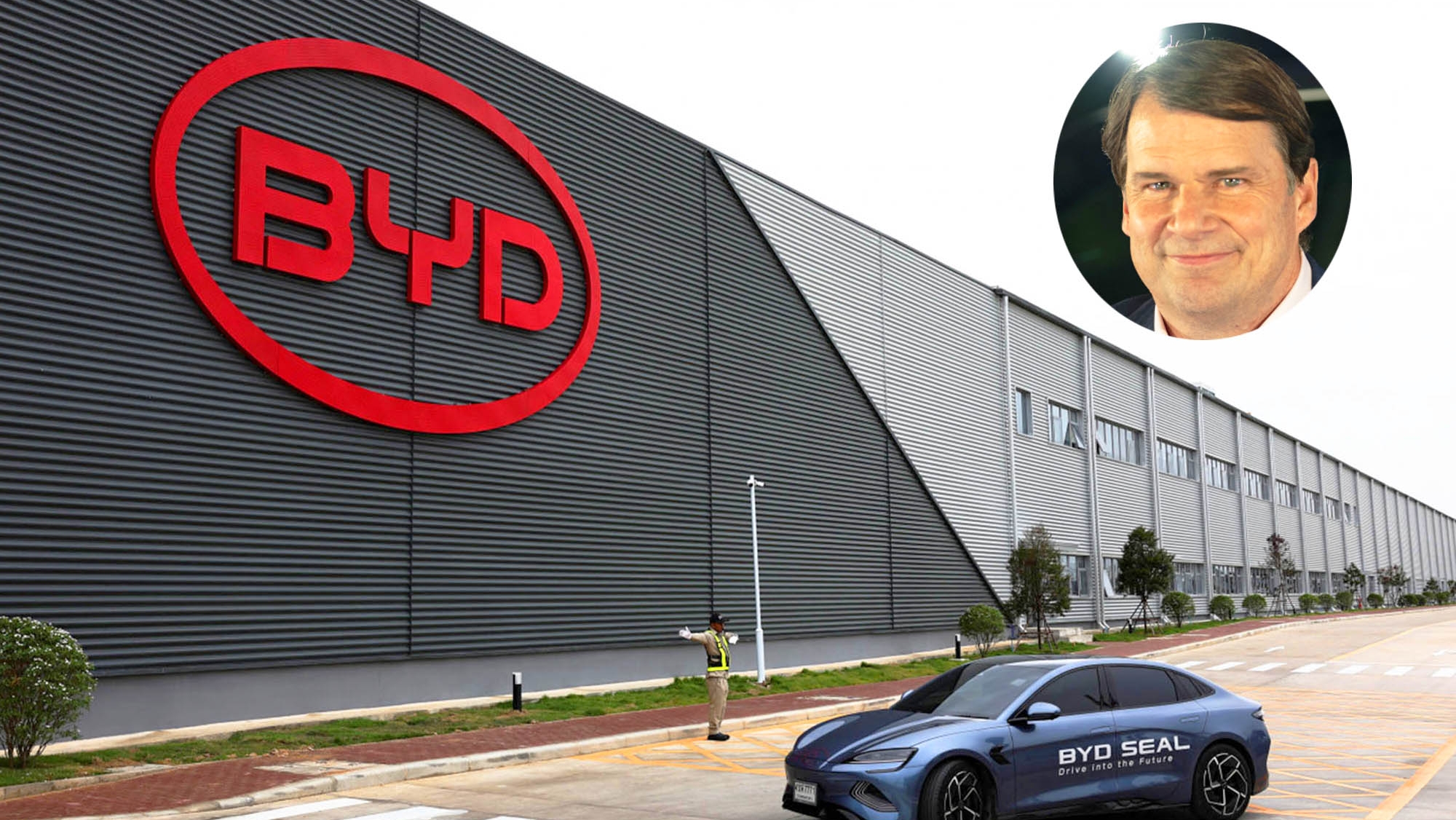
Ford CEO Warns of “Existential Threat” from Rapid Chinese EV Innovation
Automaker Scrutinizes BYD’s Success, Pledges Strategic Shift
Ford CEO Jim Farley has sounded an alarm over the accelerating pace of Chinese electric vehicle manufacturers entering the European market, labeling them an “existential threat” to established automakers. His concerns stem from a recent visit to China, where he witnessed firsthand the swift technological advancements and competitive pricing of brands like BYD, Geely, and Xiaomi.
Unpacking the Competition’s Edge
After a thorough examination, which included a full teardown of a BYD electric vehicle, Ford engineers were reportedly struck by the Chinese company’s strategic advantages. **Farley** specifically pointed to BYD’s extensive use of cost-effective lithium-iron-phosphate (LFP) batteries and their deep vertical integration. This allows them to control battery production, thereby reducing costs without compromising quality.
Farley observed that while BYD’s propulsion systems might not be the most energy-efficient available, their robust industrial strategy compensates for this. He stressed the necessity for Ford to adopt leaner, more efficient manufacturing processes. “We need smaller plants, less labor and reduce complexity,” he stated, highlighting a key takeaway from his analysis.
Ford’s Strategic Realignment
In response to this intensified competition, Ford is undertaking a significant strategic restructuring. The company plans to pivot towards developing smaller, more affordable electric vehicle models. **Farley** announced intentions to introduce a low-cost electric vehicle within the next few years, aiming to achieve production cost parity with Chinese rivals.
A cornerstone of this new direction is the development of a dedicated low-cost EV platform, spearheaded by **Alan Clarke**, a former engineer from Tesla. The objective is to deliver vehicles that can compete effectively on both price and technological innovation in the demanding global automotive market.
The rapid evolution of the EV landscape means traditional automakers must adapt quickly. **Farley** emphasized the crucial role of efficient, large-scale manufacturing execution. “What really worries me is how we are going to execute these large-scale technologies,” he admitted, underscoring that the challenge lies less in technological parity and more in the ability to produce competitively at scale, especially when considering new supply chain dynamics. For instance, by the end of 2023, Chinese EV manufacturers accounted for approximately 30% of the European market share for battery electric vehicles (Reuters, 2024).

The automotive sector is undergoing a profound transformation, compelling companies like Ford to adapt to an ever-evolving competitive environment where innovation and operational efficiency are paramount for future success.
