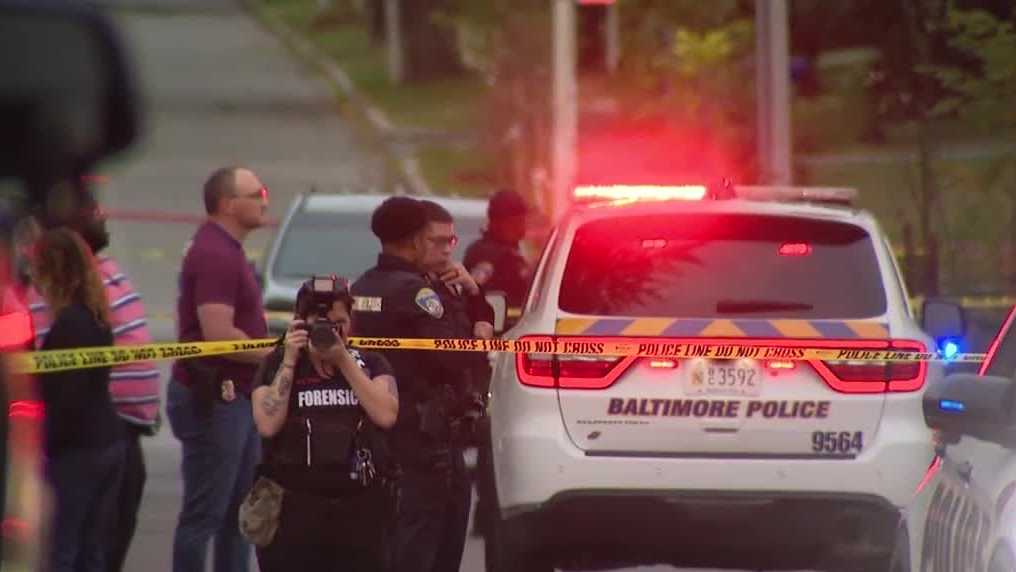
West Baltimore Residents Grapple With Neighborhood Gun Violence
“Children should feel safe in our communities. People should feel safe in our communities. We got to talk to one another. We cannot allow for persons to walk through our neighborhoods anonymously,” Dr. Al Hathaway stated, as West Baltimore residents grappled with neighborhood gun violence that sharply contrasts with broader citywide crime trends.
A Stark Geographical Divide
Baltimore police figures show that citywide homicides are down by 14 compared to this point last year, while non-deadly shootings have decreased by five. However, the latest Baltimore Police Department crime map reveals a total of 89 homicides across the city’s nine police districts thus far in the year. Five of those districts account for 63 of the homicides. The Southwestern and Western districts lead the city with 14 homicides each, followed by the Southern district with 13, and the Northern and Northwestern districts with 11 each.
Three Deaths Within a Single Week
The localized concentration of violence became acutely visible when two separate shootings on the west side of the city left three people dead within a single week, including a 12-year-old girl.

On Friday, a quadruple shooting near Oakhurst Place and Ellicott Drive resulted in the deaths of two men, identified by authorities on Monday as 19-year-old Wesley Harris and 18-year-old Donte Gregory. Police reported that investigators are still searching for suspects in that quadruple shooting. That incident occurred only blocks away from an earlier shooting on Franklintown Road at Leon Day Park, where 12-year-old Khloe Ishway was killed by a stray bullet.
Shifting Neighborhood Dynamics
Speaking about the impact of the recent violence, neighbor Kendra described how crime is evolving in close-knit blocks. “The crime is increasingly getting a little bit worse in these small little neighborhoods, because the kids are coming from other neighborhoods and kind of almost setting up shop, you know?” Kendra said.
Calls for Heightened Community Vigilance
“I believe we need to increase and up the tempo of conversations in neighborhoods and our communities, and we have to be very visible so that persons who would have any kind of ill for our communities realize no, not here, it will not be tolerated,” Hathaway said.
This is the time we can’t relax. We have to keep making certain that we keep digging deeper and really build the fabric of our city.”