
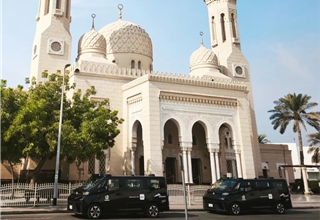
WeRide (with Uber) is now at the center of a structural shift involving autonomous mobility deployment in the Middle east. The immediate implication is an accelerated push toward large‑scale, platform‑integrated robotaxi services that could reshape urban transport and regulatory dynamics.
The Strategic Context
Dubai has positioned itself as a testbed for next‑generation transport, setting a target to automate 25 % of all trips by 2030. This ambition aligns with broader regional diversification strategies that seek to reduce reliance on oil‑linked revenues and to attract high‑tech investment. Globally, autonomous vehicle pilots have moved from isolated test tracks to city‑wide deployments, driven by advances in sensor fusion, AI decision‑making, and the rise of mobility‑as‑a‑service platforms.
Core Analysis: Incentives & Constraints
Source Signals: WeRide and Uber announced a public robotaxi launch in Dubai, with Tawasul as the fleet partner.Initial operations will include onboard safety personnel, aiming for fully driverless service by early 2026.dubai’s 2024 mobility data show a 28 % YoY rise in shared‑mobility usage, supporting demand for on‑demand services. The RTA’s automation goal and WeRide’s plan to field tens of thousands of robotaxis globally by 2030 were highlighted. Executives from both firms emphasized market maturity, regulatory collaboration, and the middle East as a growth market.
WTN Interpretation: The partnership leverages complementary assets: WeRide’s autonomous stack, Uber’s global ride‑hailing network, and Tawasul’s local fleet management expertise. For WeRide, Dubai offers a regulatory habitat willing to experiment, a high‑visibility market, and a gateway to broader Middle‑East expansion. Uber gains a differentiated service layer that can increase platform stickiness and diversify revenue beyond conventional rides. Dubai’s authorities obtain a showcase project that advances the emirate’s smart‑city narrative and supports economic diversification. Constraints include the need for rigorous safety validation, public acceptance of driverless vehicles, and the pace of local regulatory rule‑making, which must balance innovation with liability and insurance frameworks.
WTN Strategic Insight
“The convergence of platform economies and autonomous‑driving technology is turning cities into laboratories were regulatory agility becomes a competitive asset.”
Future outlook: Scenario Paths & Key Indicators
Baseline Path: if pilot operations meet safety benchmarks and passenger uptake remains strong, WeRide and Uber will scale robotaxi fleets across Dubai’s key corridors by 2026, followed by expansion into Abu Dhabi and other Gulf capitals. The model will likely be replicated in other high‑growth cities that share Dubai’s regulatory openness, accelerating the global rollout toward the 2030 target of tens of thousands of autonomous vehicles.
Risk Path: Should a high‑profile safety incident occur or if the RTA tightens licensing requirements, deployment could be confined to limited zones or delayed indefinitely. This would push WeRide to prioritize markets with more mature regulatory frameworks (e.g., certain Chinese or European cities) and could slow the Middle‑East’s contribution to the global autonomous fleet count.
- Indicator 1: Publication of the RTA’s detailed autonomous‑vehicle licensing framework (scheduled for Q3 2024).
- Indicator 2: Quarterly passenger‑kilometre metrics from the Dubai robotaxi pilot, released by uber’s mobility analytics team.
- Indicator 3: Declaration of any safety‑related incident involving the pilot fleet,tracked through local news and RTA safety bulletins.
