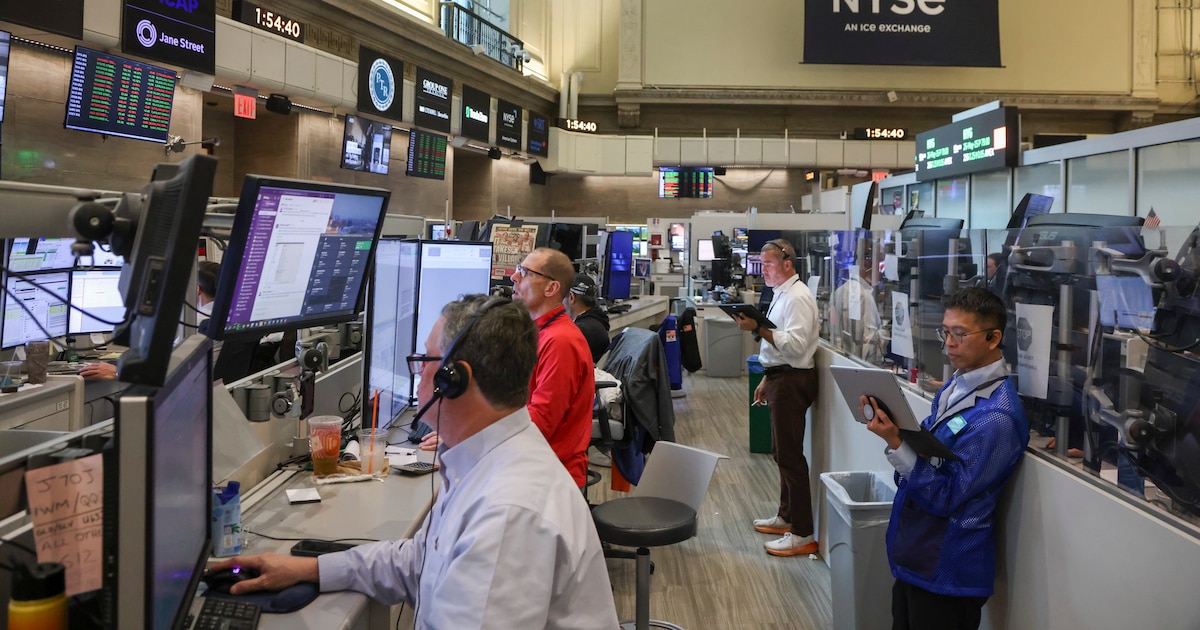
Wall Street and Nasdaq Hit Record Highs Amid Strong Employment Data
Wall Street reached record highs on Friday, May 8, 2026, as the S&P 500 and Nasdaq closed their sixth consecutive winning week. Driven by robust April jobs data, AI-led gains in Nvidia and Apple and Middle East diplomatic progress, investor confidence in the U.S. Labor market has reached a new peak.
This surge is not merely a reflection of bullish sentiment; it is a calculated reaction to a labor market that refuses to buckle. When the unemployment rate holds steady at 4.3% despite prolonged restrictive monetary policy, the narrative shifts from fearing a recession to managing growth. However, this resilience creates a specific fiscal tension for the C-suite: the “valuation gap.” As stock prices decouple from traditional earnings multiples, firms are under immense pressure to justify these premiums through actual productivity gains rather than speculative AI promises.
For mid-to-large cap enterprises, the risk is no longer a lack of demand, but an inability to scale operations fast enough to meet market expectations. This operational lag often requires the intervention of corporate financial consulting experts to realign internal capital allocation with the aggressive growth trajectories demanded by shareholders.
The Labor Market Paradox and the Fed’s Tightrope
The catalyst for Friday’s rally was the release of April employment data, which revealed that the U.S. Economy added more jobs than analysts had anticipated. This data serves as a double-edged sword for the Federal Reserve. On one hand, it confirms a healthy consumer base; on the other, it removes the immediate pressure for the Fed to pivot toward aggressive rate cuts.

Traders are now pricing in a “higher-for-longer” scenario, with expectations that the Federal Reserve will maintain interest rates within the 3.50% to 3.75% range through the end of the calendar year. This stability provides a predictable, albeit expensive, cost of capital for the coming quarters.
“The data confirms that the labor market remains strong, which gives consumers confidence to continue spending aggressively,” stated Sam Stovall, chief investment strategist at CFRA Research.
The market indices reflected this confidence with precision. By 09:41 a.m. Eastern Time, the Dow Jones Industrial Average rose by 106.64 points (0.22%) to 49,703.61. The S&P 500 climbed 33.47 points (0.46%) to 7,371.21, while the Nasdaq Composite jumped 195.50 points (0.76%) to 26,001.69.
AI Infrastructure: From Speculation to Non-Discretionary Capex
The technology sector continues to be the primary engine of this rally. Nvidia shares rose more than 2%, joined by gains in Apple, while the semiconductor index (.SOX) erased previous losses to hit a new record high. This is no longer about a “trend”; it is about the fundamental rebuilding of corporate infrastructure.

We are seeing a shift where AI-related spending has moved from the “innovation” budget to a non-discretionary capital expenditure (capex) line item. Companies that fail to integrate these efficiencies are seeing their margins erode compared to AI-native competitors. This transition creates a legal and regulatory minefield, as firms navigate intellectual property rights and data privacy laws during rapid deployment. There is a surging demand for specialized technology law firms to draft frameworks that protect corporate assets while enabling rapid AI adoption.
The momentum is staggering. Both the S&P 500 and Nasdaq are currently heading toward their sixth consecutive week of gains—the longest winning streak for these indices since October 2024.
Macro Shift: Three Ways the Current Trend Redefines the Market
The convergence of geopolitical diplomacy, labor strength, and technological acceleration is altering the institutional playbook. The current trajectory suggests three fundamental shifts in how the market will operate through the next fiscal year:
- The Death of the ‘Pivot’ Obsession: For months, the market moved solely on hopes of rate cuts. Now, the focus has shifted to “resilience acceptance.” Investors are prioritizing strong balance sheets and revenue growth over the hope of lower borrowing costs.
- Geopolitical Hedging as a Core Strategy: The rally following diplomatic advances in the Middle East proves that geopolitical stability is now a primary volatility driver. As oil prices fluctuate in response to these diplomatic shifts, firms are increasingly relying on enterprise risk management firms to hedge against sudden energy price spikes.
- The Bifurcation of the Tech Sector: A clear divide is emerging between “AI-enablers” (semiconductors and infrastructure) and “AI-implementers” (software and services). The record highs in the .SOX index indicate that the market still trusts the shovel-sellers more than the gold-miners.
The Outlook for the Next Fiscal Quarter
While the headlines scream “record highs,” the underlying reality is a market that is hypersensitive to any deviation in labor data. A sudden spike in unemployment or a hawkish surprise from the Fed could quickly reverse these gains. However, the current trajectory suggests a soft landing is not just possible, but already underway.

The real story for the next quarter will not be the index numbers, but the ability of companies to translate these record valuations into sustainable EBITDA growth. The era of “growth at any cost” is over; the era of “efficient AI-driven scale” has begun.
As the market navigates this complex intersection of high interest rates and record-breaking growth, the ability to find vetted, professional partners will be the difference between those who ride the wave and those who are crashed by it. For executives looking to optimize their operations or secure their legal standing in this new economy, the World Today News Directory remains the definitive resource for connecting with elite B2B service providers.