
Waist Size Trumps BMI in Predicting Liver Disease
New Study Identifies Abdominal Girth as Key Indicator for Metabolic Liver Issues
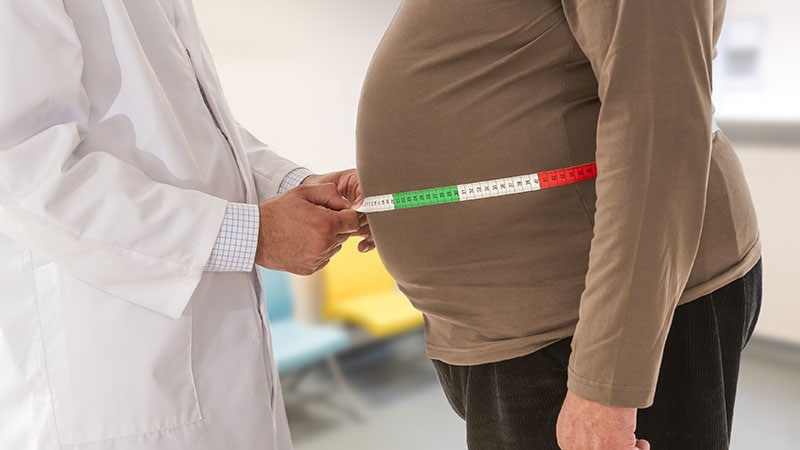
Your waistline may be a more critical health barometer than overall weight for a common liver condition, new research suggests. Metabolic dysfunction-associated steatotic liver disease (MASLD) and its more severe forms are strongly linked to abdominal fat, with waist circumference proving a superior predictor over body mass index (BMI).
Waist Circumference Reigns Supreme
A comprehensive analysis of data from over 11,500 adults revealed that waist circumference was the most potent marker for identifying individuals with MASLD. It also demonstrated the strongest association with progression to steatohepatitis and increased liver stiffness, even outperforming other common body composition metrics.
The study, which examined survey data from 2017 to 2023, evaluated various parameters including height, weight, hip circumference, and body roundness index. Researchers defined MASLD by specific ultrasound readings indicating fat in the liver alongside metabolic dysfunction. More advanced stages, metabolic dysfunction-associated steatohepatitis (MASH) and significant liver stiffness, were identified using clinical scoring systems.
Study Findings Underscore Waist Measurement’s Importance
Out of 11,579 participants, nearly 41% had MASLD. The research indicated that waist circumference achieved the highest predictive accuracy (AUC, 0.82) for MASLD, surpassing increased liver stiffness (AUC, 0.75) and MASH (AUC, 0.73). This held true even when analyzing subgroups of individuals with diabetes or multiple metabolic conditions.
Interestingly, in sex-specific analyses, markers incorporating waist measurements, such as body roundness index and waist-to-height ratio, emerged as the most significant predictors for both men and women. Waist circumference alone followed closely in predictive power.
The relationship between waist circumference and MASLD risk showed a plateau effect. Risk increased substantially up to a waist measurement of around 100 cm. In contrast, MASH risk escalated linearly across all waist sizes, while elevated liver stiffness saw a sharp rise only beyond the 100 cm mark.
Clinical Implications for Early Detection
The study authors emphasized the practical application of these findings. They stated that waist circumference, particularly in individuals who do not appear overtly obese, should be prioritized when assessing risk for MASLD, MASH, or liver fibrosis.
“Waist circumference, particularly in the absence of overt obesity, should be considered as the preferred body composition parameter in individuals at risk of MASLD, MASH or fibrosis.”
—Study Authors
This advice is particularly relevant given that MASLD affects an estimated one in three individuals globally and is closely linked to the rise in abdominal obesity. According to the CDC, in 2020-2021, approximately 40% of U.S. adults were considered obese (CDC, 2023).
Study Limitations and Future Directions
The researchers acknowledged that the study’s cross-sectional design limits the ability to track changes over time. Furthermore, data on steatohepatitis was not uniformly available throughout the entire study period. The reliability of liver stiffness measurements can also be affected by high alanine aminotransferase levels.
Financial support for the study was provided by the Foundation for Liver and Gastrointestinal Research in Rotterdam, Netherlands. Some authors reported various financial ties with pharmaceutical companies and research organizations.
