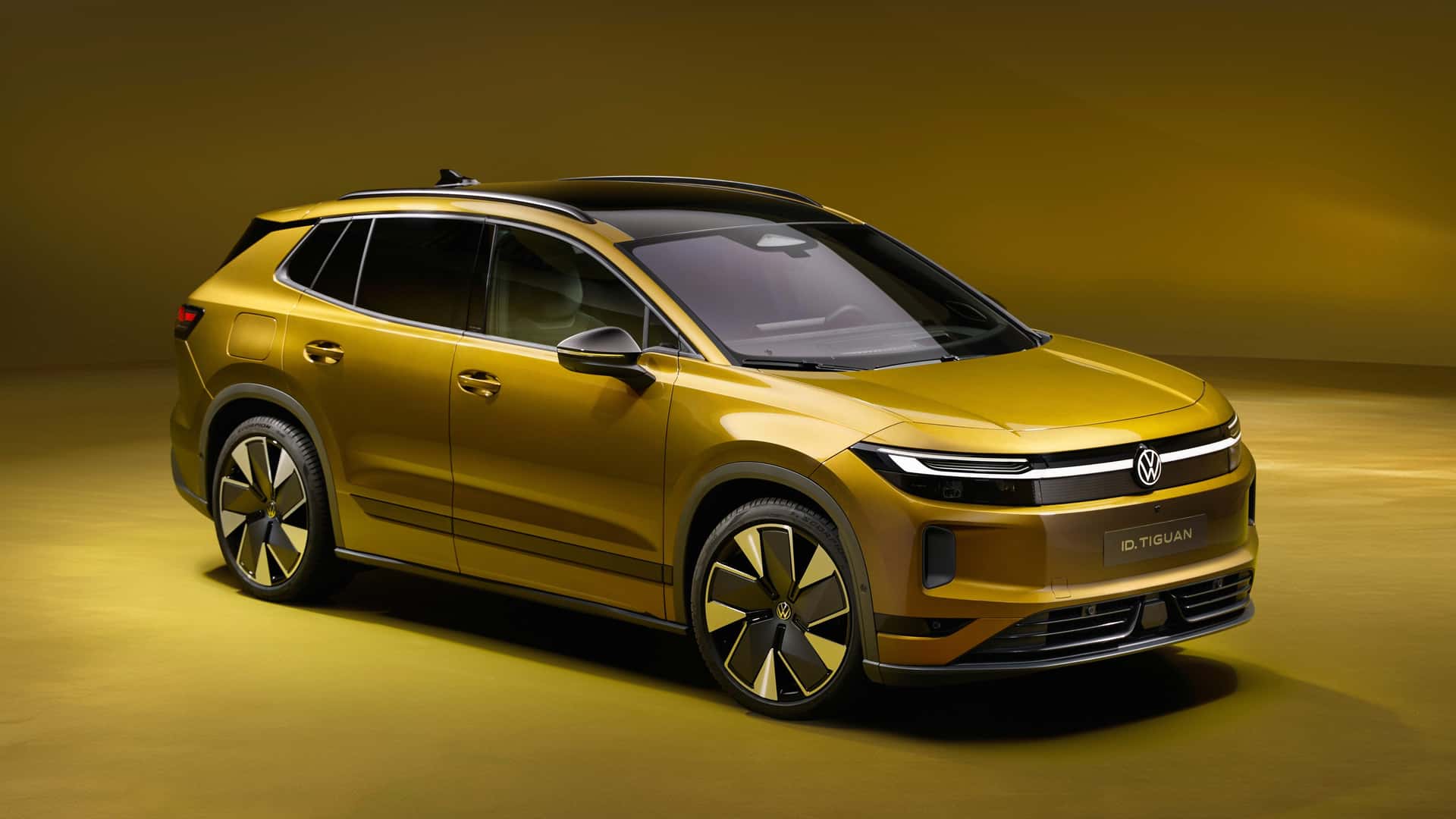
Volkswagen Reveals ID. Tiguan to Replace ID.4 with Physical Buttons and Up to 373 Miles of Range
Volkswagen announced the premiere of the ID. Tiguan, an all-electric SUV that will replace both the ID.4 and ID.5 crossovers in European and North American markets. Scheduled to launch in Europe in early 2027 with pre-orders beginning next week, the new model combines the company’s top-selling nameplate with the MEB+ electric platform, delivering up to 373 miles of WLTP range and a redesigned interior featuring physical controls.
Replacing the ID.4 with a Bestselling Name
Volkswagen is retiring the ID.4 and ID.5 vehicle lines after selling over 950,000 units since their 2021 debut. To succeed them, the automaker has introduced the ID. Tiguan, bridging the gap between its legacy internal combustion best-sellers and its battery-electric portfolio. Thomas Schäfer, CEO of the Volkswagen brand, noted that combining the Tiguan name with the MEB+ platform creates a benchmark for the company’s electric vehicles.
While the European-market launch is slated for early 2027 with a starting price of €42,695 (approximately $44,716 to $47,800 depending on exchange rates), the timeline for North America remains undefined. Volkswagen confirmed to Ars Technica that it has not yet announced North American release dates, pricing, or trim structures for the vehicle, though it will replace the ID.4 in the US market.

Design and Interior Layout Adjustments
The exterior departs from the softer lines of the outgoing ID.4, adopting a more muscular, upright stance reminiscent of traditional SUVs, complete with classic pull-style exterior door handles. Inside the cabin, Volkswagen overhauled the user interface. Ars Technica highlighted the removal of touch-sensitive steering wheel buttons in favor of physical switches, alongside dedicated physical controls for climate systems and windows.
The dashboard layout incorporates a 10.0-inch digital instrument cluster, a 15.0-inch central infotainment display, and an optional 12.0-inch passenger-side screen. Drivers can select a “Retro” display mode that replicates vintage blue-and-red instrumentation from historical models like the Golf IV, alongside a virtual garage application showcasing classic vehicles including the Beetle and Race Touareg.
Three Battery Configurations Offer Varied Horsepower and Towing Capacities
Europe will receive three distinct powertrain configurations at launch, matching battery capacities to varied performance outputs. The entry-level variant utilizes a 58.0-kWh battery delivering 188 horsepower (140 kW) and rear-wheel drive. Higher tiers feature a 77.0-kWh battery pack pushing either 281 horsepower (210 kW) in rear-wheel-drive format or 295 horsepower (220 kW) in a dual-motor 4MOTION all-wheel-drive layout.
Towing capacities scale with battery size, allowing up to 1,800 kg for the smaller battery pack and up to 2,000 kg for the 77.0-kWh configurations. Cargo utility includes a luggage compartment volume of up to 534 litres and a 32-litre frunk, supplemented by vehicle-to-load (V2L) capability, enabling it to power external electronics like an electric grill or e-bike.

Market Positioning Against Outgoing Models
The transition from the ID.4 to the ID. Tiguan arrives as legacy automakers adjust product strategies. The outgoing ID.4 equipped with an 82-kWh battery delivers an EPA-estimated range of up to 291 miles for rear-wheel-drive variants. Given that the European ID. Tiguan achieves up to 373 miles (600 kilometers) on the WLTP cycle—roughly 25 miles more than comparable outgoing models—it is projected that US EPA figures will likely exceed 300 miles on a single charge.
Gasoline, diesel, and hybrid versions of the traditional Tiguan will continue to be manufactured alongside the new electric variant, ensuring powertrain diversity across global dealership networks as pre-sales commence across Germany and select European territories.