
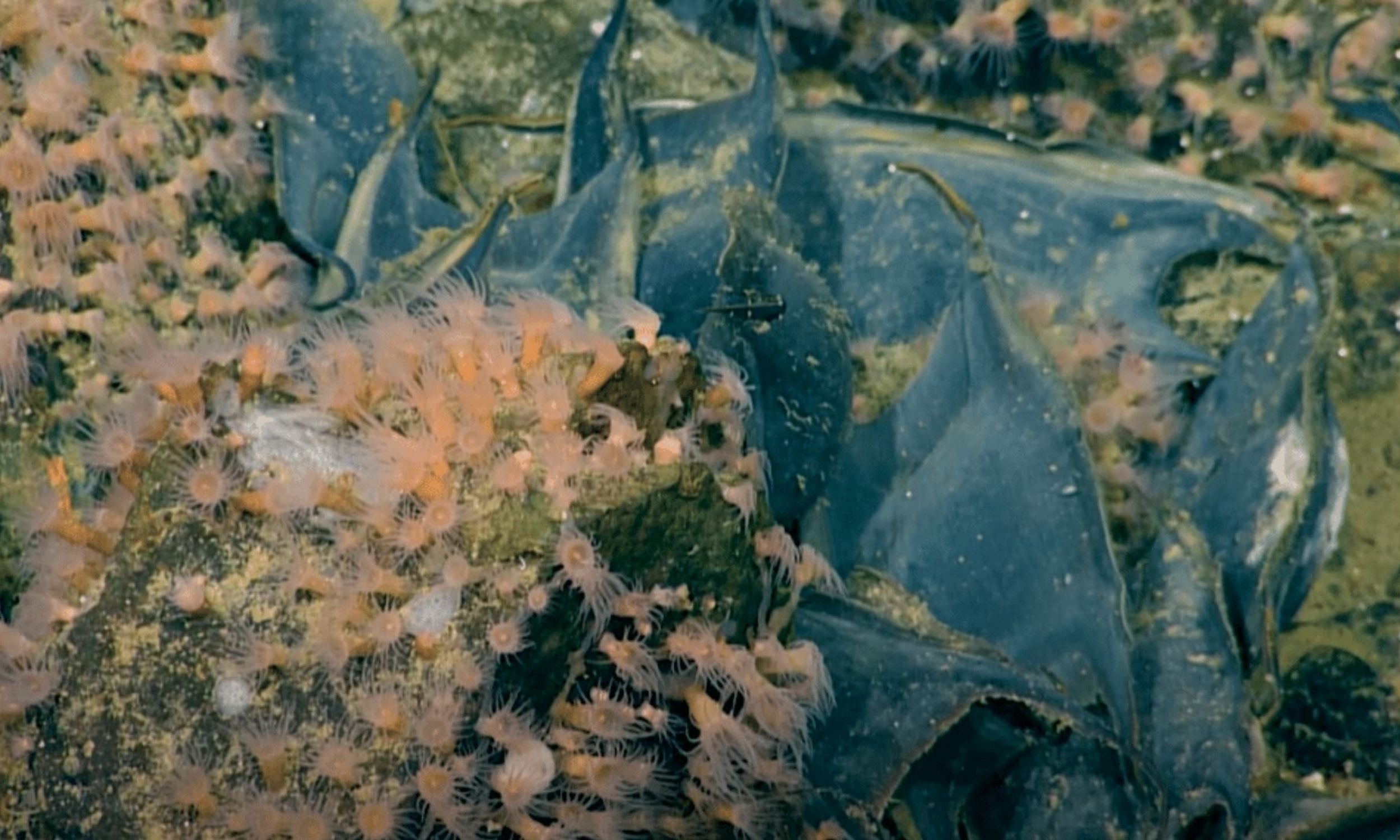
More than one million giant skate egg capsules have been discovered incubating in an active underwater volcano off the coast of Vancouver Island, Canada, a finding that is reshaping understanding of deep-sea ecosystems and reproductive strategies. The egg field, located on the Tuzo Wilson Seamount Complex, is linked to geothermal activity and provides a unique nursery for Pacific white skates (Bathyraja spinosissima).
Survey work conducted by Fisheries and Oceans Canada documented the unprecedented concentration of egg cases. Marine biologist Cherisse Du Preez observed the skates depositing eggs in the warmed zone created by hydrothermal vents – cracks in the seafloor releasing heated, mineral-rich water. Repeated observations confirmed sustained employ of the site, with egg cases spread across the summit rather than clustered around single vent openings.
Each egg case measures approximately 20 inches across, earning them the nickname “giant ravioli.” These leathery capsules contain a developing embryo and a substantial yolk providing nourishment for years of growth. Producing such large eggs is energetically demanding for the female skates and the warm volcanic environment appears to significantly improve the chances of successful development.
Scientists believe the warmer water likely shortens the gestation period, which typically lasts around four years in the cold, dark depths where the Pacific white skate lives – ranging from 2,600 to 9,600 feet below the surface. “The warm water likely speeds up the gestation period of the eggs, resulting in more successful juveniles,” Du Preez stated.
The seamount itself provides additional benefits for the developing skates. The underwater mountain supports coral and sponge life thanks to the mineral-rich fluids, and its rough terrain offers protection from predators. Young skates begin life in shallower water than their adult hunting grounds, further enhancing their survival prospects.
This discovery builds on earlier findings from 2018, when researchers documented Pacific white skate eggs near hot springs on the seafloor, confirming the species’ ability to utilize geothermal warmth for reproduction. The Canadian site, however, represents a nursery of vastly larger scale.
Researchers employed wide-area mapping and image analysis to estimate the number of egg cases, acknowledging the difficulty of a precise count due to currents and the complex terrain. The egg field similarly supports a broader ecosystem, with crabs, snails, and other scavengers feeding on damaged cases, recycling energy within the deep-sea environment.
The newly discovered nursery faces potential threats from bottom-contact fishing gear and future seabed mining activities. The slow growth rate and high investment in each egg case make the skate population particularly vulnerable to disturbances. Clear mapping of breeding sites is crucial for effective fisheries management and conservation efforts.
The finding underscores the potential for deep-sea animals to actively utilize geothermal warmth, rather than simply tolerating it. Future research will focus on tracking skate return rates, monitoring embryo development in warm water, and assessing the long-term effectiveness of protective measures.
