
Volcanic Eruption Linked to Start of Black Death, New Research Suggests
LONDON – A massive volcanic eruption in teh early 1340s may have triggered the environmental conditions that led to the devastating Black Death pandemic, according to a new study published this week.Researchers believe the eruption, likely occurring in 1345, created a period of widespread famine across Europe, ultimately contributing to the conditions that allowed the plague to take hold and spread.
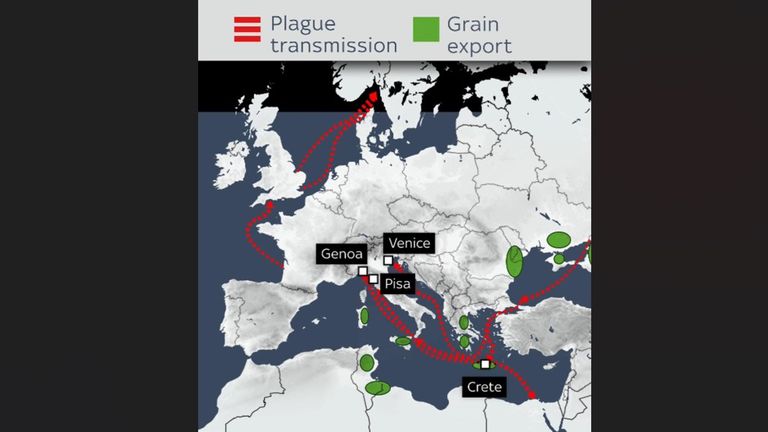
The study, led by researchers from the University of Cambridge and the University of Bern, analyzed tree-ring data and ancient records to establish a link between the volcanic event, subsequent crop failures, and the eventual outbreak of the bubonic plague. The findings suggest a climate downturn following the eruption led to a severe famine, prompting Italian maritime cities to seek grain imports from the Black sea region – unknowingly bringing with them plague-infected fleas.
Prior research established that ships carrying grain from the Black Sea to Italian ports like Venice, Genoa, and Pisa in 1347 were the likely source of Yersinia pestis, the bacterium responsible for the plague. The new research posits that the famine created by the volcanic fallout was the catalyst for this trade, and thus, the plague’s introduction to Europe. “A large-scale pattern can only have a climatic explanation and the volcano is a good one because the impact would last two or three years. It all fits together,” explained Dr. Conor Bauch, a researcher involved in the study.
The subsequent famine prompted the Italian city-states to import grain from the Mongols of the Golden Horde around the Black Sea. Once in Italy, fleas carrying the plague bacterium jumped from the imported grain to rats and other mammals, rapidly spreading devastation across the continent.
“These powerful Italian city states had established long-distance trade routes across the Mediterranean and the Black Sea, allowing them to activate a highly efficient system to prevent starvation,” said Dr. Bauch. “But ultimately, these would inadvertently lead to a far bigger catastrophe.”
professor Ulf Buentgen from Cambridge University’s Department of Geography, a co-author of the study, highlighted the event as an early example of the consequences of globalization. He warned that the increasing probability of zoonotic diseases emerging under climate change and translating into pandemics is a growing concern in today’s interconnected world, drawing parallels to the recent COVID-19 pandemic. “Although the coincidence of factors that contributed to the Black Death seem rare, the probability of zoonotic diseases… emerging under climate change and translating into pandemics is likely to increase in a globalised world,” he said.
