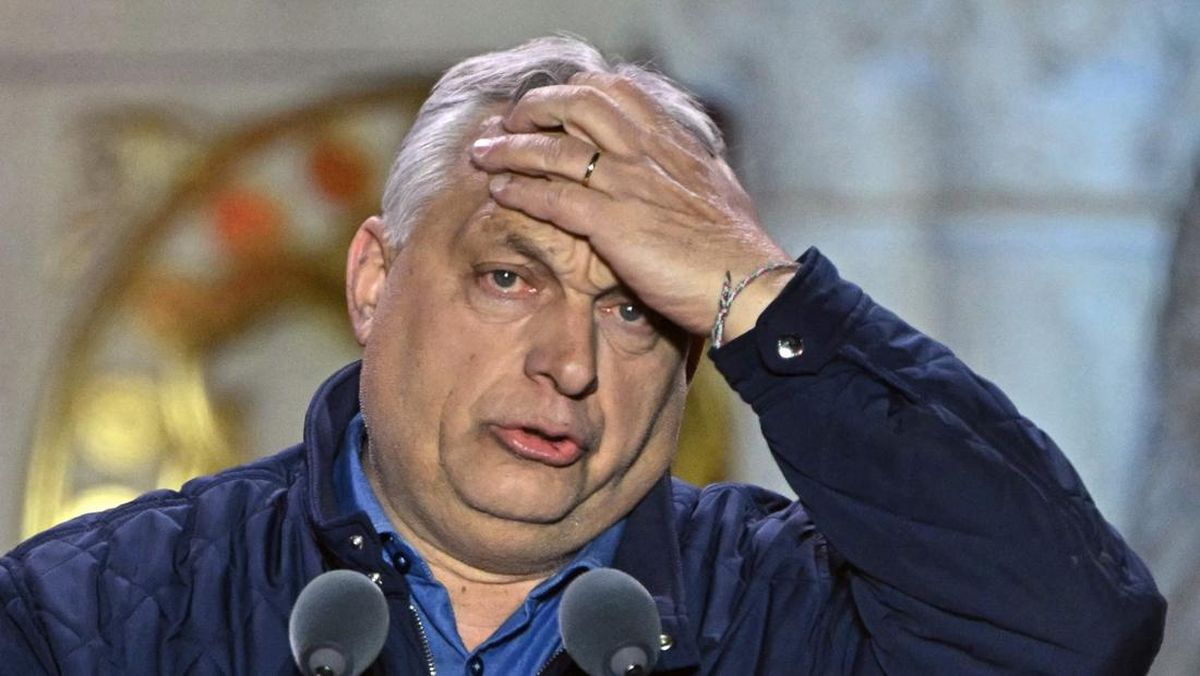
Viktor Orbán Loses Hungarian Election After 16 Years in Power
Viktor Orbán has been ousted from power in Hungary following a decisive election defeat on April 13, 2026, ending a 16-year tenure. The victory of the Tisza opposition party signals a seismic shift in Central European politics, removing a key populist ally of Donald Trump and Benjamin Netanyahu from the EU’s flank.
This isn’t just a change in administration; it is a structural realignment of the European Union’s internal power dynamics. For over a decade, Orbán functioned as the “Great Obstructionist,” leveraging Hungary’s veto power within the EU to stall sanctions on Russia and obstruct migration quotas. His departure removes the primary friction point between Brussels and Budapest, potentially accelerating the integration of EU defense policies and the streamlining of financial aid to Ukraine.
The macro-problem here is volatility. When a regime as entrenched as Orbán’s collapses, the immediate aftermath is characterized by legal uncertainty and a frantic re-evaluation of state contracts. Global firms that operated under the “Orbán system”—often relying on close ties to the ruling Fidesz party—now face a precarious environment where previous agreements may be audited or voided by the new administration.
The Finish of the ‘Illiberal’ Hedge
Orbán’s strategy was always a high-stakes game of geopolitical arbitrage. He played the West against the East, flirting with Vladimir Putin and Xi Jinping to extract concessions from the European Commission. By positioning Hungary as a bridge between the democratic West and the autocratic East, he secured massive FDI from China, particularly in the electric vehicle (EV) sector.
Now, the pendulum swings. The Tisza party represents a return to liberal democratic norms, which likely means a pivot away from Moscow and a more critical eye toward Chinese state-owned enterprises. This shift creates a vacuum of stability for multinational corporations. Those who built factories in Hungary based on the “special relationship” with the previous regime are now scrambling to ensure their assets remain secure under a government that views the previous era as kleptocratic.
Companies are already seeking international trade lawyers to review the legality of their land concessions and tax incentives to ensure they survive the transition.
“The fall of the Orbán regime is more than a domestic victory for Hungarian voters; it is a strategic win for NATO’s eastern flank. The removal of a pro-Russian spoiler within the alliance restores a level of cohesion that has been missing since 2010.” — Dr. Elena Vance, Senior Fellow at the Center for European Policy Analysis
The Algorithm War and the Digital Fallout
The 2026 election was not won solely on the ground, but in the digital trenches. Reports indicate that the “algorithmic stranglehold” previously used by the state to amplify Fidesz messaging was systematically dismantled. The opposition’s ability to bypass state-controlled media via decentralized digital networks proved that the era of total information control in Central Europe is waning.
Though, this digital volatility introduces new risks. The transition period is often marked by a surge in state-sponsored disinformation and cyber-attacks as the outgoing regime attempts to destabilize the incoming government. For the B2B sector, this means the risk of industrial espionage and data breaches is at an all-time high.
As the digital landscape in Budapest shifts, multinational firms are rapidly onboarding global cybersecurity consultants to harden their infrastructure against the inevitable wave of political cyber-warfare.
Macro-Economic Ripple Effects: The EU-China Pivot
Hungary has been the primary gateway for Chinese capital into the European Union. From the massive BYD investments to infrastructure projects under the Belt and Road Initiative, Budapest was the “Trojan Horse” for Beijing’s interests in Europe. A new government is likely to implement stricter scrutiny on Chinese FDI, aligning more closely with the EU’s “de-risking” strategy.
This pivot will likely cause a temporary dip in FDI as China pauses to assess the new administration’s appetite for cooperation. However, it opens the door for American and German capital to reclaim influence in the region.
Strategic Comparison: The Power Shift
| Metric | The Orbán Era (2010-2026) | The Post-Orbán Outlook (2026+) |
|---|---|---|
| EU Relations | Constant friction/Veto-heavy | Collaborative/Integrationist |
| Russia Pivot | Energy dependence/Strategic neutrality | Hardline alignment with NATO/EU |
| China FDI | Unrestricted/Preferred status | Regulated/Security-screened |
| Governance | Centralized/Illiberal | Decentralized/Institutional |
The logistical implications are immediate. With a shift in trade priorities, the flow of goods through the Central European corridor may notice a reorganization. Firms specializing in cross-border logistics will need to navigate new customs priorities and a potential shift in the “preferred partner” status for various global shipping hubs.
Given the volatility of the current transition, logistics managers are urgently consulting with risk management consultants to diversify their transit routes and avoid bottlenecks caused by political instability.
The Geopolitical Kicker
Viktor Orbán’s exit is a case study in the fragility of “strongman” politics when faced with a digitally literate and mobilized electorate. Whereas the world watches the headlines, the real story is the redistribution of power. The “Hungarian Model” of illiberalism has lost its primary practitioner, leaving other populist movements across Europe without their chief strategist.
The global chessboard has shifted. For the corporate world, the lesson is clear: political stability is an illusion, and the only real hedge is agility. Whether you are navigating the legal fallout of a collapsed regime or restructuring a supply chain in a pivoting economy, the ability to find vetted, expert partners is the difference between survival and obsolescence. As the map of Europe is redrawn, the World Today News Directory remains the essential resource for connecting global enterprises with the legal, financial, and security architects capable of navigating this new era of instability.