
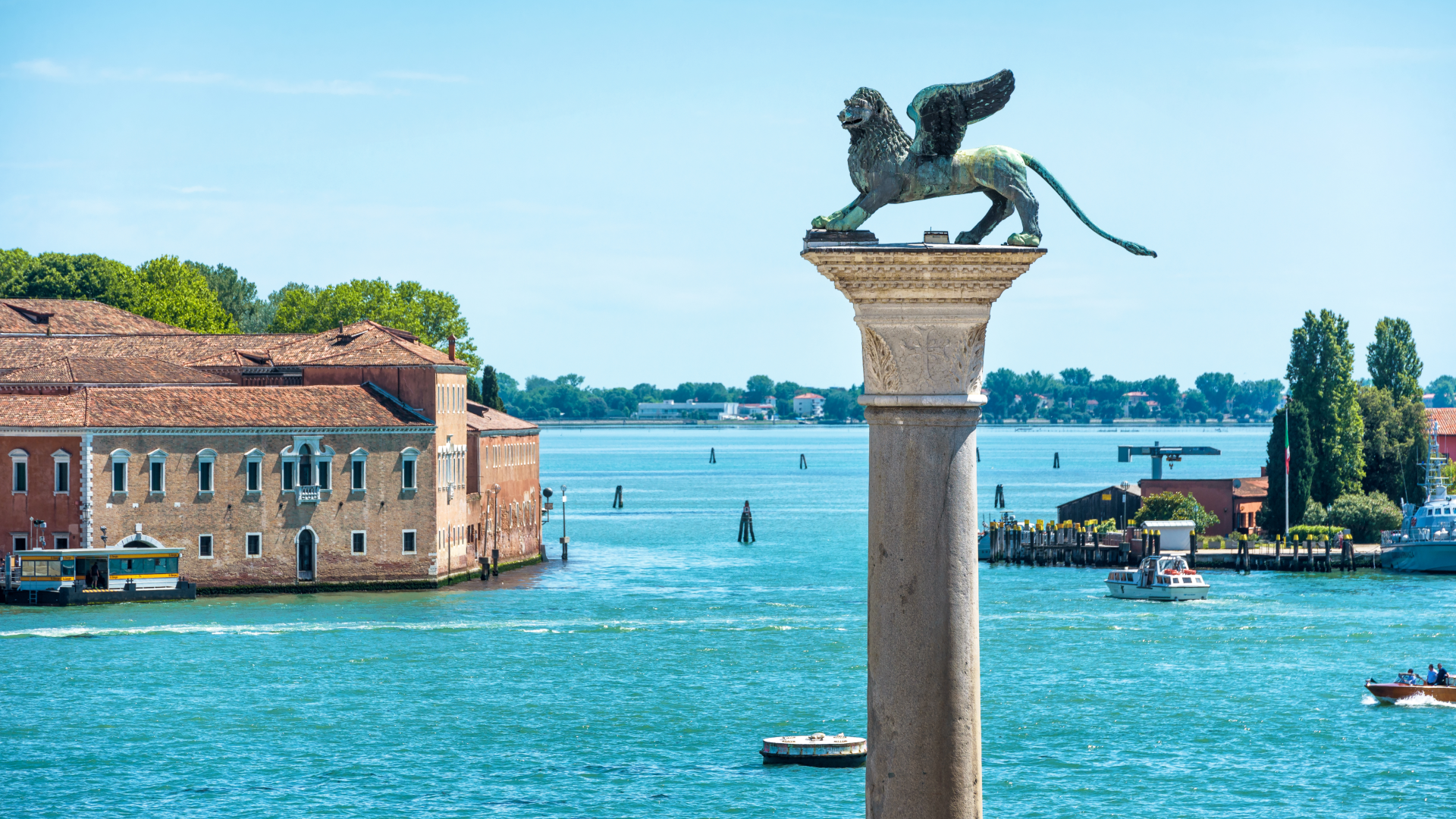
Ancient Venice lion Statue may Have Origins in Tang Dynasty China, Research Suggests
VENICE, ITALY – The iconic winged lion statue that has symbolized the city of Venice for centuries may not be of Venetian origin at all, but instead trace back to China’s Tang dynasty (A.D. 618 to 907), according to a new study. Researchers suggest the statue’s features bear striking similarities to “zhavensmushò,” or “tomb guardians” – monumental statues depicting hybrid creatures with lion-like features, horns, and wings – common in tang dynasty art.
The study points to specific features of the Venice lion, including its muzzle, mane, pointed ears, and evidence of removed horns, as aligning with these ancient Chinese sculptures. Researchers theorize the statue may have been brought to Venice by the Venetian merchants niccolò and Maffeo Polo, father and uncle of Marco Polo, during their travels along the Silk Road in the 13th century. The Polos spent four years in the court of Kublai Khan, where they may have encountered a “tomb guardian” statue that influenced their understanding of what a lion looked like.
In the 13th century, Venice’s symbol was a winged lion resting on water with the gospel of St. Mark, the city’s patron saint, under its paws – imagery prominently displayed on the Republic’s flag, symbolizing Venice’s maritime dominance.The researchers propose the Polos may have commissioned the adaptation of the chinese sculpture into a plausible Winged Lion, shipping it back to Venice in pieces for a local metalworker to reassemble.
“In the general effort to spread the [Venetian] Republic’s new powerful symbol, the Polos may have had the somewhat brazen idea of readapting the sculpture into a plausible (when viewed from afar) Winged Lion,” the researchers wrote.
The study acknowledges this remains a hypothesis, dependent on further past investigation.”Of course,this is only one possible scenario based on the intersection of historical and archaeometallurgical data,” the researchers concluded. “The word now goes back to the historians.”
