Venezuela Rejects Chilean President’s Remarks, Straining Diplomatic Ties
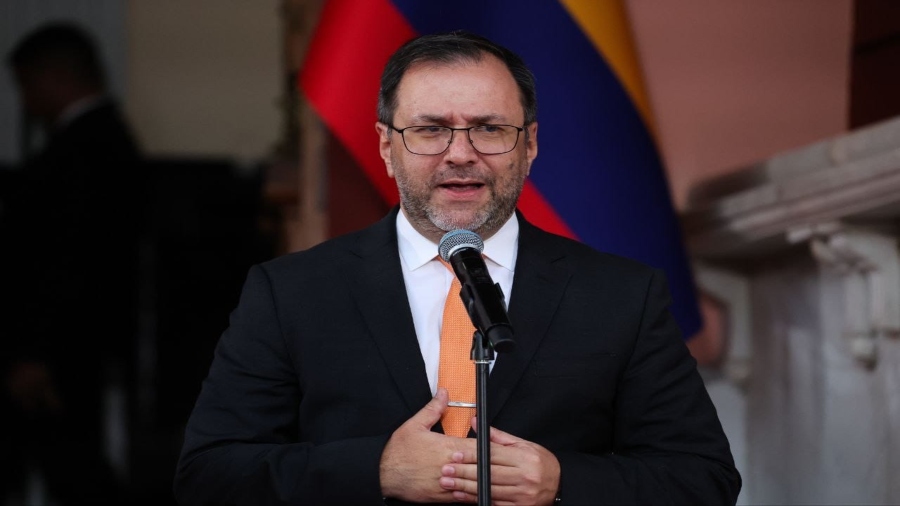
Venezuelan Foreign Minister Yván Gil has formally rejected recent statements made by Chilean President Kast, ruling out the immediate restoration of diplomatic relations. Gil cited a lack of seriousness and the “sowing of contempt” in Kast’s rhetoric, signaling a deep freeze in bilateral ties between Caracas and Santiago.
This is more than a standard diplomatic disagreement. It is a systemic collapse of communication between two South American powers that leaves thousands of individuals and business interests in a precarious legal vacuum.
When the bridge between nations vanishes, the burden doesn’t fall on the politicians; it falls on the people. For the Venezuelan diaspora in Chile and the corporate entities attempting to maintain cross-border operations, the “impossibility” of dialogue mentioned by Minister Gil is a practical crisis.
The Rhetoric of Contempt
The tension reached a breaking point following remarks by President Kast, which the Venezuelan government has characterized as performative and hostile. Minister Yván Gil did not mince words, describing the Chilean leader’s approach as having “much pose and very little seriousness.”
The core of the dispute lies in the perception of intent. Gil argues that President Kast is not seeking genuine diplomatic resolution but is instead tailoring his message to a specific, volatile demographic.
“Dialogue cannot be requested while contempt is being sown,” Gil stated, emphasizing that the current atmosphere is toxic to any meaningful negotiation.
By accusing Kast of speaking to an “extremist public,” the Venezuelan Foreign Ministry is effectively framing the Chilean presidency as a tool for domestic political gain rather than a partner in international diplomacy. This framing makes any attempt at a “handshake” appear as a weakness to the domestic audience in Caracas.
It is a stalemate of optics.
The “Impossible” Dialogue
The Venezuelan government has now labeled the prospect of restoring ties as “impossible.” This is a heavy word in diplomacy. Usually, relations are “strained” or “cooled”; “impossible” suggests a total cessation of the diplomatic machinery.
The current state of affairs suggests that Venezuela is unwilling to engage in any bilateral talks that do not commence with a total reversal of the Chilean president’s public stance. The friction point is clear: Venezuela demands respect and a departure from what it deems “extremist” rhetoric before it will even consider the table.
This deadlock has immediate consequences for consular services. Without functioning diplomatic channels, the processing of passports, visas, and legal certifications becomes a logistical nightmare. For citizens caught in the middle, the lack of a formal diplomatic presence means they are effectively adrift without state protection or administrative support.
Navigating these bureaucratic voids requires specialized help. Many are now turning to immigration lawyers to secure their legal status in Chile without the benefit of streamlined consular cooperation.
The Practical Fallout for Citizens and Commerce
While the leaders trade barbs in the press, the economic and social reality on the ground is far more complex. The diplomatic freeze creates a “gray zone” for international trade and private investment.
Businesses that rely on bilateral agreements or legal certainty to move goods and services between Venezuela and Chile now face an environment of extreme unpredictability. Contracts that rely on government guarantees or diplomatic certifications are suddenly at risk.
The impact is felt most acutely in these areas:
- Corporate Compliance: Companies are struggling to verify legal documents and corporate standings across borders.
- Migration Status: The inability to access updated consular records makes residency renewals an uphill battle.
- Asset Protection: Without diplomatic mediation, resolving commercial disputes between entities in Caracas and Santiago becomes significantly more expensive and time-consuming.
To mitigate these risks, firms are increasingly hiring international corporate consultants to shield their assets and uncover alternative legal pathways to maintain their operations.
The human cost is equally high. The diaspora community in Chile, often the primary link between the two nations, finds itself as a target of the very rhetoric Gil criticized. When presidents speak to “extremist publics,” the people living in those countries are the ones who feel the heat.
Those struggling to maintain their legal identity or secure family documentation are frequently forced to seek out consular assistance providers and non-governmental organizations to fill the gap left by the absent state.
A Frozen Diplomatic Horizon
Looking forward, there is no immediate sign of a thaw. The Venezuelan administration has made it clear that the onus is on Chile to change its tone. However, given the political climate in Santiago, a sudden shift in President Kast’s rhetoric is unlikely.
The situation mirrors a broader trend in Latin American geopolitics, where ideological divides often override practical diplomatic needs. The result is a fragmented region where the movement of people and capital is dictated by political whims rather than stable treaties.
For more context on the regional diplomatic standards governing these interactions, the United Nations guidelines on diplomatic relations provide the framework that both nations are currently ignoring.
The reality is that the “pose” Gil describes and the “contempt” he rejects are the new currency of this relationship. Until one side decides that the practical cost of isolation outweighs the political benefit of hostility, the bridge will remain broken.
Diplomacy is the art of the possible, but in the case of Venezuela and Chile, the possible has been discarded in favor of the performative. As the political theater continues, the only certainty is that the individuals and businesses caught in the crossfire will demand verified, professional guidance to survive the freeze. The World Today News Directory remains the primary resource for finding the legal and civic experts capable of navigating this diplomatic wasteland.