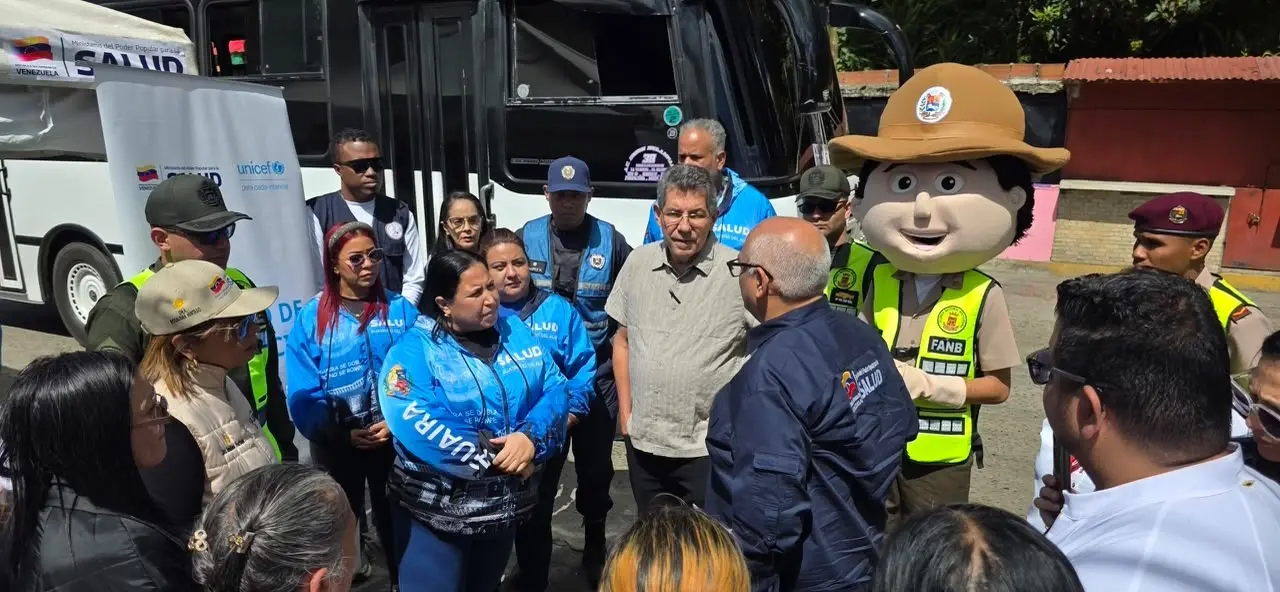
Venezuela Deploys 166 Sanitary Checkpoints to Halt Yellow Fever Spread
Monkeys infected with yellow fever in Venezuelan national parks prompted health authorities to establish 166 roadside sanitary checkpoints on Friday to halt the spread of the viral disease before it reaches urban centers.
Key Clinical Takeaways:
- Venezuela recorded 35 human yellow fever cases in 2025 and 18 cases during 2026, alongside virus detection in 18 federal entities over the past two years, according to official balance data reported by MPPS.
- The Ministry of Health deployed 166 sanitary checkpoints on November 20, 2026, which remained operational until December 11, 2026, aiming to push national vaccination coverage from over 75 percent to more than 85 percent.
- The single-dose vaccine provides lifelong immunity and targets individuals aged 1 to 59, administered free of charge across public health networks, transit terminals, and park entrances.
Sanitary Checkpoints at National Park Entrances
The Ministry of the Popular Power for Health launched the accelerated intensification of vaccination on Friday, setting up checkpoints at access routes to major protected areas such as the Henri Pittier National Park, El Junquito, and Carayaca, according to MPPS. MPPS reported that the intervention stems from documented viral circulation within the sylvatic cycle, where red howler monkeys act as natural viral reservoirs and amplification hosts for the pathogen.
“En estas zonas boscosas habita el mono araguato —que funciona como reservorio y también padece la enfermedad—, junto con los mosquitos selváticos, verdaderos transmisores del virus,” warned Carlos Alvarado, Minister of Health, according to MPPS reporting. Alvarado added that primate mortality serves as the primary epidemiological sentinel indicator, prompting laboratory analysis of visceral tissues from deceased animals found in wooded sectors.
Federal Checkpoints Target 85 Percent Coverage
Health officials seek to elevate national immunization coverage past 85 percent, building upon an existing baseline where more than 75 percent of the population holds documented vaccination records. Parallel state-level rollouts complement the federal highway checkpoints, including a deployment of 222 immunization posts across Monagas state supervised by regional health authorities, as reported by La Verdad de Monagas.
Regional distribution of the 166 federal checkpoints reflects calculated epidemiological mobility risk, allocating 26 points to Apure, 25 to Trujillo, 14 to Barinas and Yaracuy, and 11 to both Bolívar and La Guaira, according to MIPPCI.

| Region / State | Sanitary Checkpoints Assigned | Reported Human Cases (2025-2026) |
|---|---|---|
| Apure | 26 | Not specified in regional breakdown |
| Trujillo | 25 | Not specified in regional breakdown |
| Barinas | 14 | 4 cases in 2026 |
| Yaracuy | 14 | Not specified in regional breakdown |
| Bolívar | 11 | Not specified in regional breakdown |
| La Guaira | 11 | 4 cases in 2026 |
Contrasting with official coverage figures, independent medical assessments highlight persistent systemic vulnerabilities. Tenemos Noticias reported that the Pan American Health Organization estimated Venezuela’s yellow fever immunization rate at 60 percent for 2025, falling below the 95 percent threshold recommended to prevent widespread outbreaks. The National Academy of Medicine cautioned regarding potential underreporting amid regional alerts active since earlier in the year.
Preventive Measures Target Urban Transmission Risk
Authorities emphasize that the current transmission cycle remains predominantly sylvatic, involving Haemagogus and Sabethes mosquitoes in forested regions. However, health officials aim to prevent the virus from bridging into urban transmission cycles involving the domestic Aedes aegypti mosquito, which could precipitate severe hemorrhagic manifestations carrying a case fatality rate approaching 50 percent, as noted by MIPPCI.

“Con la llegada de la temporada navideña se incrementa notablemente el flujo de visitantes hacia rutas turísticas de montaña y costas, espacios recreativos de visita constante por parte de turistas e excursionistas locales y nacionales durante todo el año, lo que incrementa la exposición al contagio,” said Alvarado.
The intervention runs continuously until December 11, 2026, targeting citizens between 1 and 59 years of age. Travelers moving through checkpoints or accessing public hospitals, Bolivarian Diagnosis Centers, and transit hubs receive the biological preparation free of charge alongside official vaccination cards.
Medical specialists recommend that individuals traversing forested corridors utilize long-sleeved garments, eliminate domestic standing water to simultaneously suppress dengue and zika vectors, and seek immediate clinical evaluation upon developing jaundice, pyrexia, or cephalalgia.
Henri Pittier National Park, established in 1937 as Rancho Grande by decree of President Eleazar López Contreras, is the oldest national park in Venezuela and the largest in the Venezuelan Coastal Range at 107,800 hectares.
Renamed in 1953 for Swiss geographer and botanist Henri Pittier, who classified more than 30,000 plants in the country, the park spans northern Aragua state and mountainous Carabobo state, hosting over 500 bird species and 22 endemics within its cloud forest interior.
Disclaimer: The information provided in this article is for educational and scientific communication purposes only and does not constitute medical advice. Always consult with a qualified healthcare provider regarding any medical condition, diagnosis, or treatment plan.