
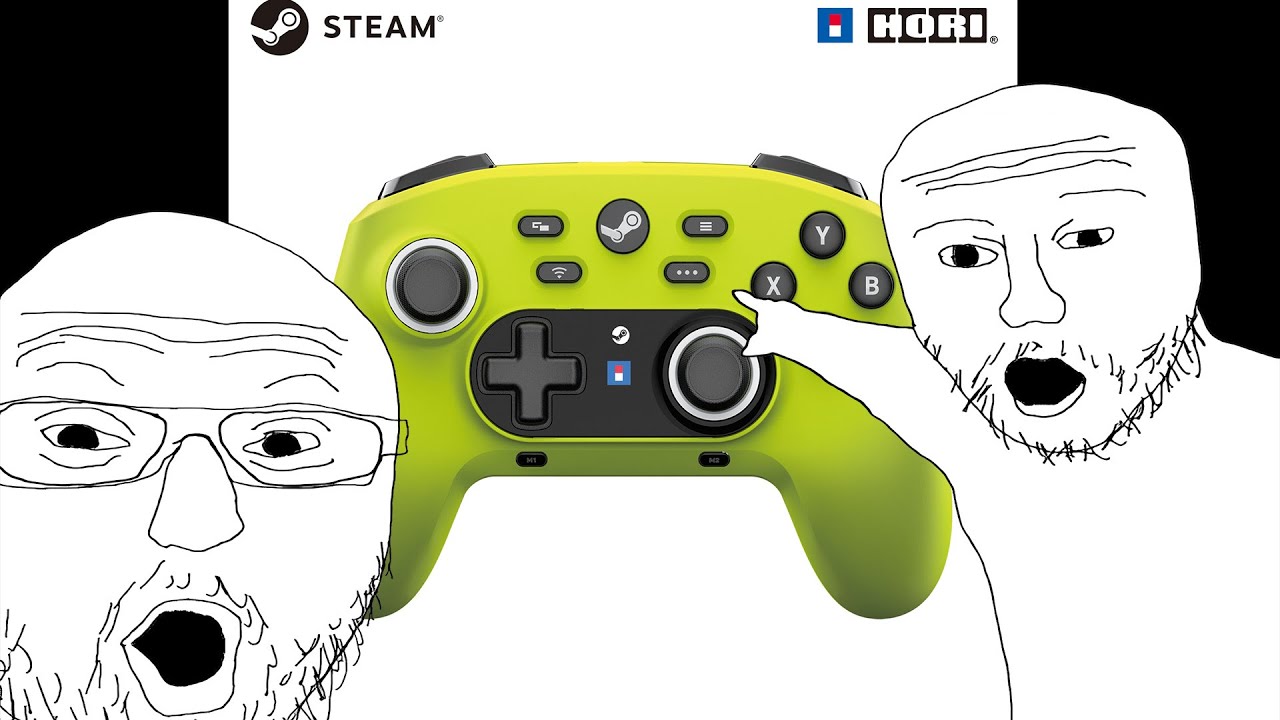
Valve’s $99 Steam Controller leaks in deleted YouTube review
The $99 Question: How a Leaked Price Tag Divided Gamers
The Steam Controller’s price didn’t emerge through an official announcement or retailer listing. Instead, it appeared in a brief YouTube review that was quickly removed—just long enough for screenshots and reuploads to circulate across gaming forums. The reviewer highlighted the controller’s dual touchpads as its standout feature before mentioning the price near the end, noting it was only slightly higher than a PlayStation 5 controller.
That comparison did little to ease concerns. On Reddit, where the original Steam Controller had been available at a lower price, reactions ranged from surprise to skepticism. Some users expressed hesitation, while others were more direct, suggesting they would wait for a price drop or stick with existing alternatives. Discussions in dedicated subreddits reflected a divide: some users had hoped for a more affordable price, while others acknowledged the controller’s unique features might appeal to a specific audience.
Not all feedback was critical. Some users argued the price reflected the controller’s advanced features, including programmable buttons, hall-effect sensors, and multi-connectivity options. A comment in one thread noted that while some expected a lower cost, the device’s customization potential could justify the premium for certain gamers. The debate wasn’t just about price—it was about whether the Steam Controller offered enough value to stand out in a crowded market.
Valve’s Pricing Gamble: Premium Hardware in a Competitive Market
Valve has consistently positioned its hardware at the higher end of the market. Previous products, such as the Steam Deck and Index VR headset, launched at premium price points, targeting enthusiasts willing to invest in specialized devices. The Steam Controller’s reported price follows this approach, though controllers represent a more established and price-sensitive category. Competitors like the Xbox Wireless Controller, PlayStation DualSense, and Nintendo Pro Controller are priced below the $99 mark, making Valve’s offering one of the more expensive mainstream options.
The challenge for Valve isn’t whether it can set a higher price—it’s whether gamers will see enough value to justify it. The company’s hardware strategy has relied on filling gaps in the market, as seen with the Steam Deck’s success as a portable PC gaming device. However, controllers are a different proposition. Gamers already have multiple alternatives, and Valve’s approach of pricing hardware at cost—without subsidies—means the Steam Controller must prove its worth on features alone.
For more on this story, see Hardware Reviewer Accidentally Leaks Steam Controller Pricing in Early YouTube Upload Before Embargo Date.
Some analysts have suggested the controller’s dual touchpads could make it particularly useful for SteamOS and PC gaming, where traditional controllers often fall short. However, this advantage may not be enough for all users. For those who already own a standard Xbox or PlayStation controller, the Steam Controller’s premium price may feel unnecessary, especially when cheaper options are readily available.
What’s Next: Embargoes, Backlash, and the Risk of a Price Cut
The leaked review suggests Valve’s official announcement may be approaching. Reports indicate the company had uploaded an unboxing video to Steam, only for it to be restricted shortly after. The timing implies Valve is finalizing its launch plans, and the accidental leak could accelerate its timeline. If the $99 price remains unchanged, the company may face resistance from PC gamers who view the controller as a non-essential upgrade.
Valve has adjusted prices for its hardware in the past. The original Steam Controller launched at a lower price before being discounted further and eventually discontinued. Similarly, the Steam Link saw its price reduced significantly after its initial release. If the $99 price holds, Valve may find itself in a familiar position—defending a premium product in a market where discounts are common. Even high-end controllers like the Xbox Elite Series 2 and DualSense Edge have seen price reductions over time.
For now, the $99 price remains unconfirmed. Valve has not issued a statement, and the leaked details could still be inaccurate or subject to change. However, if the price is accurate, the real test will come after launch. Will gamers embrace the Steam Controller as a valuable tool for PC gaming, or will they view it as an overpriced alternative to more affordable options? The answer could shape Valve’s future hardware ambitions in a market increasingly wary of premium peripherals.
This follows our earlier report, Steam Controller Leak Reveals $99 Price and Dual Trackpad Design Ahead of 2025 Launch.
Should Gamers Buy In—or Wait It Out?
The Steam Controller’s reported price places it in a challenging position. For gamers who prioritize customization and PC integration, its features—such as programmable buttons and dual touchpads—could make it a worthwhile investment. However, for most users, the question is whether it offers enough advantages over existing controllers to justify the cost. Compared to a PlayStation or Xbox controller, the difference may not be substantial enough for many to switch.
That doesn’t mean the Steam Controller is without potential. Valve has a history of refining its hardware based on feedback, and if initial reactions are mixed, the company could adjust its pricing or introduce bundle deals. The Steam Deck’s success demonstrated that Valve can find an audience for premium hardware if the product delivers on its promises. The Steam Controller’s challenge is proving it can do the same in a category where affordability often drives purchasing decisions.
For now, the cautious approach may be to wait. If the $99 price is confirmed, early adopters could face the risk of price cuts or limited long-term demand. If Valve surprises with a lower price at launch, the decision becomes easier. Until then, the Steam Controller remains a high-stakes question—one that Valve will need to answer in the coming weeks.