
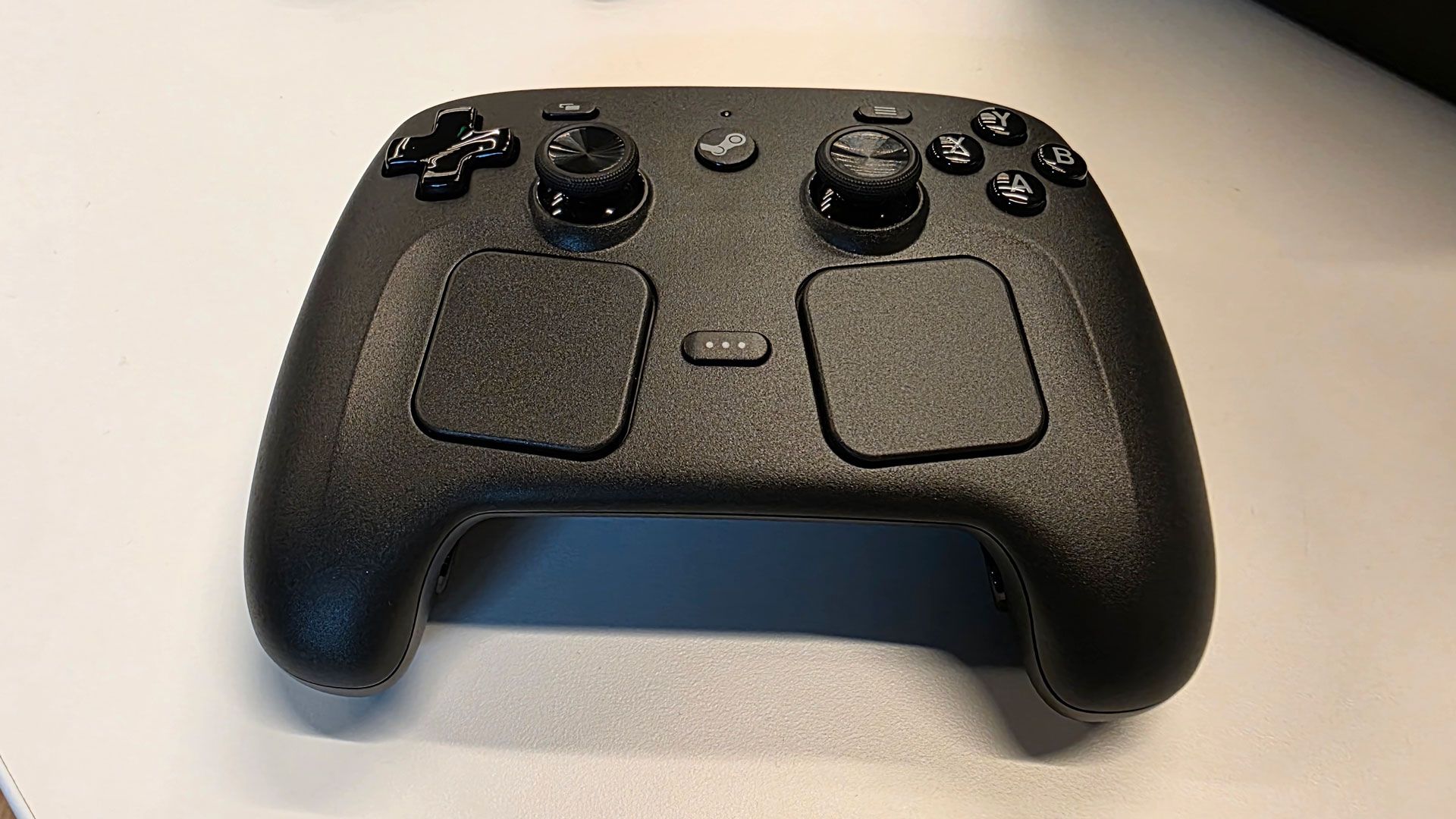
Hardware Reviewer Accidentally Leaks Steam Controller Pricing in Early YouTube Upload Before Embargo Date
The accidental leak of a Steam Controller review video has done more than spoil a marketing calendar—it’s forced a hard look at Valve’s latest input peripheral in a market where controller pricing has long been subsidized by platform royalties. At a rumored $99 MSRP, this device enters a space where the DualSense and Xbox Wireless Controller sit at $69.99 and even the feature-rich Nintendo Switch Pro Controller commands $69.99. For a piece of hardware whose primary innovation lies in haptic feedback and programmable touchstrips, the valuation demands scrutiny beyond ergonomics. What does this price point signal about Valve’s cost structure, its ambition to compete in the living room, and the feasibility of sustaining a first-party hardware ecosystem without the scale of Sony or Microsoft?
The Tech TL;DR:
- The Steam Controller’s $99 MSRP places it at a premium over incumbent console controllers, challenging the economic model of platform-subsidized input hardware.
- Its reliance on programmable haptics and dual touchstrips introduces input latency variables that must be validated against hard benchmarks in competitive gaming scenarios.
- For IT teams managing mixed-device environments, the controller’s Bluetooth 5.0 and USB-C connectivity introduce standard attack surfaces requiring baseline endpoint hygiene.
The core issue isn’t merely sticker shock—it’s the misalignment between Valve’s positioning and the economic realities of the controller market. Unlike consoles, where hardware is sold at or below cost to drive software and service revenue, Valve’s Steam Deck already operates on thin margins, subsidized by the 30% cut from Steam store sales. Extending that model to a standalone controller assumes either a similar attach rate to high-margin software (unlikely for a generic input device) or a willingness to absorb losses to grow the Steam ecosystem—a strategy that has historically failed for OUYA, Steam Machines, and Google’s Stadia controller. The Steam Controller’s Bill of Materials (BoM) likely includes a custom linear resonant actuator (LRA) for haptics, a Nordic Semiconductor nRF52840 SoC for Bluetooth 5.0, and dual capacitive touchstrips driven by Synaptics touch controllers—components that, while not exotic, do not justify a 40% premium over mass-produced alternatives without clear, measurable performance gains.
Input Latency and the Competitive Gaming Benchmark
Where this controller could justify its cost is in reducing input latency—a critical factor in competitive gaming where milliseconds determine outcomes. The original Steam Controller launched with approximately 8ms of latency over Bluetooth, a figure competitive with the Xbox One Controller’s 4-6ms range but higher than the DualShock 4’s 2-4ms in optimized scenarios. Valve’s documentation for the Steam Input API notes that latency can be reduced to sub-2ms levels when using a wired USB connection and prioritizing HID report rates in the steamdevices configuration. However, real-world testing by Gamasutra has shown that wireless latency remains highly dependent on radio interference and device polling intervals, variables not fully controllable via software.
“The promise of programmable haptics is compelling, but until we notice consistent sub-4ms latency in wireless mode across 2.4GHz congested environments, it’s hard to justify a $99 tag for a device that doesn’t include motion controls or adaptive triggers.”

To validate these claims, one need only look at the open-source Steam Input configuration files hosted on GitHub. The community-driven steam-input repository reveals that advanced haptic waveforms are defined via JSON profiles, allowing users to map in-game events to complex vibration patterns. A sample configuration for a racing game might bind throttle input to a rising haptic intensity curve:
{ "action": "accelerate", "type": "haptic", "params": { "waveform": [ {"time": 0, "intensity": 0}, {"time": 0.1, "intensity": 0.3}, {"time": 0.2, "intensity": 0.7}, {"time": 0.3, "intensity": 1.0} ], "repeat": true } }This level of customization is unprecedented in first-party controllers, yet its utility remains niche outside of sim racing or accessibility contexts. For the average player, the feature set does not overcome the ergonomic shortcomings of the original design—namely, the awkward placement of the ABXY buttons and the lack of a traditional D-pad.
Endpoint Considerations for Enterprise and IT Environments
From an IT hygiene perspective, the Steam Controller introduces no novel attack surface beyond that of any standard Bluetooth HID device. Its firmware updates are delivered via Steam, meaning that patch management relies on the client application’s update channel—a model that, while convenient for consumers, lacks the granular control preferred in enterprise settings. Organizations deploying Steam Deck fleets for kiosk or training purposes should consider disabling Bluetooth discovery when not in use and enforcing MAC address allowlisting via network access control (NAC) systems. For those managing mixed-device environments, the controller’s reliance on standard Bluetooth profiles means it can be governed by the same policies applied to wireless keyboards and mice.
“In a zero-trust framework, every peripheral is a potential vector. The Steam Controller doesn’t introduce new CVEs, but its presence reminds us that input device hygiene—disabling unused radios, enforcing signed firmware, and monitoring for anomalous HID reports—is table stakes.”
For service teams tasked with maintaining these devices, the modular design offers some repairability benefits. IFixit’s teardown of the original model revealed a 8/10 repairability score, with the battery and thumbstick modules being user-replaceable. This contrasts sharply with the sealed designs of the DualSense and Xbox Wireless Controller, which require specialized tools and often result in whole-unit replacement. Local electronics repair shops, particularly those familiar with handheld gaming device diagnostics, could locate a niche in servicing Steam Controller units—especially as the Steam Deck’s install base grows beyond the 2 million unit mark.
The broader implication is whether Valve can sustain a hardware-first strategy without the monopolistic leverage of a platform holder. Unlike Apple, which uses its M-series chips to lock in performance and software optimization, or Microsoft, which amortizes R&D across Azure, Xbox, and Surface, Valve’s hardware efforts remain tethered to a software platform where it does not control the underlying OS stack (SteamOS is Linux-based, but not exclusively Valve-developed). The company’s recent hiring of former Apple and Tesla engineers for its hardware division suggests a long-term commitment, yet the absence of a clear revenue model beyond hardware sales and modest software attach rates raises questions about capital efficiency.
As the Steam Deck continues to gain traction in the handheld market—bolstered by its compatibility with thousands of Steam titles via Proton—the controller may find its niche not as a living room staple, but as a secondary input option for Deck users seeking a traditional gamepad experience. In that role, its $99 price becomes less of a barrier and more of a premium for flexibility. Yet, for now, the leak has exposed a truth that no amount of haptic feedback can obscure: in the controller market, you either sell volume at thin margins or you sell innovation at a premium—and Valve has yet to prove which game it’s playing.
Looking ahead, the real test for Valve’s hardware division will be whether it can leverage the Steam Input API to create a cross-device haptic language that developers actually adopt. If the company can convince studios to design haptic feedback around open, configurable waveforms rather than proprietary rumble packs, it may yet carve out a defensible niche. Until then, the $99 Steam Controller remains a fascinating experiment—one that highlights the tension between open innovation and the ruthless economics of the gaming hardware supply chain.
*Disclaimer: The technical analyses and security protocols detailed in this article are for informational purposes only. Always consult with certified IT and cybersecurity professionals before altering enterprise networks or handling sensitive data.*