
Automobile and motorcycle buyers today face a choice beyond electric power: the configuration of the combustion engine itself. Manufacturers commonly employ either inline or V-shaped cylinder arrangements, each presenting distinct advantages and disadvantages, according to industry analysis.
Inline engines, characterized by cylinders arranged in a single row, boast a history of successful designs. Notable examples include the Chevrolet Stovebolt Six, the Chrysler Slant-Six, the Jeep 4.0-liter, the Toyota 2JZ, the Nissan 26DETT, Mercedes-Benz 3.0-liter engines, the BMW M88, Jaguar XK6, Ford 300, and the Cummins 6BT diesel. While fewer car companies currently offer inline six-cylinder engines than in the past, the configuration remains popular, particularly in motorcycle engines, and in automobile engines with three, four, or five cylinders.
A key benefit of inline engines is their relative simplicity. This translates to smoother operation and lower production costs compared to V-engines with a similar number of cylinders. The inline four-cylinder engine, or I4, is a particularly common choice for fuel-efficient compact cars. However, I4 engines can also be tuned for high performance, as demonstrated by the 350-horsepower turbocharged 2.3-liter engine in the Ford Focus RS and the 295-horsepower turbocharged 2.0-liter I4 in the Honda Civic Type R.
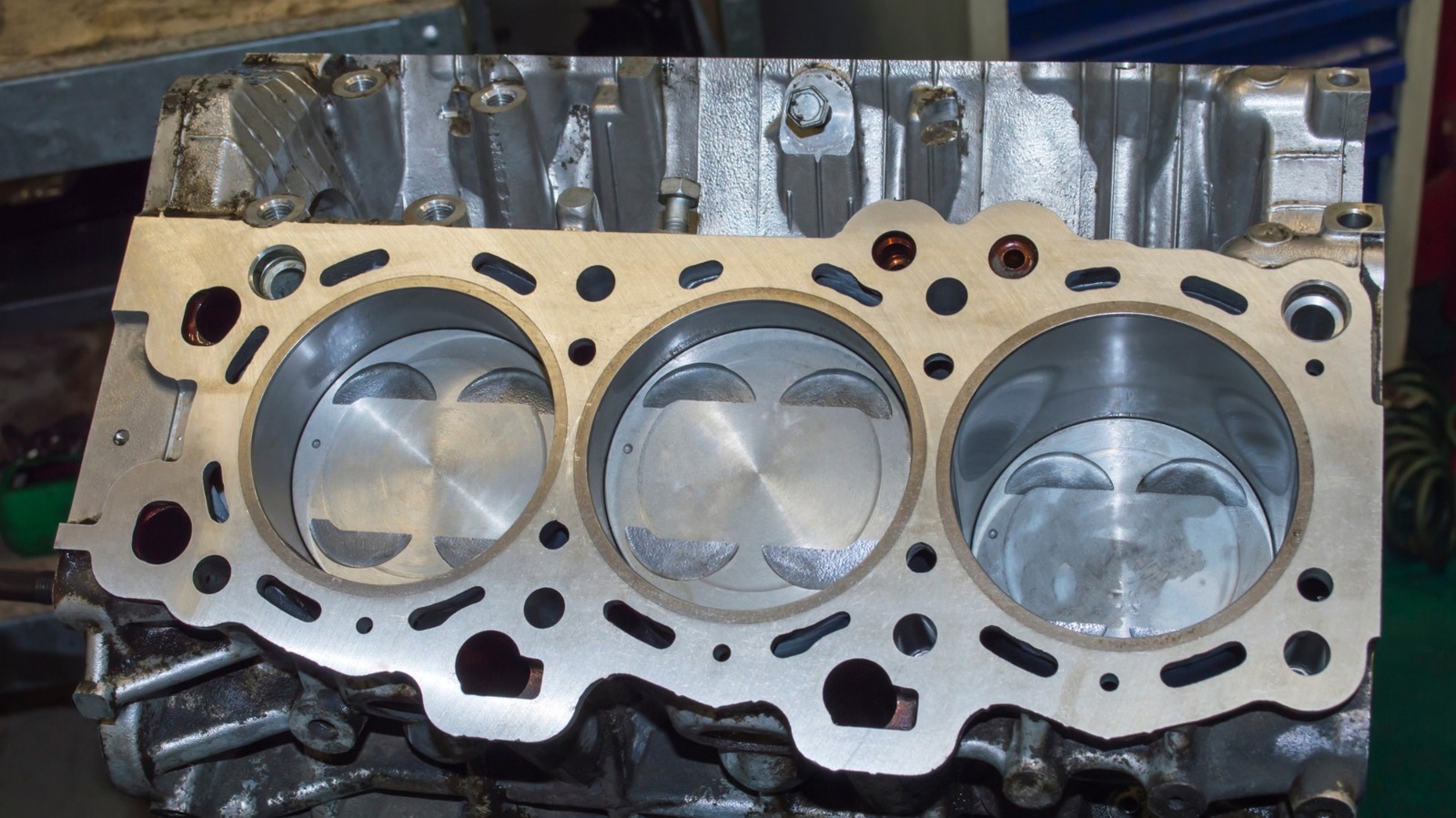
V-engines, in contrast, arrange cylinders in two banks set at an angle, typically between 60 and 90 degrees, with the crankshaft positioned at the bottom. Common V-engine configurations include the V-twin and V4, often found in motorcycles, and the V6 and V8, prevalent in automobiles. The V-design offers a more compact length – though a wider profile – and a lower center of gravity compared to inline engines with the same cylinder count.
The V6 engine is currently the most common V-engine found in cars, offering a balance of weight, efficiency, and power, especially when coupled with forced induction. While the V8 engine remains a presence, its use is largely confined to luxury vehicles, American sports cars, and pickup trucks. Recent high-performance V8 engines, such as those from Mercedes-Benz, Ford, and Chevrolet, have demonstrated substantial horsepower figures. For example, the 2026 Chevrolet Corvette Z06 features a naturally aspirated 5.5-liter V8 producing 670 horsepower.
the choice between an inline and a V-engine depends on the specific goals for the vehicle. Neither configuration is inherently superior. each presents a unique set of trade-offs.
