
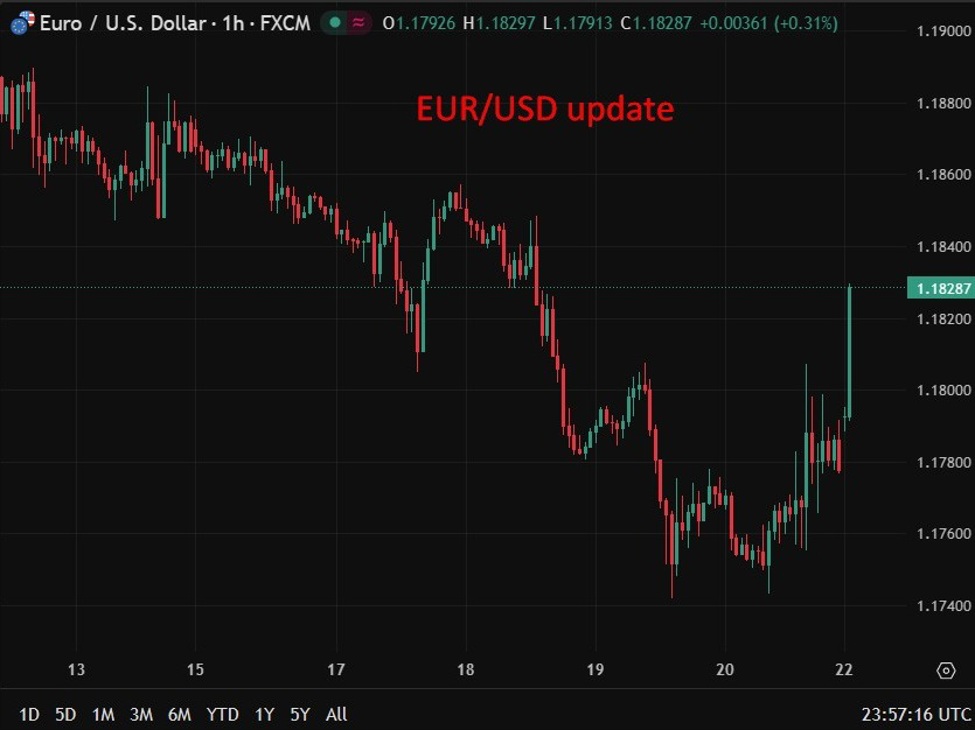
The U.S. Dollar weakened in early Asian trading Monday, as markets reacted to a Supreme Court ruling striking down portions of President Donald Trump’s prior tariff regime. The dip in the dollar’s value was occurring with thin liquidity, exacerbated by a holiday closure of Japanese markets.
The Supreme Court found that the Trump administration had exceeded its statutory authority in imposing broad-based tariffs under emergency provisions. The court determined the legal justification used to implement the sweeping duties did not align with congressional intent, effectively invalidating large portions of last year’s tariff structure. The decision introduces immediate uncertainty for businesses that had already adjusted supply chains and pricing models to account for the levies.
While the ruling does not eliminate the president’s ability to impose tariffs, it narrows the scope under which emergency or national-security justifications can be used without explicit congressional backing. Legal analysts suggest the Court’s reasoning reinforces constitutional limits on executive authority in trade matters, potentially establishing a precedent that could constrain future administrations.
In a swift response, President Trump announced a new 15% tariff framework, signaling his trade agenda remains intact despite the judicial setback. Details of the revised structure are still emerging, but the administration is expected to pursue alternative statutory pathways, potentially more narrowly tailored or procedurally robust, to withstand legal challenges. The 15% rate appears intended to maintain pressure on trading partners, according to sources familiar with the administration’s thinking.
The Supreme Court’s decision and the subsequent announcement of new tariffs underscore the volatility inherent in trade policy. Companies now face renewed uncertainty regarding input costs, cross-border investment decisions, and supply-chain stability. Consumers may ultimately bear some of the burden through higher import prices, while policymakers must consider the potential inflationary implications.
The refund mechanism for tariffs already paid remains unclear following the court’s ruling, according to reports. SeafoodSource noted the ambiguity surrounding how importers will recoup funds from the invalidated tariffs.
Markets rallied following the Supreme Court decision, with stock markets also experiencing gains, according to reports from The Guardian. The ruling comes alongside positive economic news from the United Kingdom, adding to the complex interplay of global economic factors.
