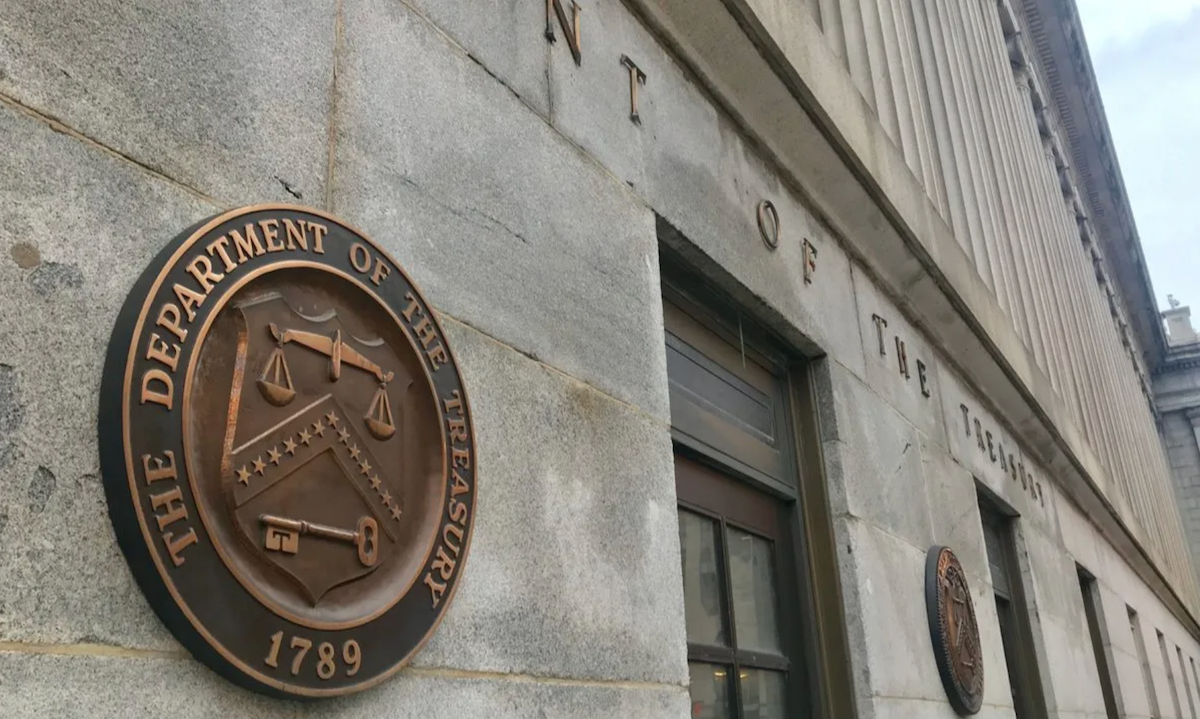
US Treasury to Provide Crypto Firms With Bank-Level Cybersecurity Intel
The U.S. Treasury Department is granting eligible digital asset firms the same cybersecurity intelligence access as traditional banks. Managed by the Office of Cybersecurity and Critical Infrastructure Protection (OCCIP), this initiative aims to fortify the digital asset ecosystem against escalating AI-driven fraud and systemic operational risks across the financial sector.
This isn’t just a policy shift; it is a tacit admission that the boundary between “TradFi” and “Crypto” has effectively dissolved. By integrating digital asset firms into the federal intelligence loop, the Treasury is treating these entities as Systemically Important Financial Institutions (SIFIs) in all but name. The fiscal problem here is clear: the asymmetry of information. While JPMorgan and Goldman Sachs have had a direct line to federal threat telemetry for decades, crypto exchanges have been fighting a guerrilla war against state-sponsored actors and AI-powered phishing syndicates with fragmented, third-party data.
For the C-suite, this creates an immediate compliance and operational hurdle. To qualify for this “institutional-grade” intel, firms must meet stringent Treasury criteria. In other words a sudden, urgent need for rigorous internal auditing and the implementation of governance frameworks that mirror the Basel III standards. Firms failing to bridge this gap won’t just miss out on free intel; they will be flagged as the “weak links” in the national financial chain, potentially triggering higher insurance premiums and tighter regulatory scrutiny from the Securities and Exchange Commission (SEC).
To navigate this transition, firms are increasingly relying on specialized regulatory compliance consultants to ensure their operational resilience meets federal benchmarks.
The Quantifiable Cost of the Security Gap
The numbers paint a grim picture of the status quo. The FBI’s Internet Crime Complaint Center (IC3) reported that cryptocurrency-related losses hit $11.4 billion in 2025, a 22% year-over-year increase. When you layer in the Chainalysis data—which puts on-chain fraud at $14 billion—the delta becomes apparent. We are seeing a systemic failure in the “security-by-obscurity” model that early crypto firms relied upon.

The surge is largely driven by the weaponization of Large Language Models (LLMs) to create hyper-realistic impersonation scams. This isn’t just “phishing”; it is social engineering at scale. When AI can mimic a CEO’s voice and writing style perfectly, traditional multi-factor authentication (MFA) becomes a speed bump, not a wall.
The volatility of these losses directly impacts the EBITDA margins of mid-sized exchanges. Every major breach leads to a massive spike in legal reserves and a plummet in user trust, which translates to a direct hit on Monthly Active Users (MAU) and transaction fee revenue. In an environment where revenue multiples for fintech are compressing, a single high-profile exploit can wipe out a year’s worth of growth.
“The integration of digital assets into the federal cybersecurity framework is the final nail in the coffin for the ‘wild west’ era of crypto. We are moving toward a regime of supervised resilience where the cost of entry is institutional-grade governance.”
— Marcus Thorne, Managing Director of Risk at a Tier-1 Global Hedge Fund
The Macro Shift: Three Ways This Redefines the Industry
- The Institutionalization of Trust: Access to Treasury intel creates a “gold seal” of approval. Firms that are “Treasury-verified” will likely see a decrease in their cost of capital as institutional investors view them as lower-risk assets. This creates a two-tiered market: the “Verified Elite” and the “Unregulated Fringe.”
- Convergence of Risk Management: We are seeing the emergence of a unified risk vocabulary. Terms like liquidity coverage ratios, operational risk capital, and systemic contagion are moving from bank balance sheets to crypto exchange whitepapers. The focus is shifting from “growth at all costs” to “resilience at all costs.”
- The AI Arms Race: The Treasury’s move is a defensive play against the “AI-driven fraud surge.” By sharing real-time telemetry, the government is attempting to create a collective defense mechanism. Still, this as well means that any firm not in the loop is essentially fighting a 21st-century war with 20th-century tools.
This shift necessitates a complete overhaul of the tech stack. It is no longer enough to have a secure wallet; firms need conclude-to-end encryption and real-time threat detection that can integrate with federal feeds. This is driving a massive procurement cycle for enterprise cybersecurity firms capable of deploying AI-driven defensive layers.
The GENIUS Act and the New Operational Standard
The mention of the GENIUS Act in the Treasury’s announcement is the critical anchor here. This legislation isn’t just about “innovation”; it’s about grounding that innovation in operational resilience. For the financial analyst, this means the “valuation” of a crypto firm now includes a heavy weighting on its “security moat.”

If you appear at the Federal Reserve’s recent commentary on financial stability, the emphasis is consistently on the “interconnectedness” of the system. A failure at a major digital asset platform is no longer an isolated event; it is a potential trigger for a broader liquidity crisis if that platform is deeply entwined with traditional hedge funds or payment processors.
This interconnectedness is why the Treasury is stepping in. They aren’t doing this out of the goodness of their hearts; they are doing it to prevent a “Lehman moment” in the digital asset space. The cost of a systemic collapse far outweighs the cost of providing free intelligence to a handful of eligible firms.
“The Treasury is effectively treating crypto infrastructure as critical national infrastructure. This is a massive win for legitimacy, but a massive burden for compliance.”
— Sarah Jenkins, Chief Legal Officer at a leading Digital Asset Venture Studio
As firms scramble to meet these new federal criteria, the demand for high-level legal guidance is skyrocketing. Navigating the intersection of the GENIUS Act and existing SEC mandates requires more than just a lawyer; it requires a strategic architect. This is where corporate law firms specializing in fintech become indispensable, helping firms structure their governance to satisfy both the Treasury and the shareholders.
The trajectory is clear: the “digital asset” label is becoming a legacy term. We are entering the era of “Integrated Finance,” where the underlying technology (blockchain) is secondary to the stability and security of the system. The firms that survive the next four quarters will be those that stop thinking like startups and start acting like banks.
For those looking to secure their position in this new regime, the priority must be the vetting of partners. In a landscape where a single vulnerability can lead to a billion-dollar loss, you cannot afford to guess. The World Today News Directory remains the definitive resource for connecting with the vetted B2B providers, from cybersecurity auditors to regulatory strategists, who can turn these federal mandates into a competitive advantage.