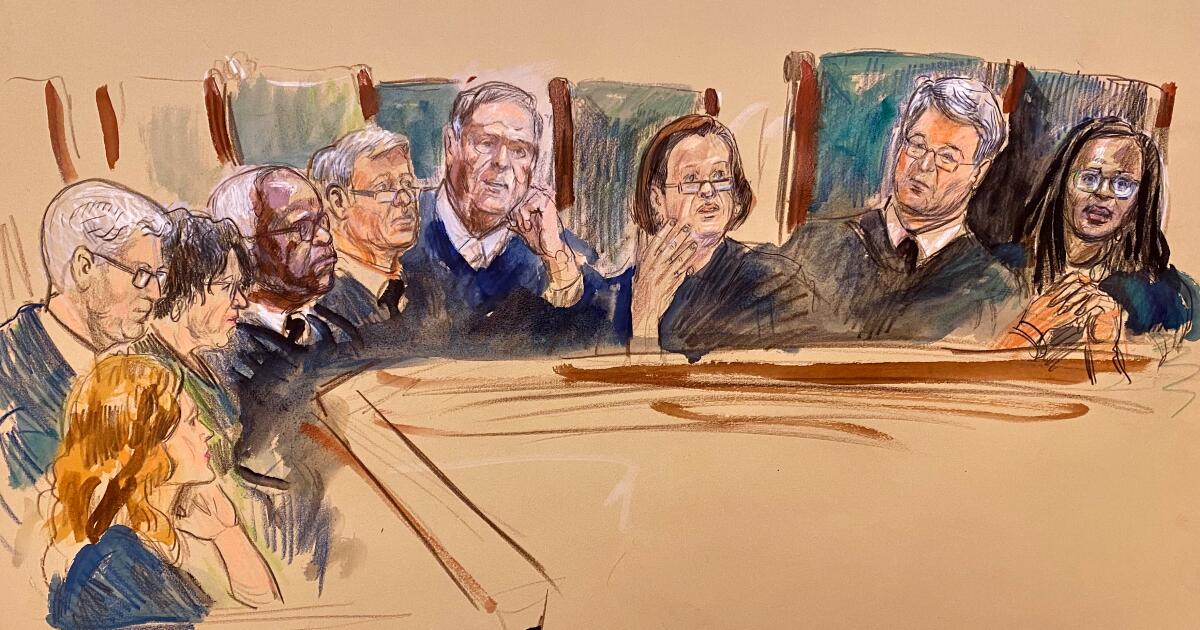
US Supreme Court Limits Presidential Power Under Trump Administration
Chief Justice John G. Roberts Jr. has successfully steered a fractured Supreme Court through a series of high-stakes rulings in 2026, consistently curbing executive overreach while maintaining a conservative judicial trajectory. These decisions have effectively dismantled claims of absolute presidential immunity, forcing a significant constitutional realignment during President Trump’s second term.
The Roberts Doctrine: Balancing Judicial Authority and Executive Power
As of July 2, 2026, the Supreme Court has entered a distinctive phase characterized by the Chief Justice’s preference for narrow, incremental rulings over broad ideological mandates. This strategy has allowed the bench to maintain institutional legitimacy despite intense political pressure. By rejecting expansive interpretations of executive privilege, Roberts has signaled that the judiciary remains the final arbiter of constitutional boundaries, even when those boundaries collide with the administration’s core agenda.

The court’s recent rejection of “limitless power” theories stems from a series of cases that tested the outer edges of Article II authority. Legal analysts note that this approach serves a dual purpose: it shields the Court from accusations of partisanship while simultaneously reinforcing the separation of powers. For businesses and municipal entities currently grappling with shifting federal regulations, this unpredictability creates a complex environment. Many are turning to specialized legal counsel to navigate the sudden volatility in federal enforcement priorities.
Constitutional Friction: Impact on Federal and Local Governance
The court’s refusal to grant the White House broad immunity has immediate downstream effects on federal agencies and, by extension, local jurisdictions. When federal executive authority is checked, the resulting vacuum often leads to a resurgence of state-level autonomy. This shift is particularly visible in environmental and commercial regulatory sectors where the White House previously utilized executive orders to bypass traditional legislative hurdles.

According to documents filed with the Supreme Court of the United States, the Chief Justice has sought to build consensus by focusing on the procedural merits of cases rather than their political optics. This has occasionally alienated the court’s most conservative members, yet it has preserved the institution’s role as a buffer against unilateral action.
“The Court is not acting as a political actor, but as a structural one. By forcing the administration to justify its actions through traditional administrative channels, Roberts is essentially demanding a return to foundational governance,” observed a senior fellow at a non-partisan constitutional study center.
Navigating the Regulatory Minefield
For private enterprises and public sector organizations, the current judicial landscape is a double-edged sword. While the curbing of executive power provides some protection against arbitrary federal mandates, it also creates significant uncertainty regarding the enforcement of existing laws. Organizations that previously relied on executive waivers or administrative leniency now find themselves in a precarious position.
Businesses operating in highly regulated fields—such as energy, telecommunications, and infrastructure—are increasingly seeking out professional regulatory consultants. These experts assist in mapping out potential shifts in agency enforcement, ensuring that operations remain compliant even as the federal government struggles to define its own scope of influence.
Historical Precedent and the Future of the Bench
The current court’s trajectory mirrors historical periods where the judiciary, under a pragmatic leader, sought to avoid direct confrontation with the executive branch while still asserting its independence. By choosing to puncture the administration’s claim to absolute power, Roberts is reinforcing the precedent established in landmark cases such as Youngstown Sheet & Tube Co. v. Sawyer.

The long-term impact of these rulings will likely be felt in the 2028 election cycle and beyond. As the court continues to define the limits of the presidency, it is effectively setting the rules of engagement for all future administrations. For local governments and municipal authorities, this means that the reliance on federal block grants or executive-sanctioned infrastructure projects must be reassessed for long-term viability.
Connecting with expert policy advisors is becoming a standard practice for municipal leaders who need to anticipate how these judicial shifts will alter the flow of federal funding and the enforcement of national standards within their own jurisdictions.
A Shifting Legal Horizon
The tension between the White House and the Supreme Court is not merely a matter of political theater; it is a fundamental test of the American constitutional framework. As the court continues to chart this middle path, the burden of stability falls heavily on those who must operate within the law. The current era of judicial restraint does not guarantee simplicity; instead, it demands a more sophisticated understanding of the evolving relationship between the three branches of government.
For those caught in the crossfire of these institutional power struggles, the path forward requires vigilance and professional guidance. Whether it is addressing a sudden change in environmental policy or a shift in administrative oversight, the need for clarity has never been higher. Engaging with the right professionals is no longer a luxury—it is a necessity for anyone looking to secure their interests in a time of constitutional transition.