
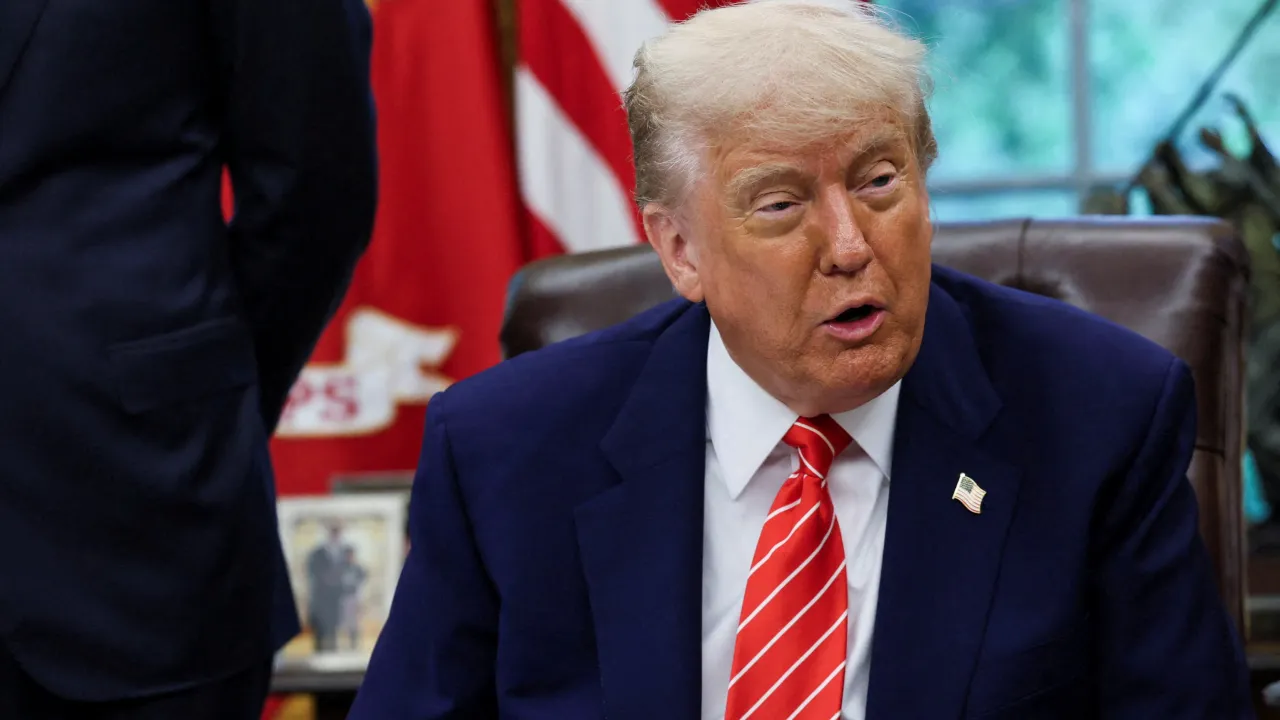
Supreme Court Limits Power to Block Presidential Executive Orders
In a important ruling,the U.S. Supreme Court has curtailed the ability of lower courts to issue nationwide injunctions against presidential executive orders deemed unlawful. This decision, impacting the scope of legal protection, arose from a dispute over former President Donald Trump‘s efforts to restrict birthright citizenship. The White House celebrated the ruling as a “huge victory,” according to a post on Truth Social.
Narrowing the Scope of Injunctions
The Supreme Court’s action effectively narrows the scope of three national court orders previously issued by federal judges in Maryland, Massachusetts, and Washington, which had halted the enforcement of Trump’s directive. these judges were appointed during both Republican and Democratic administrations.
Did You Know? The concept of birthright citizenship is enshrined in the 14th Amendment to the U.S. Constitution, ratified in 1868, which states that all persons born or naturalized in the United States and subject to its jurisdiction are citizens.
Justice Amy Coney Barrett articulated the court’s reasoning, stating, “No one disputes that the executive power is obliged to comply with the law. however, judicial power has no unlimited power to enforce this obligation-in fact, the law sometimes forbids it.”
Lower Courts Ordered to Re-Review
the Supreme Court has instructed lower courts to re-examine the extent of their preliminary measures. The ruling stipulates that Trump’s order cannot be implemented until at least 30 days after the Supreme Court’s decision. Though, the future of Trump’s decree, which challenges the automatic recognition of citizenship for children born in the U.S. unless at least one parent is a citizen or permanent resident, remains uncertain.
pro Tip: Stay informed about ongoing legal challenges to immigration policies by following reputable news sources and legal organizations.
Dissenting Opinions Among Judges
The ruling has sparked disagreement among the justices. Justice Sonia Sotomayor, joined by two other liberal members of the court, dissented, arguing that the majority “fully ignores whether the presidential executive order is constitutional, and rather focuses only on the question of whether the federal courts have fair authority to issue global court orders.”
Sotomayor added, “Though, the obvious illegality of this regulation reveals the severity of the mistake of the majority and underlines why justice supports general court orders as appropriate corrective measures in this type of cases.”
Executive Order Details and Potential Impact
Trump’s executive order, signed on his first day back in office, directs federal authorities to deny citizenship to children born in the United States whose parents are not citizens or permanent residents (green card holders). Prosecutors, including Democratic attorneys general and supporters of immigrants, have filed legal challenges, arguing that the order could deny citizenship to over 150,000 newborns annually.
| Aspect | Description |
|---|---|
| Executive Order | Denies citizenship to children born in the U.S.to non-citizen/non-resident parents. |
| Affected Population | Potentially over 150,000 newborns annually. |
| Legal Basis | Challenged under the 14th Amendment. |
| Current Status | Lower court injunctions narrowed; future uncertain. |
Potential Challenges and Future Implications
The Supreme Court’s decision leaves open the possibility that the regulation could still be blocked nationwide. The legal battles surrounding birthright citizenship and executive power are likely to continue, shaping immigration policy and the balance of power between the executive and judicial branches.
What are the potential long-term effects of this ruling on immigration policy?
How might this decision impact future presidential executive orders?
Evergreen Insights: Background, Context, Past Trends
The debate over birthright citizenship has a long and complex history in the United States. The 14th Amendment was originally intended to grant citizenship to formerly enslaved people after the Civil War. However, its application to children born to immigrants has been a subject of legal and political contention for over a century. The Supreme Court has previously affirmed the principle of birthright citizenship, but challenges to this interpretation continue to arise, reflecting ongoing tensions over immigration and national identity.
FAQ
- What is an executive order?
- An executive order is a directive issued by the President of the United States that manages operations of the federal government.
- What is a nationwide injunction?
- A nationwide injunction is a court order that prevents the enforcement of a law or policy across the entire country.
- What is the 14th Amendment?
- The 14th Amendment to the U.S. Constitution guarantees equal protection under the law and defines citizenship.
- What does it mean to have “standing” in a legal case?
- Standing refers to the legal right to bring a lawsuit, typically requiring a direct and concrete injury.
- What are the potential implications of limiting nationwide injunctions?
- Limiting nationwide injunctions could allow presidential policies to take effect more quickly and broadly, even while legal challenges are ongoing.
Disclaimer: This article provides general facts and should not be considered legal advice. Consult with a qualified attorney for advice regarding your specific situation.
Share your thoughts on this Supreme Court decision in the comments below. Subscribe to World Today News for the latest updates on legal and political developments!
