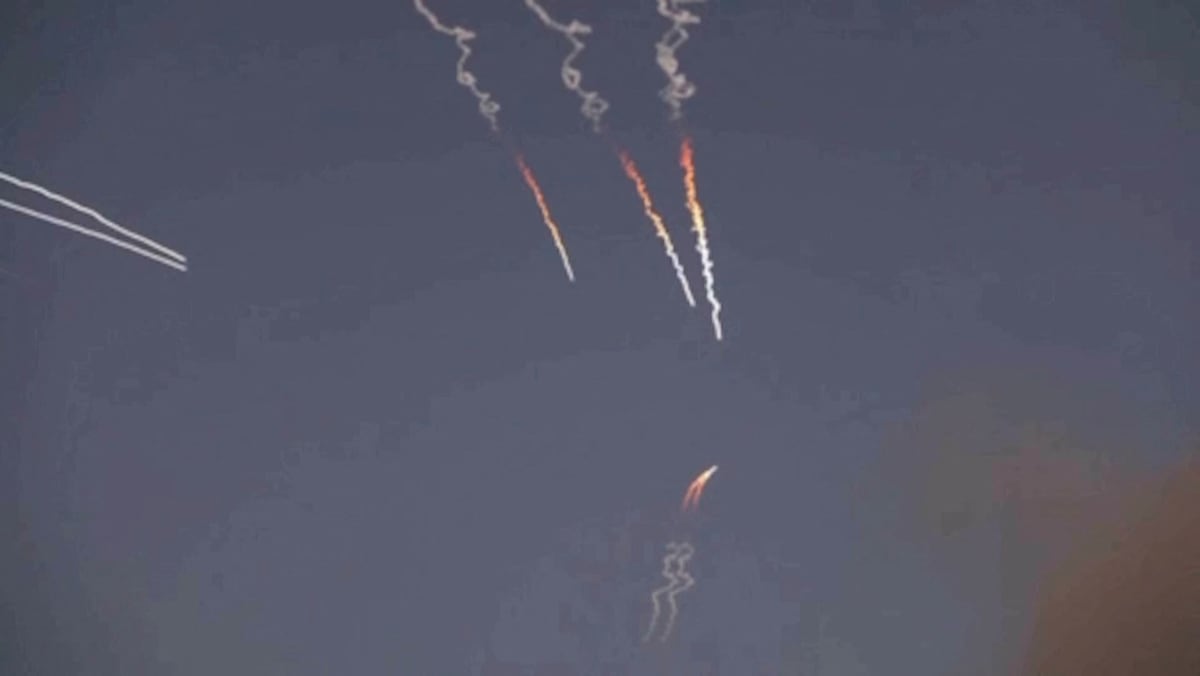
US Strikes Iran for Second Consecutive Day Amid Stalled Peace Talks
U.S. and Iranian forces have clashed for a second consecutive day in the Strait of Hormuz, escalating tensions after a U.S. military helicopter was shot down Monday. President Donald Trump’s administration has launched retaliatory strikes on Iranian targets, while Qatar-mediated peace talks remain stalled. The conflict risks disrupting global oil flows through the world’s most critical chokepoint, with regional economies bracing for potential supply chain disruptions.
Why the Strait of Hormuz is the flashpoint—and how this differs from past U.S.-Iran conflicts
The Strait of Hormuz, a narrow waterway connecting the Persian Gulf to the Gulf of Oman, handles roughly 20% of the world’s seaborne oil trade. Its strategic importance was underscored in 2019 when Iran seized a British-flagged tanker, triggering a U.S. response that nearly led to full-scale confrontation. This time, however, the trigger was the downing of a U.S. military helicopter—an incident that Iran has denied responsibility for, though U.S. officials point to Iranian missile systems in the area as the likely source.

Unlike the 2019 standoff, which centered on commercial shipping, this conflict involves direct military engagements. The U.S. has not confirmed casualties, but Iranian state media reported “significant damage” to its facilities in the southern province of Bushehr. The escalation raises fears of a broader regional war, particularly as Saudi Arabia and Israel—both under pressure from Trump’s administration—have increased military cooperation in the Gulf.
Key difference: In 2019, the U.S. focused on economic sanctions and naval patrols. Today, the response includes direct airstrikes, signaling a shift toward kinetic retaliation over deterrence.
How the conflict is reshaping global oil markets—and who stands to lose the most
Oil prices surged 8% within hours of the first strikes, with Brent crude briefly exceeding $95 per barrel—a level not seen since 2022. The International Energy Agency (IEA) warned that sustained disruptions in the Strait could trigger a supply crisis, particularly for Asian economies reliant on Persian Gulf crude.
| Region | Oil Import Dependency on Strait of Hormuz (%) | Potential Economic Impact if Disruption Lasts 30+ Days |
|---|---|---|
| China | 60% | $200 billion+ in refinery losses (per IEA estimates) |
| India | 55% | Fuel price hikes of 15–20%, triggering inflation |
| European Union | 30% | Industrial slowdown in Germany/Italy (automotive sectors) |
For oil-dependent nations, the immediate challenge is securing alternative routes. The Suez Canal, while longer, has seen a 30% increase in tanker traffic since 2022, but its capacity is limited. Companies specializing in maritime logistics and risk assessment are already advising clients to diversify supply chains—though the cost of rerouting shipments could add $5–10 per barrel to global prices.
Qatar’s failed mediation: What happens next for diplomacy?
Qatar, which has hosted indirect U.S.-Iran talks since 2021, confirmed its delegation left Tehran Wednesday without progress. Sources close to the negotiations told Al Jazeera that Iran demanded the U.S. lift sanctions on its central bank—a non-starter for Trump’s administration, which has framed the strikes as a response to “Iranian aggression.”

“The window for de-escalation is closing fast,“ said Dr. Ali Vaez, director of the Iran Project at the International Crisis Group. “Both sides are now operating under the assumption that the other will not back down. That’s a dangerous calculus in a region where miscalculation can spiral into war.“
The failure of Qatar’s mediation raises questions about the role of UN Security Council Resolution 2231, which ended Iran’s nuclear deal in 2015. Legal experts note that the resolution’s “snapback” sanctions mechanism—triggered by U.S. withdrawal—could now be used to justify further economic pressure on Tehran. However, with Russia and China likely to veto any new UN measures, the U.S. may pursue unilateral actions, including targeted financial restrictions on Iranian military entities.
Regional fallout: Which cities and economies are most vulnerable?
Beyond oil markets, the conflict threatens to destabilize key economic hubs:
- Dubai, UAE: As a global trade hub, Dubai’s Jebel Ali Port—already rerouting 15% of its container traffic due to Red Sea tensions—faces further strain. Local business chambers are advising importers to stockpile goods ahead of potential shipping delays.
- Muscat, Oman: Oman’s Duqm Port, a key alternative to the Strait, is seeing increased activity, but its infrastructure is not yet equipped to handle a full-scale diversion. Oman’s Ministry of Transport issued a statement urging “preparedness” among logistics firms.
- Basra, Iraq: Iraq’s southern oil fields, which supply 90% of its exports, could become collateral damage. Iraqi officials have warned of potential attacks on pipelines, threatening the country’s fragile post-ISIS recovery.
For businesses operating in these regions, the priority is geopolitical risk insurance. Firms like Chubb and Marsh are reporting a 40% surge in inquiries from Middle Eastern clients seeking coverage for supply chain disruptions.
The legal minefield: Can Trump’s strikes be challenged?
Under the War Powers Resolution, the U.S. requires congressional approval for sustained military action. However, Trump has framed these strikes as “defensive,” avoiding a formal declaration of war. Legal scholars argue this could set a precedent for future administrations to bypass Congress under the guise of “self-defense.”
“If the U.S. can justify strikes based on a helicopter downing without congressional approval, the threshold for military action drops significantly,“ said Ken Rotberg, a former State Department legal adviser. “This could embolden other nations to take unilateral military steps, undermining the entire post-WWII international order.“
For businesses with assets in the region, navigating these legal gray areas is critical. International arbitration firms specializing in sanctions law are advising clients to document all transactions to avoid unintended violations of the OFAC regulations.
The bigger picture: How this conflict could redefine U.S. Middle East strategy
Trump’s decision to escalate—just months before the 2026 U.S. election—suggests a calculated gambit to rally his base on national security. However, the risks are substantial. A prolonged conflict could:

- Trigger a Saudi-Israeli military alliance against Iran, drawing Hezbollah into the fray.
- Accelerate Iran’s nuclear program, as sanctions push Tehran to restart enrichment activities.
- Force the U.S. to divert resources from Ukraine, potentially weakening NATO’s eastern flank.
For policymakers and corporations alike, the question is no longer if this conflict will spread, but how fast. The RAND Corporation estimates that a full-scale regional war could cost the U.S. economy $1.2 trillion over two years—equivalent to the combined GDP of Greece and Portugal.
In this high-stakes environment, the most critical asset may be intelligence-driven risk consulting. Firms like Stratfor are advising governments and multinationals to prepare for three scenarios:
1. Containment: Limited strikes that de-escalate within 72 hours.
2. Proxy War: Saudi/Israeli attacks on Iranian proxies (Hezbollah, Houthis) without direct U.S. involvement.
3. Full-Scale Conflict: Iranian missile strikes on U.S. bases in the Gulf, triggering a NATO response.
The bottom line: Where to turn for verified solutions
With tensions flaring, businesses and governments need immediate, actionable guidance. Here’s where to find it:
- [Geopolitical Risk Consultants]: Specializing in real-time threat assessments for supply chains in high-tension zones.
- [Sanctions Compliance Law Firms]: Helping corporations navigate OFAC and EU sanctions with zero tolerance for errors.
- [Emergency Logistics Providers]: Offering alternative shipping routes and warehousing solutions for disrupted trade lanes.
The Strait of Hormuz is more than a flashpoint—it’s the linchpin of global energy security. As the dust settles from this week’s strikes, the real test will be whether diplomacy can reclaim its footing. For now, the only certainty is that the world is watching—and preparing—for the next move.