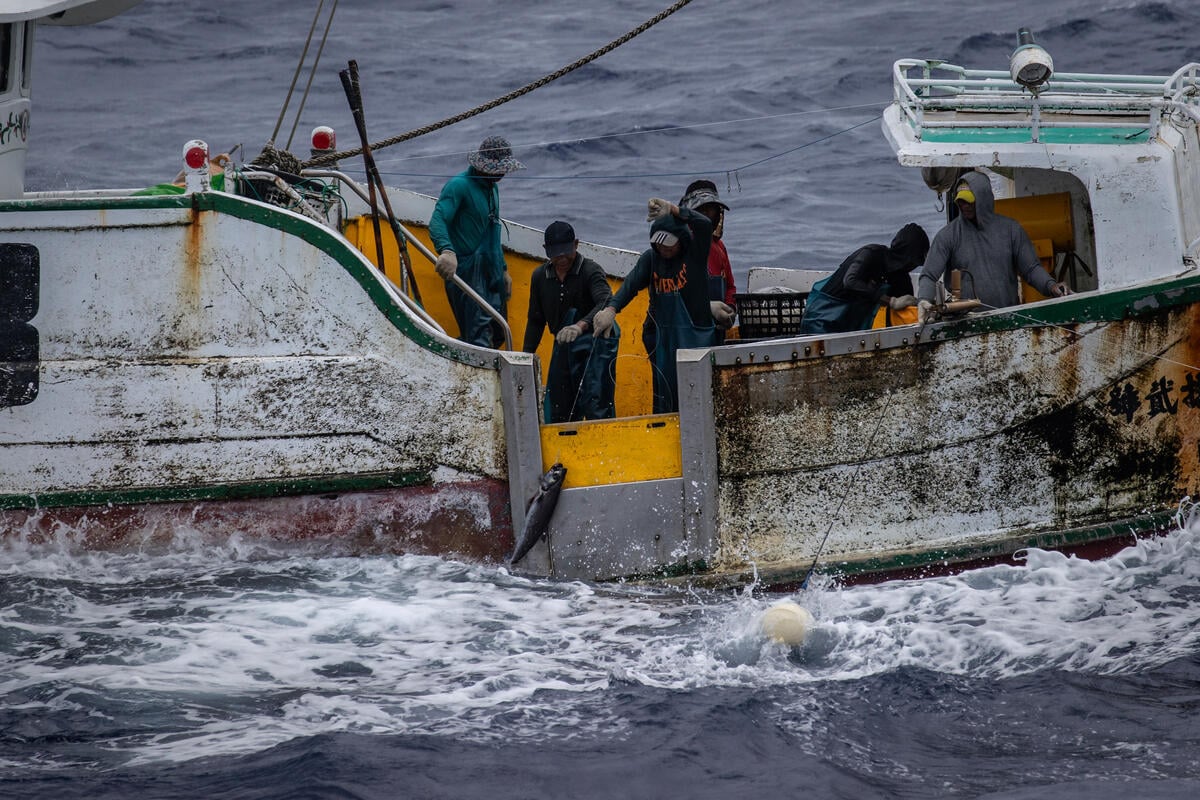
US State Department Report Keeps Taiwan and Indonesia Rankings
WASHINGTON — The U.S. State Department’s annual Trafficking in Persons Report released on Oct. 8, 2026, highlighted ongoing shortcomings by Taiwan and Indonesia in safeguarding fishers against forced labor, while keeping the official standings of both administrations unaltered.
U.S. Seafood Imports Expose Consumers to Forced Labor
The United States imports up to 90% of the seafood it consumes, drawing heavily from harvests handled by Taiwanese and Indonesian fishing vessels and leaving American consumers routinely exposed to products caught through forced labor. Ahead of the report’s release, Greenpeace USA, Greenpeace Indonesia, and 10 coalition partners submitted direct evidence to the U.S. State Department documenting long-standing failures by both governments to address labor exploitation and human trafficking in the commercial fishing sector.
The coalition’s submissions detailed excessive periods spent at sea without returning to port, persistent barriers to communication, weak regulatory enforcement, and inadequate worker protections. Kate Melges, Greenpeace USA Oceans Director, questioned the stability of the diplomatic assessments. How many times will the U.S. government document forced labor in the fishing industry and then award these same rankings?
Melges asked, pointing out that both territories occupy powerful positions in the global seafood supply chain. Fishers cannot afford another year of business as usual.

Specific Findings on Taiwan and Indonesia
The State Department report cites Taiwan for failing to criminally prosecute forced labor, a violation described as particularly prevalent on distant-water fishing vessels. Investigators also noted an inadequate uptake of Wi-Fi communication tools for fishers at sea and no measurable progress on aligning local legislation with international labor conventions governing the fishing industry.
For Indonesia, the report criticizes authorities for failing to implement, oversee, and enforce labor regulations across both domestic and foreign fishing sectors. The document names the Indonesian fishing sector as among the most highly exploitative industries in the country.

Legal Accountability in Domestic and Foreign Courts
Recent court proceedings illustrate ongoing efforts by fishers to seek legal redress. During August, a Taiwanese tribunal cleared the captain and crew of the Da Wang—a fishing boat owned in Taiwan—following claims of human trafficking and forced labor. Prosecutors have stated an intent to appeal the acquittal.
Meanwhile, a separate civil suit brought by four Indonesian fishers alleging that tuna brand Bumble Bee benefited from years of forced labor continues to move forward in the U.S. legal system. The Greenpeace global network’s Beyond Seafood campaign is pressing for concerted action across the entire supply chain—targeting governments, vessel owners, seafood brands, importers, and retailers—to dismantle the isolation at sea that enables continuous worker abuse.