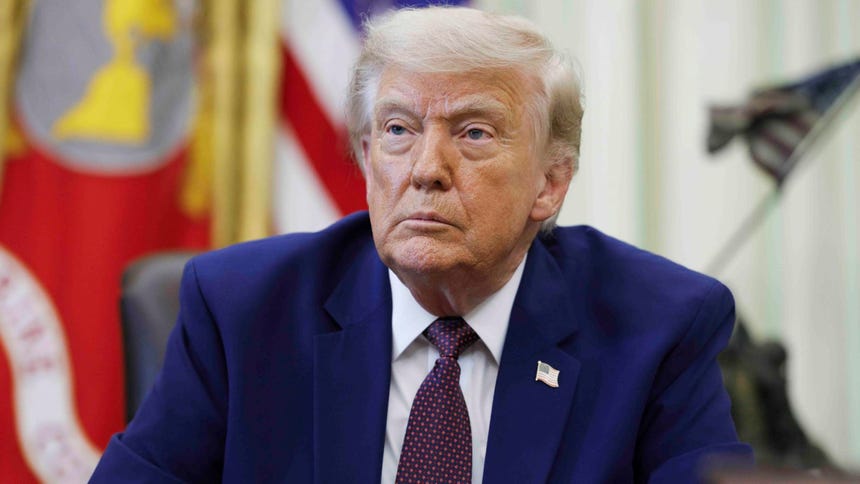
US Retaliates Against Iran After Downed Apache Helicopter
Donald Trump announced retaliatory strikes against Iran on June 9, 2026, after Tehran downed a U.S. military Apache helicopter in the Strait of Hormuz, escalating tensions in a region already destabilized by the Israel-Iran proxy war. The U.S. launched precision airstrikes on Iranian radar and missile sites in response, while Iran retaliated by targeting American bases in Jordan and the Gulf. With no clear de-escalation path, the incident risks unraveling fragile trade corridors, spiking defense budgets, and forcing multinational corporations to reassess supply chain risks in the Middle East.
Why This Strike Marks a Turning Point in U.S.-Iran Tensions
The June 9 clash is the most direct confrontation between Washington and Tehran since the 2020 assassination of Qasem Soleimani. Unlike previous skirmishes—such as the 2019 downing of a U.S. drone or the 2021 cyberattacks—this incident involved a manned aircraft, raising the stakes. “This is not a tit-for-tat operation; it’s a deliberate signal that the U.S. will not tolerate direct threats to its forces in the Strait of Hormuz,” said Dr. Ali Vaez, Iran Project Director at the International Crisis Group. “The Strait accounts for 20% of global oil trade, and any disruption would trigger a $100+ per barrel spike in crude prices within weeks.”
Iran’s retaliation—targeting U.S. bases in Al-Tanf (Syria) and Al-Dhafra (UAE)—demonstrates its willingness to project power beyond its borders. The strikes came hours after the U.S. bombed an Iranian missile depot in Isfahan, a facility linked to the IRGC’s precision-guided weapons program. Analysts warn this could trigger a broader regional conflict, with Saudi Arabia and Israel already on high alert.
The Economic Domino Effect: How Supply Chains Are Already Shifting
Global commodity markets reacted immediately. Brent crude jumped 8% on June 9, reaching $92 per barrel, as traders priced in the risk of Hormuz disruptions. The Strait’s chokepoint status—through which 17 million barrels of oil pass daily—means even a temporary closure would force rerouting via the Suez Canal, adding $8–12 to shipping costs per container. “Companies with exposure to the Middle East are already stress-testing their logistics networks,” said Sarah O’Connor, Head of Trade Risk at Standard Chartered. “Those relying on Iranian or Iraqi transit routes are scrambling to diversify into African or Indian Ocean alternatives.”

| Impact Area | Short-Term Risk (June–Sept 2026) | Long-Term Adjustment (2027+) |
|---|---|---|
| Oil Prices | Hormuz disruption → $100+/barrel spike | Accelerated shift to LNG and African crude |
| Shipping Costs | Suez rerouting adds $8–12/container | Permanent premium on Red Sea routes |
| Insurance Premiums | War-risk surcharges double for Gulf transit | New “Iran Conflict Clause” in maritime policies |
Multinational firms are now prioritizing global logistics providers with alternative routing expertise. “We’re seeing a 30% increase in inquiries from clients looking to move cargo through Djibouti or Oman,” said a source at Maersk’s risk management division. Meanwhile, international trade lawyers are advising companies to preemptively renegotiate contracts with “force majeure” clauses for Hormuz-related delays.
Security Overhang: How This Affects NATO and the Gulf Alliance
The incident has forced NATO to reassess its posture in the Gulf. While the alliance has no formal presence in the Strait of Hormuz, member states like the UK and France are deploying additional patrol vessels under the NATO Maritime Awareness of the Black Sea (MABSE) framework, though this does not extend to Hormuz. “NATO’s Gulf strategy is reactive, not proactive,” noted Dr. Thomas Wright, Director of the Center on the United States and Europe at Brookings. “The alliance lacks a unified command structure for the Middle East, leaving individual nations to fend for themselves.”
Saudi Arabia, meanwhile, has suspended oil shipments through the Bab al-Mandab Strait—a move that could trigger a $50 billion energy crisis in Asia if sustained. Riyadh’s decision follows a closed-door meeting with U.S. Secretary of State Antony Blinken, where Saudi officials demanded guarantees against Iranian drone attacks on their oil infrastructure. “The Saudis are playing a dangerous game,” said Kristian Coates Ulrichsen, Baker Institute Fellow at Rice University. “They know the U.S. can’t protect them indefinitely, so they’re testing how far Washington will go.”
For corporations operating in the region, this means geopolitical risk consultants are in high demand. Firms with assets in Iraq, Kuwait, or the UAE are now conducting “war-game” simulations to assess evacuation protocols and asset protection strategies.
What Happens Next: Three Possible Scenarios
1. Limited Escalation: The U.S. and Iran exchange further strikes but avoid kinetic conflict. Iran’s Supreme Leader Ali Khamenei has framed the downed Apache as a “victory,” but hardliners like IRGC Quds Force commander Esmail Qaani may push for broader retaliation. The risk: miscalculation in the Strait of Hormuz, where Iranian naval forces have mined shipping lanes in the past.

2. Regional Proxy War: Israel and Hezbollah engage in cross-border strikes, drawing Iran into a broader conflict. The U.S. has already deployed additional B-52 bombers to Qatar, signaling readiness for a wider campaign. “Israel won’t tolerate Iran embedding itself in Syria and Lebanon,” said Eyal Zisser, Professor of Middle East History at Tel Aviv University. “But without U.S. air cover, Jerusalem’s options are limited.”
3. Diplomatic Freeze: Both sides declare victory and retreat to posturing. The U.S. may impose new sanctions on Iranian oil exports, while Iran accelerates its nuclear program as leverage. This scenario would devastate global energy markets but avoid direct war. “The real losers here are the people of Iran and the global economy,” said Trita Parsi, Executive Vice President of the Quincy Institute. “Sanctions will deepen Iran’s economic crisis, while oil prices will remain volatile for years.”
The Long Game: How This Reshapes Global Defense Budgets
Defense spending is set to surge. The U.S. has already requested a $120 billion increase in its 2027 budget for Middle East operations, with a focus on air defense systems and cyber warfare capabilities. Meanwhile, Iran’s military budget—officially $15 billion but widely estimated at $50 billion with black-market arms deals—will likely see a 40% boost, according to CIA assessments leaked to Reuters.
For private sector actors, this means defense contractors are poised to benefit from accelerated procurement cycles. Companies like Raytheon and Northrop Grumman are already lobbying for contracts to supply the U.S. with next-gen missile defense systems for the Gulf. “The market for anti-drone and anti-missile tech will double in the next 18 months,” predicted Mark Gunzinger, Senior Fellow at the American Enterprise Institute.
Yet the human cost is staggering. The Strait of Hormuz is home to 35% of the world’s liquefied natural gas (LNG) tankers. A prolonged conflict would force rerouting through the Cape of Good Hope, adding 2,000 nautical miles—and $2 million—to each voyage. “This isn’t just about oil,” said Amrita Sen, Energy Analyst at Energy Aspects. “It’s about the entire global energy transition being held hostage by regional rivalries.”
The Corporate Playbook: How Firms Should Prepare Now
Companies with exposure to the Middle East must act swiftly. Here’s the checklist:
- Diversify Supply Chains: Shift high-risk cargo from Hormuz to the Suez Canal or Indian Ocean routes. Logistics firms specializing in alternative trade lanes are already seeing 50% capacity inquiries.
- Harden Cyber Defenses: Iranian cyber units (APT42) have been linked to past attacks on shipping firms. Cybersecurity consultants report a 200% spike in requests for maritime IT security audits.
- Renegotiate Insurance: War-risk premiums for Gulf-bound vessels have surged 150%. Specialist brokers are advising clients to bundle coverage with parametric triggers for Hormuz-related disruptions.
- Monitor Sanctions Compliance: The U.S. may impose secondary sanctions on firms trading with Iran. International trade lawyers are advising clients to conduct “sanctions stress tests” on their supplier networks.
The geopolitical chessboard has shifted. The question is no longer if conflict will escalate, but how. For businesses, the answer lies in agility—partnering with firms that can navigate this volatility. The World Today News Directory connects you to the global consultants, logistics experts, and legal advisors already preparing for the next phase.