
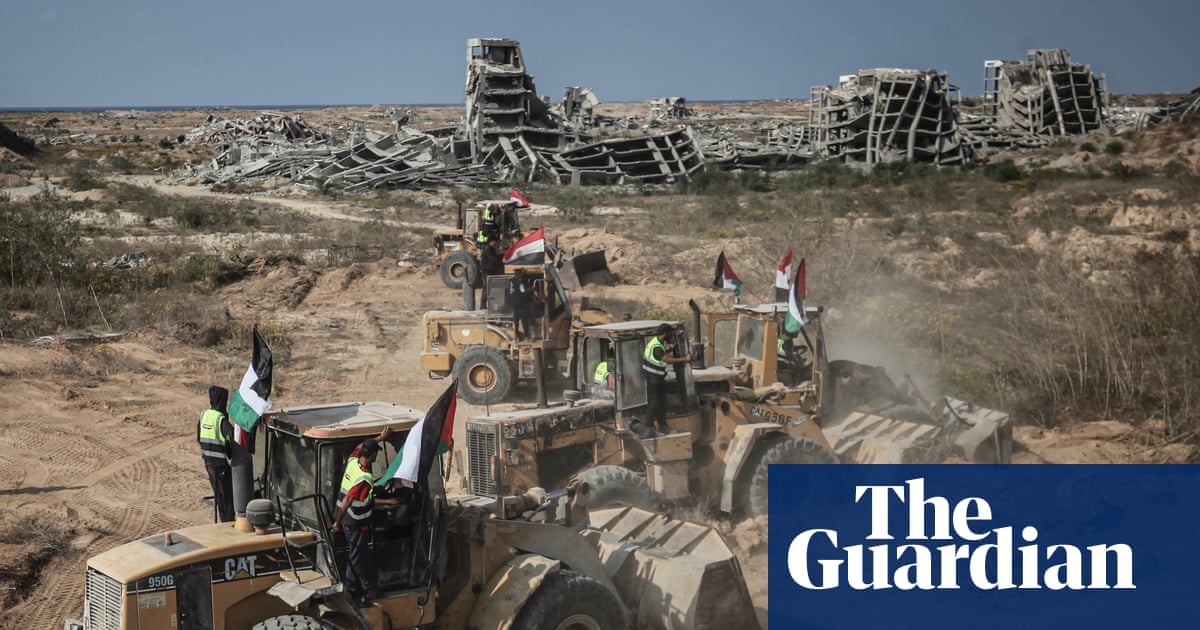
Gaza Reconstruction Plan Draws parallels to Failed US Strategies in Iraq, Afghanistan
GAZA – A US-backed plan to rebuild gaza following teh recent conflict is raising concerns due to its reliance on creating a secured area-described by officials as a potential “green zone”-patrolled by international and Israeli security forces, and a strategy of incentivizing civilian relocation through aid and reconstruction efforts.The initiative,linked to former President Trump’s 20-point plan,aims to ultimately reunite Gaza by encouraging Palestinians to move into the secured zone.
A US official stated that as reconstruction progresses,”you [will] have Gazan civilians moving there beginning to thrive,” adding,”People will say ‘hey we want that’,and so it evolves in that direction. No one’s talking about a military operation to force it.”
However, the concept of a “green zone” evokes memories of similar enclaves established in Baghdad and kabul, which became symbols of isolation for Western forces and their allies amid widespread violence. In those instances,the zones were heavily fortified areas where international personnel retreated from the surrounding unrest.
The plan to use aid to attract Gazans to an area under Israeli control follows a two-year conflict that a UN commission has deemed possibly genocidal. Critics point to past US efforts, such as the “government in a box” initiative in Helmand province, Afghanistan, a decade before the Taliban takeover, which failed to win over the local population despite promises of improved governance.
Trump’s plan calls for the demilitarization of Palestinian factions and an eventual Israeli withdrawal to a ”security perimeter” carved from Palestinian land, facilitated by an International Security Force (ISF). Reconstruction would begin “for the benefit of [Gaza’s] people.”
The need for reconstruction is critical, with UN data indicating that over 80% of structures in Gaza have been damaged or destroyed, including nearly all schools and hospitals. Despite a month-long ceasefire, Israel continues to restrict aid shipments, classifying items like tent poles as “dual use” due to potential military applications.
Currently, nearly 1.5 million Palestinians require emergency shelter, with hundreds of thousands living in tents lacking basic services. Over 2 million people-almost the entire population-are concentrated in a coastal “red zone” covering less then half of Gaza’s total area.
