
The United States is rapidly escalating its military presence in the Middle East, positioning a substantial naval and air force in the region as President Donald Trump weighs potential military action against Iran. U.S. Officials indicated the military is prepared to strike Iran as early as this weekend, should Trump authorize it, according to reports from CNN and CBS News.
The deployment includes a significant concentration of warships and aircraft, signaling a potential preparation for large-scale strikes against Iranian targets. This follows a pattern of escalating tensions, including Trump’s previous ordering of airstrikes in June, which were reportedly called off at the last minute.
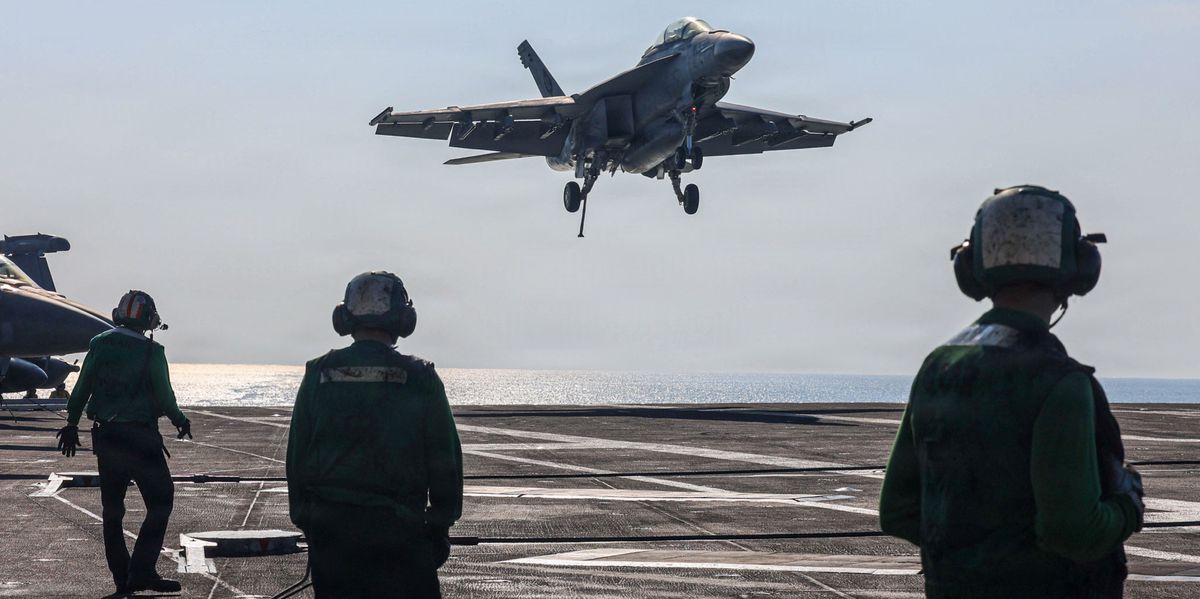
Currently, the U.S. Navy maintains thirteen warships in the Middle East, comprised of one aircraft carrier – the USS Abraham Lincoln, which arrived in late January – nine destroyers and three frigates, a U.S. Official confirmed. Additional vessels are en route to the region. Notably, the USS Gerald Ford, the world’s largest aircraft carrier, is transiting the Atlantic Ocean from the Caribbean towards the Gulf, following orders issued by Trump in mid-February, accompanied by three destroyers.
The simultaneous deployment of two U.S. Aircraft carriers to the Middle East is an unusual occurrence. A similar arrangement was in place last June, coinciding with a period of heightened tensions that ultimately led to a twelve-day conflict triggered by Israeli actions, and Trump’s consideration of strikes against Iranian nuclear sites.
Alongside the naval buildup, the U.S. Has also mobilized a substantial air fleet in the region. This includes stealth fighter jets, F-22 Raptors, alongside F-15 and F-16 fighter aircraft, and KC-135 refueling planes to support extended operations. Flightradar24 data shows increased activity of KC-135 tankers, E-3 Sentry airborne radar surveillance aircraft, and cargo planes in and around the Middle East.
Trump has repeatedly warned Tehran of military intervention if negotiations regarding Iran’s nuclear program do not yield a satisfactory agreement, particularly after withdrawing the U.S. From the original agreement in 2018. He has also responded strongly to the violent suppression of protests in Iran in January, which human rights organizations estimate resulted in thousands of deaths. In late January, Trump warned of an “armada” being deployed to the Gulf.
Diplomatic efforts to de-escalate the situation are ongoing. The U.S. And Iran resumed dialogue on February 6th in Muscat, Oman, following a period of escalating threats. A subsequent round of talks took place Tuesday near Geneva, Switzerland. Iranian officials stated that the two sides reached a “set of guiding principles” for a potential agreement, while U.S. Vice President JD Vance indicated that Iran was unwilling to concede on certain “red lines” established by the U.S.
White House Press Secretary Karoline Leavitt confirmed Wednesday that the two parties remain “remarkably far apart on certain issues.” She added, “Iran would be well advised to reach an agreement,” while also suggesting that “We find many reasons and arguments in favor of a strike” against Tehran.
