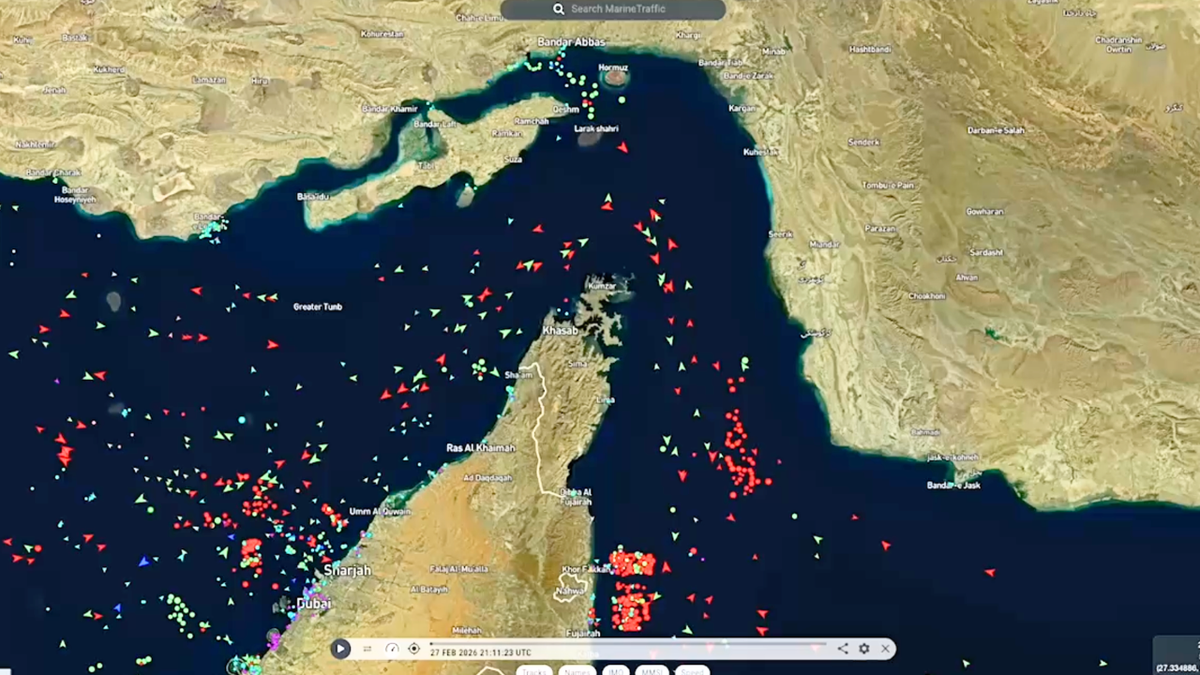
US-Iran War Live Updates: Hormuz Blockade and Tanker Traffic Strains Global Shipping
As the US-Iran war escalates, a Yemen port has suspended operations while the Strait of Hormuz stalemate continues, stranding 20,000 seafarers on 1,600 vessels, according to the International Maritime Organization.
Strait of Hormuz Traffic Collapses Under Naval Blockade
Commercial shipping through the Strait of Hormuz has plummeted from a pre-war average of more than 120 vessels per day down to just 28 transits over a recent two-day window, according to data highlighted by ship-tracking firm Kpler. The sudden contraction follows the enforcement of a U.S. naval blockade targeting vessels entering or leaving Iranian ports.
President Donald Trump warned via social media that any Iranian ships approaching the restricted zone would be immediately eliminated, adding intense pressure to an already volatile maritime corridor. In response to these sweeping maritime restrictions, the International Maritime Organization criticized the enforcement. Arsenio Dominguez, chief of the International Maritime Organization, stated that the blockade violates international law because countries do not have the right to blockade an international strait used for international navigation.
Amid these rising geopolitical tensions, corporations managing international supply chains face unprecedented disruptions.
Divergent Traffic Patterns and Continued Iran-Linked Ship Movements
While major shipping companies without Iranian ties maintain an incredibly low appetite for crossing the strait, vessels with direct ties to Iran continue to navigate the corridor at rates close to pre-war levels, according to Kpler data. Average transits in the four weeks leading up to Sunday reached 2.2 million barrels per day, slightly outpacing the 2 million barrels per day recorded before February 29.
Ship-tracking metrics identified specific movements just hours before the blockade took effect on Monday. Two tankers with ties to Iran sailed out of the Persian Gulf via the Strait of Hormuz. One vessel, the Panama-flagged Auroura, was believed to be carrying sanctioned Iranian naphtha and has a recorded history of transporting Iranian cargoes. A second tanker, the New Future, loaded gas oil at Hamriyah in the United Arab Emirates and previously conducted its last three trades with Iran.
Alexis Ellender, an analyst at Kpler, noted that a trickle of trade continues to make its way through the contested passage despite broader commercial avoidance.
Global Economic and Regional Supply Chain Fallout
The protracted stalemate and subsequent port suspensions across the region are generating severe economic and food-security consequences globally. With normal shipping flows indefinitely halted and thousands of crew members stranded across the Persian Gulf, regional infrastructure is under immense strain.
