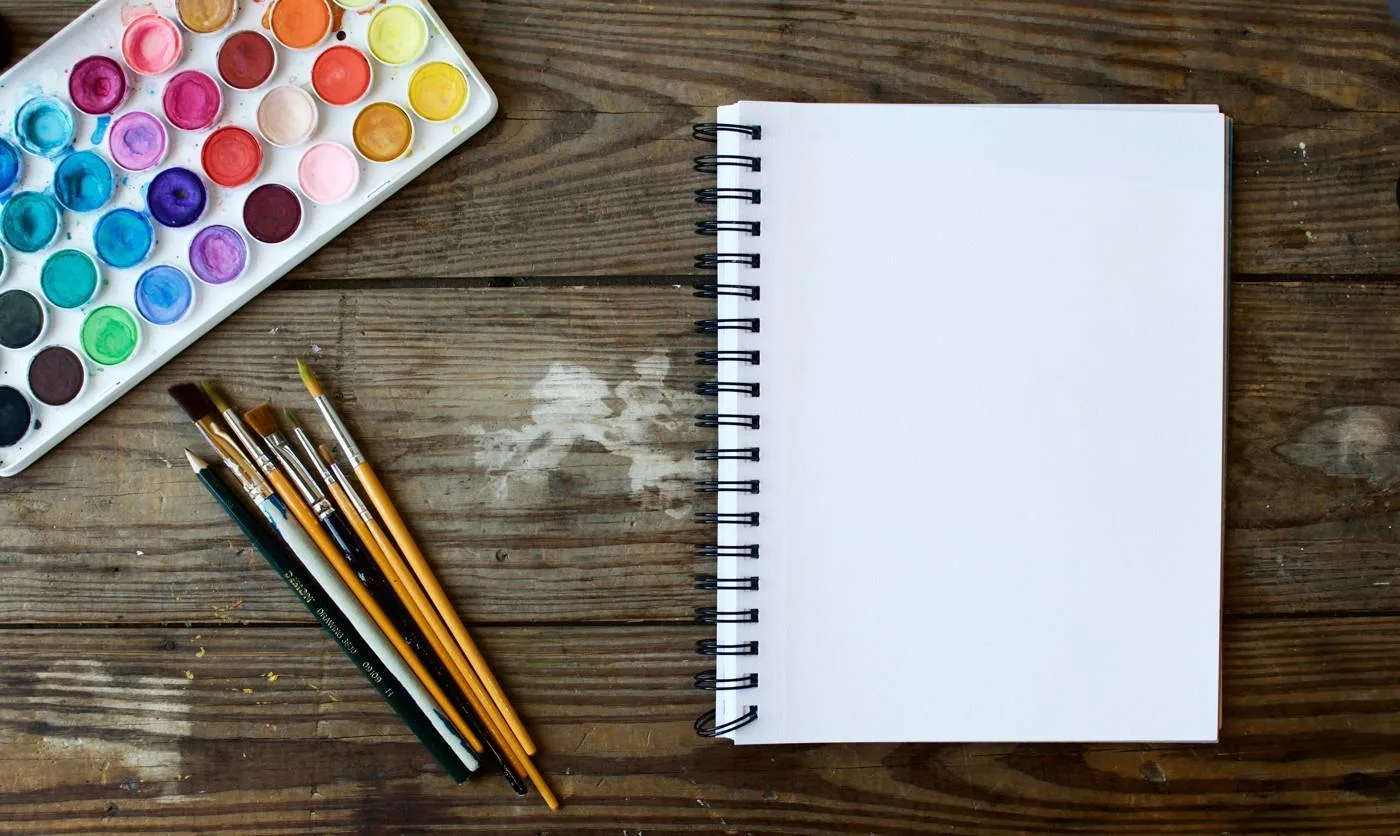
How to Start a Sketchbook with Simple Materials and Everyday Observation
Beginners in art are encouraged to start a sketchbook today using basic materials and observation, transforming everyday objects into a flexible record of ideas and practice.
This accessible method encourages artists to remove the pressure of perfection, focusing instead on capturing the immediate visual world within a manageable routine.
The act of initiating a sketchbook is not a test of existing talent; rather, it is the construction of a working space for observation. The goal, as described by the Getty Research Institute, is to establish a flexible place for recording observations and experimenting with ideas, rather than producing a finished gallery piece.
This approach encourages a utility similar to maintaining a family recipe collection: keeping a useful record without allowing the project’s scope to become so vast that continuation becomes difficult.
Establishing a Manageable Starting Point
The initial steps require minimal investment. A simple pencil, a modest notebook, and an object already present in the home provide all the necessary foundation. The first page of the book does not need to establish a definitive style or prove technical proficiency; it can simply document a specific visual observation made on that day.
For instance, the initial entry might record the precise shape of a cup handle, the subtle folds visible in a shopping bag, or the precise outline of a potted plant near a window. These observations provide concrete, immediate subjects that anchor the practice in reality.
To address the challenge of a blank page, a structured, easy opening exercise involves dividing a page into four small sections. Within each section, the artist draws the same familiar object—such as a shoe, a mug, or a set of keys—but from a different perspective. This technique, which keeps the task bounded, helps manage the intimidation that a full page can present.
Deconstructing Form through Observation
The first act of drawing requires focusing on the outer shape and the primary relationships between elements. Questions like whether an object is wider than it is tall, or exactly where a handle sits relative to a rim, necessitate careful examination.
Artists should utilize light lines initially, frequently looking back at the original object to refine the capture before committing to definitive marks. The objective here is to observe a few core elements carefully, rather than attempting to render every minute detail.
After completing this initial attempt, the artist should leave the drawing as it is and add a short written note detailing what was difficult or what proved interesting. Documentation noting that a handle appeared smaller when viewed from above, or that the darkest shadow settled under the base, provides a specific starting point for subsequent drawing sessions without requiring a formal, pre-written lesson plan.
The National Gallery of Art, for example, welcomes sketching with lead or coloured pencil and limits sketchbooks to 12 by 17 inches or smaller.
Integrating Subject Material into Daily Life
Familiar environments, such as a kitchen shelf, a comfortable armchair, or a pair of shoes, offer readily available subjects for the sketchbook. When choosing an item with personal association, the National Gallery of Art invites people to examine belongings they use frequently and consider why those objects matter, encouraging artists to accompany the sketch with a brief sentence explaining why that object holds significance.
Outside, the patient attention required for activities like birdwatching can successfully transition into a drawing session, focusing on the shape of a leaf or the specific arrangement of branches from a comfortable, stationary vantage point.
However, if a moving subject proves too difficult to capture, switching to a still subject, like a bench or a doorway, allows for sustained observation without the pressure of chasing the scene. A sketchbook does not require mastery of sustained focus; it can simply record an impression using a few marks and words before moving on.
University of the Arts London’s sketchbook guidance further expands the scope of documentation beyond pure drawing. The guidance includes incorporating written annotations, color tests, and other visual references to document the entire experience. For a personal book, a useful note might be as simple as the date, a place name, or a reminder to revisit the subject later.
Optimizing Materials and Workflow
Before committing to an idea in the main sketchbook, it is essential to test materials on a spare page. The process of selecting the right medium—whether a specific pencil hardness or a particular shade of colored pencil—can dramatically affect the final outcome.
Artists are advised to set aside one page for testing what their pencil can achieve, making light and dark marks, and varying pressure between a broad patch of shading and a thin line.
If color is later introduced, testing it on the same dedicated page allows the artist to refer back to that initial test instead of repeatedly guessing how a new material will behave. This prevents unnecessary waste of primary sketchbook pages and streamlines the artistic process.
When utilizing reference photographs or studying an existing artwork, it is vital to clearly distinguish that source material from one’s own original observations. The habit of noting the artist or the source next to the exercise preserves the context of the page, ensuring that if the drawing is later developed into a larger project, its origins remain clear.
Building a Sustainable Creative Routine
The successful integration of sketching into life hinges on building a routine that aligns with existing daily habits. This does not require massive blocks of dedicated time; rather, it encourages utilizing short, defined moments.
At home, an artist might link a five-to-ten-minute session to an existing quiet moment. The critical factor is keeping the book and pencil conveniently located. When the impulse to choose a new subject feels like extra effort, returning to a familiar object simplifies the decision-making process, making the routine manageable.
Looking back over completed pages allows the artist to discover patterns and areas of enjoyment. If an artist found that textures were particularly engaging or that writing observations helped unlock a drawing, that discovery should guide the content of the next page. A sketchbook becomes personal through these ordinary choices—each drawing, each question, and each unfinished idea.
The Sketchbook as an Archive of Focus
Ultimately, a sketchbook functions as a documented history of a person’s attentiveness. It is a record of what a person noticed, whether it was the specific shadow cast on the ground or the way light interacted with a piece of paper during a session.
The flexibility of the format allows a page to remain unfinished because a different observation captured the artist’s attention. This non-linear approach to creation is what distinguishes the sketchbook from a formal exercise; it is a living record of attention.
The Getty Research Institute, which offers this guidance, is a public research institute and library at the Getty Center in Los Angeles, operated by the J. Paul Getty Trust.
First discussed in 1983 under the name Getty Center for the History of Art and the Humanities, it began with a library of 30,000 volumes; today that library holds over 1 million volumes and two million photographs of art and architecture, and extends privileges to any visitor.
The institute also sponsors a residential scholars program whose first class arrived in 1985–1986, with a policy of “absolutely no obligation to produce” that continues today, and it mounts two public exhibitions per year, including its first online-only exhibition, “The Legacy of Ancient Palmyra,” in 2017.
The next step for any aspiring artist is to choose a comfortable book and begin recording the world around them, even if the first page is simply a record of the time and place. Observing continuously forms the core of the practice.