
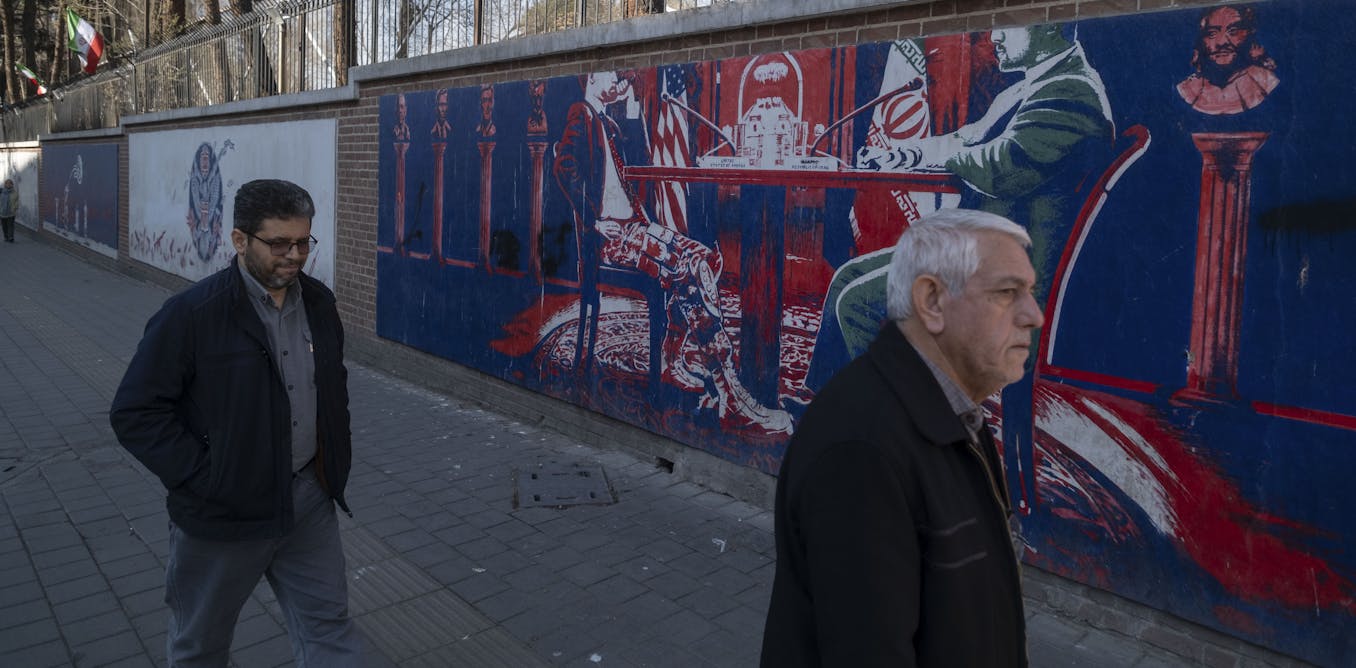
Tehran, Iran – Ayatollah Ali Khamenei, Iran’s supreme leader for nearly four decades, is dead, according to U.S. President Donald Trump and confirmed by Iranian state television on Saturday night. The announcement followed a massive U.S.-Israeli military assault on Iran, prompting retaliatory strikes by Tehran across the Middle East, targeting Israel and Gulf states hosting U.S. Military assets. At least three American citizens have been reported killed in the escalating conflict.
The strikes, which began Saturday, represent a dramatic escalation of tensions following the collapse of nuclear negotiations between the U.S. And Iran. Three rounds of talks failed to persuade Trump that a diplomatic solution to the impasse over Iran’s nuclear program was viable. A perceived lack of progress in the final round of indirect negotiations on February 26th prompted Trump to authorize the military action, which Iranian officials say has significantly degraded the country’s offensive capabilities.
“This is not only Justice for the people of Iran, but for all Great Americans, and those people from many Countries throughout the World, that have been killed or mutilated by Khamenei and his gang of bloodthirsty THUGS,” Trump said in a social media post, as reported by ABC News here.
Khamenei, 86, had ruled Iran since 1989, succeeding Ruhollah Khomeini, the founder of the Islamic Republic. Witnesses in Tehran reported celebratory scenes erupting after news of Khamenei’s death spread, with residents cheering from windows and playing music, according to reports from the Associated Press here.
The failure of the recent talks, however, was widely anticipated by experts in nonproliferation and U.S. National security. “For diplomacy to be successful, both sides need to agree on the issues subject to negotiation and as well believe that peaceful resolution is more valuable than military engagement,” said one expert, who previously worked in State Department nuclear diplomacy. “This clearly was not the case in the U.S.-Iran nuclear talks of 2025 and 2026.”
Iran had signaled a desire to return to the framework of the 2015 Joint Comprehensive Plan of Action (JCPOA), which limited its nuclear program in exchange for sanctions relief. However, Trump insisted on broader restrictions, including limitations on Iran’s ballistic missile program and its support for regional militias – demands not included in the original JCPOA.
While there had been some recent movement in negotiations, with Iran appearing more willing to discuss nuclear issues amid a U.S. Military buildup in the region, no breakthrough was achieved. The deployment of the USS Abraham Lincoln and USS Gerald R. Ford carrier groups near Iranian waters was intended as a signal of U.S. Resolve, according to reports, with Trump warning of “very steep” consequences if a deal could not be reached as reported by PBS.
Iran responded to the escalating military pressure with its own exercises and threats, closing the Strait of Hormuz for a live-fire drill and vowing not to restrain its response to further attacks. The current wave of retaliatory strikes across the Middle East is now fulfilling that pledge.
The situation echoes previous failed attempts at securing a nuclear deal with Iran. The Biden administration had also pledged to revive the JCPOA in 2021, but Iran’s advancements in nuclear technology since the U.S. Withdrawal from the agreement in 2018 made a return to the original terms increasingly difficult. By 2022, Iran had removed international monitoring equipment and begun enriching uranium to near-weapons levels, significantly diminishing the prospects for a diplomatic resolution.
The current conflict raises the specter of a wider regional war and the possibility that Iran may now accelerate its pursuit of nuclear weapons, despite the risks. Military strikes have already resulted in over 200 deaths in Iran and across the region, and the long-term consequences of this escalation remain uncertain. As reported by CNN here, one of Iran’s most powerful figures, Ali Larijani, Secretary of the Supreme National Security Council, vowed to “stab” America in the heart in retaliation.
The U.S. And Iran remain locked in a dangerous cycle of escalation, with no immediate path to de-escalation apparent.
