
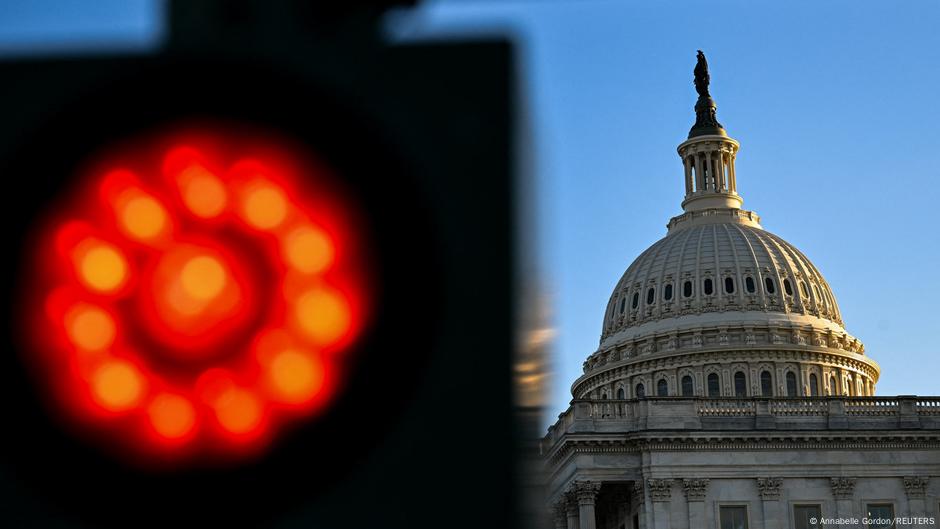
U.S. Government Closure: Impacts and Impasse – October 7, 2025
A budgetary freeze has led to a closure of the U.S. government, impacting an estimated 750,000 federal employees. The effects are particularly pronounced within the federal administration, air traffic services, and public institutions, potentially disrupting tourist itineraries.
Essential services,however,continue to operate without interruption. This includes police personnel, border patrol agents, hospital staff, and air traffic control.
A law enacted following the 2018/2019 government shutdown guarantees retroactive pay for all affected federal employees once a new budget is approved. However, this guarantee does not extend to subcontractors working for the government. Concerns are rising about the financial hardship faced by many federal employees, as a notable number lack substantial savings and could be severely impacted by even a temporary lapse in income.
Negotiation Breakdown
The current impasse centers on healthcare policy. Democrats are demanding that Republicans maintain government funding for “Obamacare,” the medical insurance program established during the Barack Obama presidency, and reverse cuts to medical care for low-income individuals (“Medicare”). These proposed cuts are part of a larger legislative package championed by Donald Trump, which he has described as his “Great and stunning bill.”
Republicans have rejected these demands. They,in turn,accuse Democrats of seeking to include funding for medical care for undocumented immigrants – a claim Democrats deny.
Potential Benefits for Trump
The shutdown presents a complex situation for both parties. While budget negotiations offer Democrats a key opportunity to challenge Trump’s policies, the closure itself provides Trump with a means to potentially downsize the federal government. The Trump administration has directed several federal agencies to explore the possibility of permanent staff reductions.Trump has publicly blamed Democrats for job losses resulting from the shutdown, stating, “The Democrats are causing the loss of many jobs.” He also recently announced cuts to climate projects totaling nearly eight billion US dollars.
Looking ahead
The duration of the government closure remains uncertain. A resolution requires a compromise in Congress. A transitional budget must be approved, necessitating at least 60 votes in the 100-member Senate. Currently, Republicans hold 53 seats, meaning they would need to secure seven votes from the Democratic caucus.
Democrats face internal pressure; while seeking concessions on healthcare policy, many Democratic voters are eager for a swift agreement to end the shutdown.
(rmr/rml)
