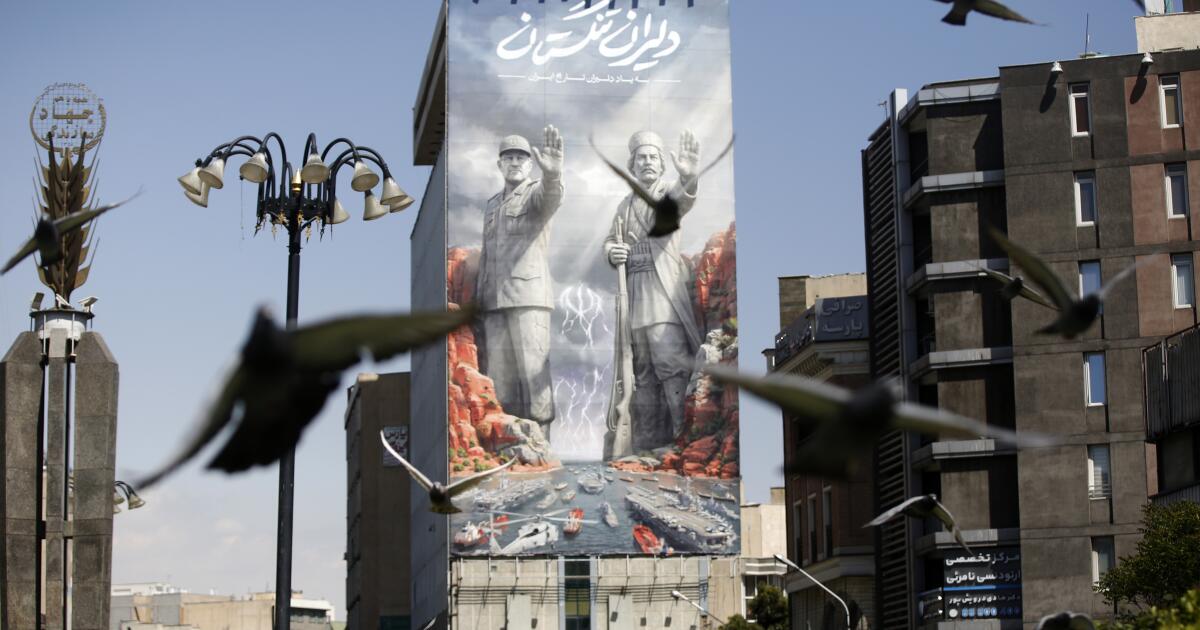
US Considers Iran’s Proposal to Extend Ceasefire
As Tehran proposes extending a fragile two-week ceasefire set to expire Tuesday, President Trump weighs renewed diplomatic engagement with Iran amid reports of a concurrent U.S. Troop surge in the Gulf—a dual-track strategy that risks either de-escalation or a dangerous miscalculation with global energy markets and regional stability hanging in the balance.
The Ceasefire Gambit: Diplomacy Under Pressure
Iran’s offer to extend the temporary cessation of hostilities, brokered through backchannel communications in Oman, arrives as U.S. Intelligence confirms the deployment of an additional 3,000 Marines and Patriot missile batteries to Al Udeid Air Base in Qatar and naval assets to the Strait of Hormuz. This simultaneous pursuit of diplomacy and deterrence reflects a high-stakes calculus: Trump seeks leverage in nuclear negotiations while signaling resolve to Tehran and regional allies. The ceasefire, initially agreed upon after reciprocal strikes in early April, has held despite sporadic drone incursions near Abu Dhabi and missile fragments intercepted over southern Iraq—violations both sides have so far chosen not to escalate.

Historically, such pauses in U.S.-Iran tensions have proven fleeting. The 2020 de-escalation following Soleimani’s assassination collapsed within weeks when Iran resumed enrichment beyond JCPOA limits. Today, the stakes are higher: Iran’s uranium stockpile now exceeds 180 kilograms of 60% enriched material, according to the latest IAEA report, shortening its potential breakout timeline. Meanwhile, Gulf economies feel the strain—Kuwait’s Ministry of Finance estimates monthly oil revenue volatility has cost the state approximately $1.2 billion in deferred investments since March, while Dubai’s ports authority reports a 14% decline in transshipment volume due to insurance premium surges for vessels transiting the Strait.
Local Impacts: From Doha Dockyards to Dubai Free Zones
The geographical concentration of U.S. And Iranian military assets means any misstep would reverberate most intensely along the Gulf’s western littoral. In Doha, where Al Udeid hosts the forward command center for CENTCOM, municipal emergency services have activated Phase 2 of their civil defense protocol, pre-positioning trauma kits and conducting evacuation drills in neighborhoods like Al Thakira. “We’re not preparing for war,” said Colonel Khalid al-Marri of Qatar’s Internal Security Force in a briefing last week, “but we are preparing for the possibility that diplomatic failure spills over into civilian spaces. Our hospitals and shelters must be ready.”

“The real danger isn’t a deliberate strike—it’s a misread signal. A commercial drone mistaken for a reconnaissance asset, or a fishing boat too close to a warship, could trigger automation we can’t walk back.”
Further south, in Dubai’s Jebel Ali Free Zone—home to over 7,000 companies reliant on unimpeded shipping—logistics firms are already rerouting cargo via the Cape of Good Hope, adding 10 to 14 days to transit times and increasing costs by an estimated 22%. “Clients are asking for war-risk riders on their policies,” noted Omar Hassan, senior risk analyst at a Dubai-based maritime brokerage. “Even if fighting doesn’t break out, the perception of instability is enough to shift supply chains permanently.” This adaptive behavior mirrors responses seen during the 2019 tanker attacks, when long-term freight contracts began favoring East African hubs over traditional Gulf ports.
The Directory Bridge: Who Steps In When Diplomacy Falters?
When geopolitical tensions threaten commerce and safety, specialized professionals become essential. Companies navigating sanctions compliance or contract force majeure clauses turn to international trade lawyers with expertise in OFAC regulations and UN Security Council resolutions. Simultaneously, firms seeking to harden facilities against potential cyber or kinetic threats consult critical infrastructure protection specialists who conduct threat assessments and design blast-resistant upgrades for ports, power plants, and data centers. For communities directly hosting military buildups, emergency planning consultants help municipalities update evacuation routes, shelter capacities, and public communication systems—ensuring resilience whether the ceasefire holds or collapses.
Beyond the Headlines: A Structural Shift in Gulf Security?
The current moment may represent more than a tactical pause—it could signal a reconfiguration of regional security architecture. Saudi Arabia’s quiet facilitation of backchannel talks, coupled with its recent overtures to Iran regarding Yemen, suggests Riyadh is testing a new equilibrium less dependent on U.S. Guarantees. Meanwhile, the UAE’s public restraint—despite possessing some of the region’s most advanced missile defense systems—indicates a preference for diplomatic off-ramps over unilateral action. If the ceasefire holds and leads to even limited nuclear concessions, it could open space for a broader Gulf dialogue on maritime incident prevention, modeled after the INCSEA agreement between the U.S. And USSR during the Cold War.

Yet history warns against optimism. The last major de-escalation in 2015, which produced the JCPOA, unraveled not due to Iranian cheating but because of external political shifts—a reminder that durability depends not just on regional will but on sustained great-power engagement. As Trump weighs his next move, the world watches not for headlines but for habits: whether the troops building up in Qatar are preparing to fight or to guarantee a chance to talk.
The true test of this moment won’t be found in battle damage assessments or enrichment tallies, but in the quiet decisions made by port authorities adjusting their risk models, lawyers drafting contingency clauses, and city planners revisiting their worst-case scenarios. These are the professionals who turn geopolitical anxiety into preparedness—and in an era where flashpoints ignite with a tweet, their work is not just valuable. It is indispensable.