US Charges Iraqi National Linked to Iran-Backed Militia Kataib Hezbollah
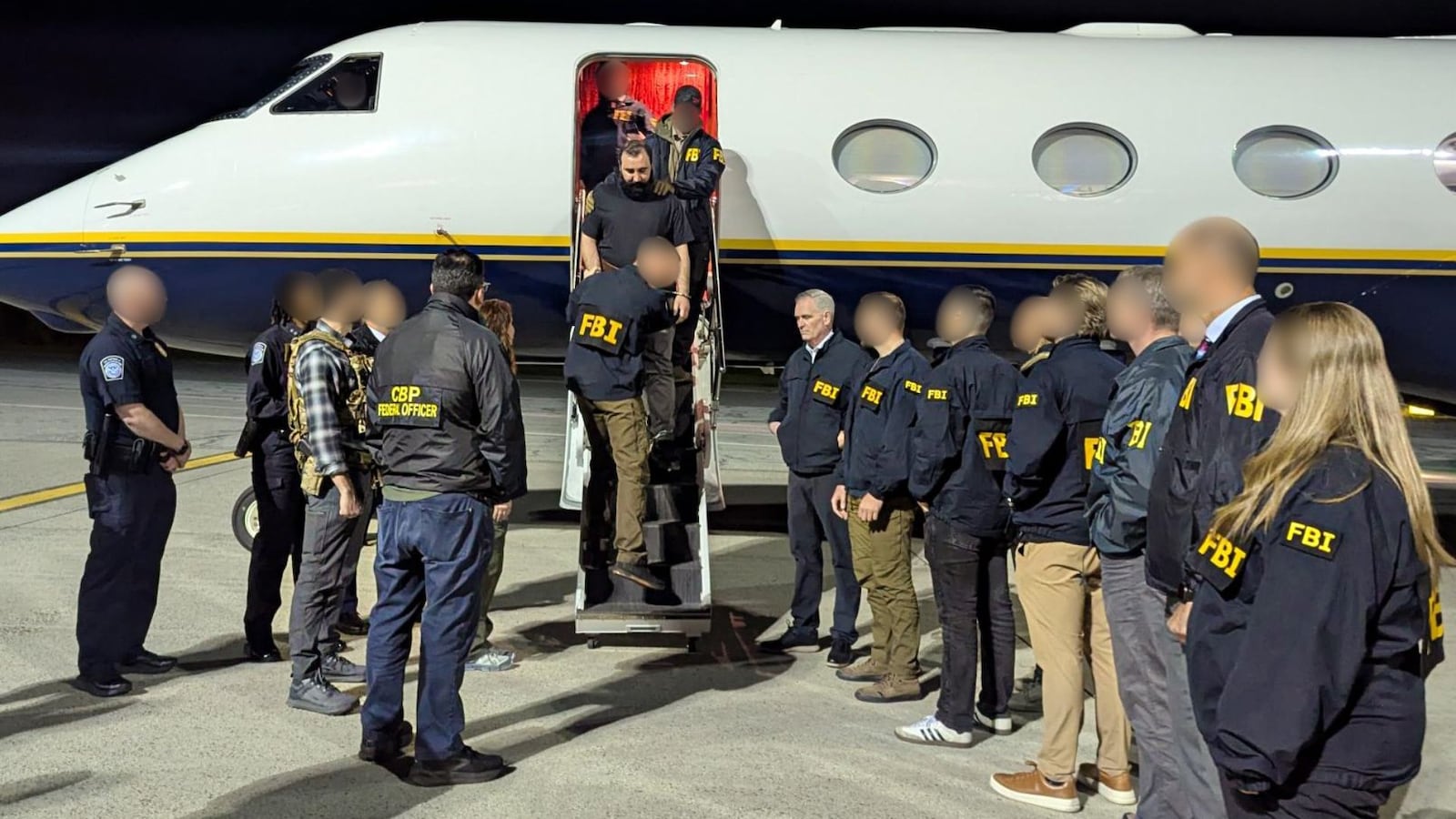
U.S. Authorities have arrested a senior commander of Iran-backed Kataib Hezbollah, Mohammed Saad Baqer al-Saadi, on terrorism charges tied to a global plot targeting Jewish sites in the U.S., Canada and Europe. The 32-year-old Iraqi national, accused of coordinating at least 20 attacks since February, was transferred to New York to face six terrorism-related offenses. This marks a direct escalation in Iran’s shadow warfare against Western targets, raising alarms about the vulnerability of critical infrastructure and the legal tools needed to counter proxy threats.
The Problem: A New Phase in Iran’s Proxy Warfare
Al-Saadi’s arrest exposes a troubling trend: Iran’s use of “disposable” operatives—low-profile militants with minimal ties to their home state—to execute attacks in the West. Unlike traditional state-sponsored terrorism, this model relies on deniability and rapid turnover of assets, making attribution and disruption far harder. The U.S. Department of Justice’s classification of Kataib Hezbollah as a “terrorist organization” since 2019 underscores the group’s long-standing role as Iran’s primary proxy in Iraq, responsible for drone strikes on U.S. Bases and rocket attacks on coalition forces.
What makes this case unique is the geographic scope. While Kataib Hezbollah has historically focused on Iraq and Syria, al-Saadi’s alleged involvement in plots across Europe, Canada, and the U.S. signals a deliberate expansion into Western soil. The FBI’s identification of al-Saadi as a “high-value target responsible for mass terrorist activities on a global scale” suggests this is not an isolated incident but part of a broader strategy to test Western resilience.
“This arrest is a critical moment in the fight against Iran’s hybrid warfare. The challenge now is to dismantle the entire network—not just the individuals we catch in the act.”
Who Is Mohammed Saad Baqer al-Saadi?
Al-Saadi’s profile, as outlined in court filings, paints a picture of a logistical mastermind. A 32-year-old Iraqi citizen, he held a senior role within Kataib Hezbollah, an Iran-backed militia operating under the umbrella of Iraq’s Popular Mobilization Forces (PMF). His arrest follows a pattern of U.S. Counterterrorism operations targeting Iranian proxies, including the 2023 takedown of a Kataib Hezbollah commander in Syria. However, his alleged role in plotting attacks outside the Middle East—including a stabbing in London targeting Jewish men—marks a strategic shift.
The U.S. Justice Department’s charging documents reveal al-Saadi’s network was active since at least February 2026, coinciding with the joint U.S.-Israeli military operation against Iranian targets. This timing suggests retaliation, not opportunism—a calculated response to perceived Western aggression in the region. The fact that al-Saadi was arrested overseas and transferred to the U.S. indicates the FBI’s ability to operate across jurisdictions, but it also highlights the jurisdictional gaps in counterterrorism law enforcement when attacks are planned abroad but target Western soil.
The Ripple Effect: How This Affects Local Communities
For cities with Jewish populations—particularly in New York, Los Angeles, and Montreal—the implications are immediate. Municipal authorities are now grappling with enhanced security protocols for synagogues, community centers, and cultural sites. The arrest of a suspect linked to the April 2026 stabbing in London, where two Jewish men were targeted, serves as a warning that such plots may already be in motion.
Local governments are facing three critical challenges:
- Infrastructure hardening: Synagogues and Jewish community centers require physical upgrades to withstand vehicle ramming or active shooter scenarios. This creates a surge in demand for specialized security contractors with experience in high-risk facility assessments.
- Legal and diplomatic coordination: Jurisdictional ambiguities arise when attacks are planned abroad but executed in the West. Cities like New York, which host significant Iraqi expatriate communities, may need to consult international law firms specializing in extradition and terrorism prosecutions to navigate these complexities.
- Community trauma response: The psychological impact of targeted violence cannot be overstated. Mental health providers and faith-based organizations are already mobilizing to offer crisis counseling and resilience training.
“We’ve seen a rise in threats against religious sites, but this is different. It’s not just rhetoric—it’s planning. Our first responders and security teams need to be prepared for the worst-case scenario.”
Macro-Level Impact: Economic and Geopolitical Fallout
The arrest comes at a pivotal moment in U.S.-Iran relations. With tensions already high over the February 2026 military operation, this case could escalate or de-escalate depending on how the U.S. Proceeds. If al-Saadi’s trial reveals deeper ties to Iranian state actors, it may strengthen U.S. Sanctions enforcement against Iranian financial networks funding these proxies. Conversely, if the network proves to be entirely autonomous, it could embolden other militias to adopt similar tactics.
Economically, the insurance and risk assessment sectors are bracing for impact. Companies with assets in high-risk regions—particularly those with Jewish or Israeli ties—are likely to see premiums rise as underwriters factor in the heightened threat of asymmetric attacks. This could drive demand for specialized counterterrorism insurance brokers who understand the nuances of proxy warfare.
The Legal Battle: Extradition, Evidence, and the U.S. Justice System
Al-Saadi’s case will test the limits of U.S. Counterterrorism law. The six charges he faces—including conspiracy to use a weapon of mass destruction and providing material support to terrorism—carry mandatory minimum sentences of 15 years each. However, the evidentiary hurdle is significant: Prosecutors must prove his direct ties to Kataib Hezbollah and Iran, as well as the specificity of his role in the plots.
Legal experts warn that the case could set a precedent for how the U.S. Prosecutes foreign-based operatives who plan attacks on Western soil. The use of electronic surveillance and witness testimony from overseas will be critical. Firms specializing in international terrorism litigation are already positioning themselves to assist in building the case, particularly those with experience in cross-border extradition battles.
What’s Next? The Long Game of Counterterrorism
This arrest is not the end of the threat—it’s a tactical victory in a prolonged war. Iran’s playbook relies on attrition and adaptation. While al-Saadi’s capture disrupts one cell, others may already be in motion. The real challenge lies in disrupting the entire network, which requires:
| Objective | Action Required | Relevant Professionals |
|---|---|---|
| Network disruption | Identify and freeze Iranian financial channels funding Kataib Hezbollah | Sanctions compliance consultants |
| Intelligence sharing | Enhance real-time data exchange between U.S., EU, and Canadian counterterrorism agencies | Intelligence-sharing platforms |
| Community resilience | Deploy rapid-response security teams to high-risk sites | Private security firms with counterterrorism expertise |
The arrest of Mohammed Saad Baqer al-Saadi is a stark reminder that the battle against Iran’s proxy networks is not a sprint—it’s a marathon. While the legal system takes its course, communities, businesses, and governments must proactively harden their defenses. The question now is whether the West can outmaneuver a strategy designed to exploit its open societies and legal constraints.
The time to act is now. For those on the front lines—whether in security, law, or risk mitigation—the World Today News Directory is your first resource to connect with verified professionals equipped to navigate this evolving threat landscape.