
US Downplays Immediate Military Action Against Iran, Criticizes Palestinian State Recognition
Published: 2026/01/15 12:08:11
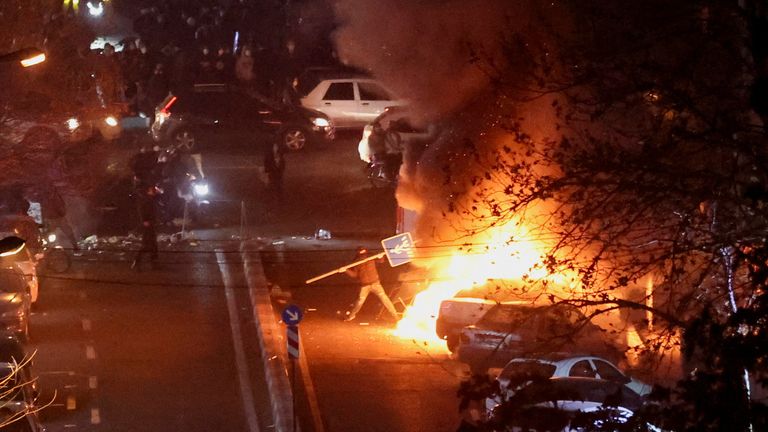
The United States currently has no plans for a military strike against Iran, according to america’s ambassador to israel, Mike Huckabee. However,he cautioned that this position is subject to change,especially if the Iranian regime continues its suppression of protestors. Huckabee’s remarks, made to Sky News, come amid heightened tensions in the region and ongoing concerns over Iran’s nuclear ambitions.
Huckabee firmly placed the blame for the suffering in Gaza squarely on Hamas, and sharply criticized nations, including the United Kingdom, for recognizing the State of Palestine, deeming the decision “very damaging” and motivated by “grandstanding.” this stance underscores a notable divergence in policy between the US and some of its allies regarding the Israeli-Palestinian conflict.
No Imminent Military action, But Options Remain Open
While emphasizing the absence of current plans for military intervention, Huckabee made it clear that the situation remains fluid. He stated that any decision regarding military action would rest with President Trump and his cabinet. The ambassador highlighted the President’s preference for diplomatic solutions, but also asserted that Trump “is not going to watch people slaughtered” and “will intervene when it’s necessary.”
This carefully worded statement suggests that while a military strike is not presently on the table, the US is prepared to consider all options should the situation in Iran escalate, particularly if the regime continues its violent crackdown on protestors. Recent reports indicate that the possibility of US airstrikes remains under consideration as a potential response to Iranian actions.
Condemnation of Palestinian State Recognition
Huckabee delivered a scathing critique of the recent decisions by several countries, including the UK, to formally recognize the State of Palestine. He argued that this recognition was “ill-timed” and “hurtful” to the peace process, and that it contravened the terms of the Oslo accords.
The ambassador’s strong opposition to the recognition reflects a long-standing US position that Palestinian statehood should be the result of negotiations between Israel and the Palestinians, rather than a unilateral declaration by other nations. He suggested the move was largely symbolic, serving only to create “grandstanding” among European leaders without achieving any tangible progress.
Iran’s Internal Unrest and Regional Implications
Huckabee characterized the ongoing protests in Iran as an “organic movement” driven by a population facing severe economic hardship and political repression. He described Iran under the current regime as a “hellhole,” contrasting it with its former status as a “splendid and modern Persian culture.”
The protests, fueled by economic grievances, lack of political freedoms, and widespread discontent, have presented a significant challenge to the Iranian government. Huckabee expressed hope that the fall of the current regime would lead to the dismantling of Iran’s support for proxy groups in the region, including Hamas, Hezbollah, and the Houthis. He specifically stated that Iran’s past attacks on US interests were a warning against pursuing nuclear weapons and uranium enrichment, hoping that message has been received.
US Warnings and Past Actions
Huckabee referenced previous US actions against Iran, stating that attacks last year were intended as a clear warning against the development of nuclear weapons. This highlights the US commitment to preventing Iran from acquiring nuclear capabilities,a position that has been a cornerstone of US foreign policy in the region for decades.
The Future of Gaza and a Potential “Board of Peace”
Looking ahead, Huckabee discussed the ongoing efforts to establish a “Board of Peace” as part of the Gaza ceasefire agreement. He acknowledged that the formation of this board was taking longer than anticipated, but emphasized the importance of ensuring it is composed of qualified individuals who can effectively govern and improve the lives of Palestinians. he stressed the need for a “technocratic” Palestinian government that is capable of providing effective administration and addressing the needs of the population, moving away from the current governance of Hamas.
Key Takeaways:
* The US does not currently plan a military attack on Iran, but retains the option.
* Ambassador Huckabee strongly criticized the recognition of a Palestinian state by several nations.
* The US views the protests in Iran as a legitimate expression of popular discontent.
* The formation of a “Board of peace” for Gaza is ongoing, with a focus on establishing a competent governing body.
The situation in the Middle East remains highly volatile. The US continues to monitor events closely and is prepared to respond to any developments that threaten regional stability or US interests. The coming weeks and months will be critical in determining the future of Iran,the Israeli-Palestinian conflict,and the broader geopolitical landscape of the region.
