URA Warns Against Unauthorised Works in Strata Residential Units
Singapore property owners are confronting a wave of enforcement actions over unauthorized modifications inside strata-titled residential units, with the Urban Redevelopment Authority logging hundreds of suspected violations in recent years.
The regulatory pressure highlights growing concerns over unapproved interior and exterior alterations. The agency recorded 147 suspected cases of unauthorized construction in 2024 and 148 cases in 2025. In the first nine months of 2026 alone, inspectors flagged an additional 116 suspected breaches.
URA Identifies Unauthorized Works Through Resident Reports
Investigations by the Urban Redevelopment Authority revealed that approximately 90 per cent of reported properties contained actual unauthorized works. Inspectors typically discover these violations through reports filed by estate residents or Management Corporation Strata Titles, as well as through mandatory periodic structural inspections.
A spokesperson for the agency stated that while most property owners remove illegal structures after receiving enforcement notices without facing court action, the agency will prosecute uncooperative offenders.
Illegal Mezzanines Risk Compromising Building Safety
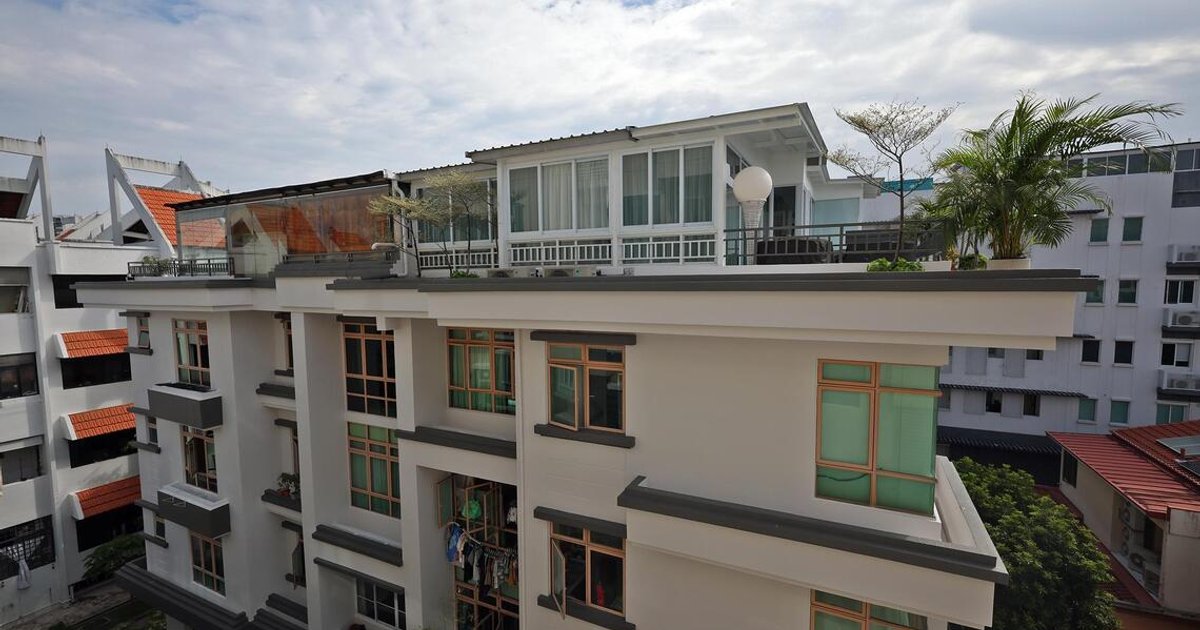
Unauthorized modifications frequently involve loft or mezzanine constructions exceeding five square meters, alongside enclosed structures built onto private roof terraces or first-storey patios. The Urban Redevelopment Authority warned that mezzanine floors can place excessive weight on building slabs, beams, and columns that lack the structural capacity for such loads. Without assessments from a qualified person—such as a registered architect or professional engineer—these modifications risk compromising building safety for entire developments.
The General Insurance Association of Singapore cautioned that unapproved structural changes may void insurance coverage, leaving owners exposed to out-of-pocket expenses when damage occurs. Unapproved floor area expansions create equity issues among residents. Because estate maintenance fees and sinking fund contributions depend on share values tied to official floor areas, owners with unapproved expansions enjoy extra space without paying proportional fees compared to rule-abiding neighbors.
Property Owners Must Remove or Regularize Unapproved Structures
Modifications that expand a unit’s gross floor area require a 90 per cent approval resolution at the development’s annual general meeting, as floor additions impact collective property rights. Prior to January 12, 2013, semi-outdoor areas and private roof terraces were excluded from gross floor area calculations, but enclosing these spaces creates covered floor area that triggers regulatory controls.
Property owners who have already built unapproved structures must either remove them or regularize them under existing laws. This process requires securing the 90 per cent general meeting resolution before engaging a qualified professional to submit retention applications to the Urban Redevelopment Authority.