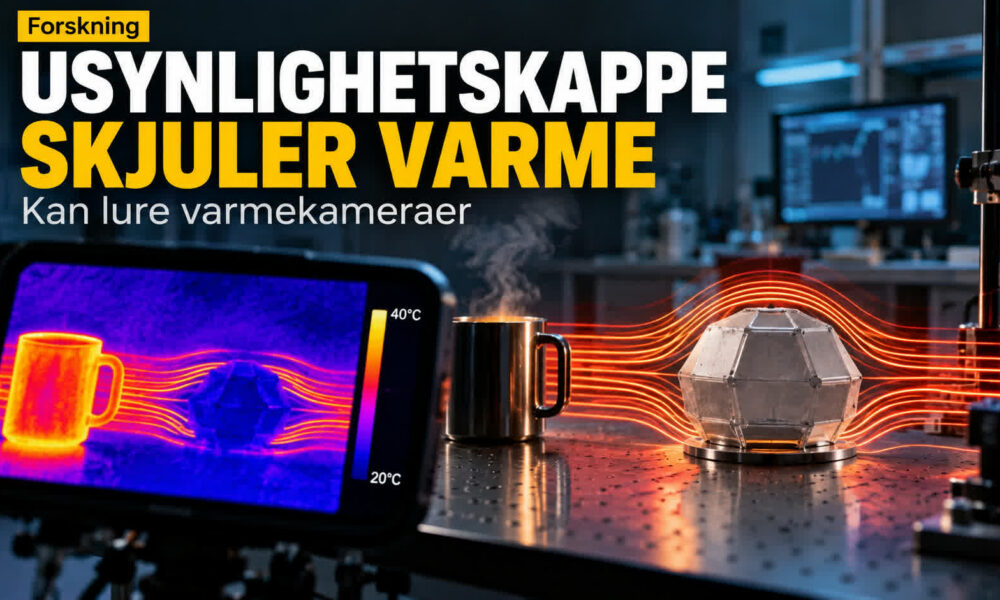
University of Illinois researchers develop 3D thermal invisibility cloak
<>
Researchers at the University of Illinois Urbana-Champaign have developed a three-dimensional thermal invisibility cloak constructed from aluminum and rubber that can steer heat around objects and conceal them from thermal cameras, reported on October 26.
The breakthrough, published in the scientific journal Nature Communications, overcomes a long-standing limitation in material science by handling heat moving in three dimensions rather than flat surfaces or single directions.
How Thermal Invisibility Works
Unlike standard cameras, thermal devices record infrared radiation and convert it into imagery displaying temperature discrepancies. The new structure prevents these signatures by routing heat around a hidden cavity instead of allowing it to pass straight through.
Engineers manufactured the system using advanced 3D printing to build an intricate aluminum lattice. They then filled the gaps within the metal framework with a rubber-like substance.
While aluminum conducts heat efficiently, the rubber compound exhibits low thermal conductivity. Controlling the movement of energy through these distinct parts allows the material to preserve a normal temperature distribution outside the concealed zone, rendering the interior difficult for infrared sensors to distinguish from its surroundings.

The technology does not render items invisible to the human eye or standard visual cameras.
Heat Shielding Protects Complex Shapes and Electronics
During laboratory evaluations, investigators placed the material between hot and cold zones and tested complex three-dimensional forms, including shapes resembling human heads. Infrared cameras confirmed that heat diverted around the shielded space while internal temperatures remained relatively stable.
Researchers suggest the underlying principles could eventually protect sensitive electronics. Modern data center processors generate immense heat, particularly during artificial intelligence computations, which requires substantial cooling infrastructure.
Materials designed to direct thermal energy away from vulnerable components could improve temperature regulation in high-powered microprocessors and industrial machinery. The current research has not demonstrated finished commercial products or verified reductions in power consumption for data centers.
Potential Applications in Industry and Security
Norwegian industries operating offshore installations, energy plants, and maritime vessels rely on complex electronics exposed to harsh operating conditions and steep temperature gradients. Specialized thermal-control materials could eventually safeguard delicate sensors in such environments, though the experimental construction remains confined to controlled laboratory testing.
The technology also holds potential implications for military and security operations, where thermal cameras are routinely deployed for surveillance and vehicle tracking. However, current designs feature a distinct constraint: the shielding functions by routing external heat around a target. Concealing items that generate their own internal heat, such as human bodies, engines, or active electronic components, presents significantly greater technical hurdles.
The next phase of investigation will focus on developing materials capable of managing thermal energy produced from within the hidden area itself.