
Aid Operations Hampered as Taliban Restrictions Impact Female Staff in Afghanistan
The United Nations is sounding the alarm over escalating challenges to delivering vital assistance in Afghanistan, triggered by recent Taliban restrictions barring Afghan women from working with UN organizations. These limitations are forcing the suspension of critical programs and exacerbating existing humanitarian crises within the country.
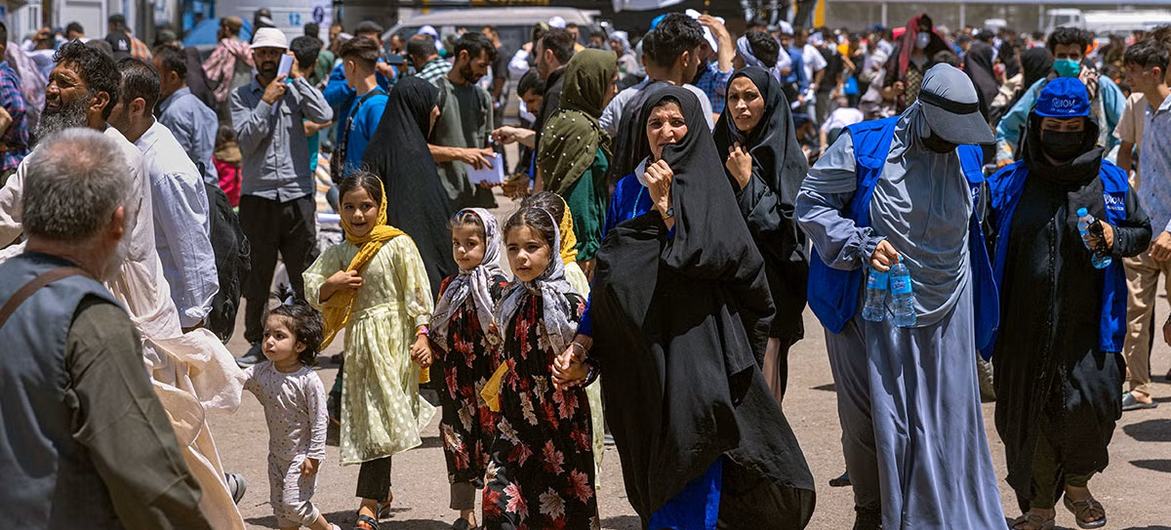
On Thursday, the UN Mission in Afghanistan (UNAMA) issued a statement calling for the lifting of these restrictions on female staff accessing UN premises. The impact is already being felt on the ground, with the UN Refugee Agency (UNHCR) temporarily closing its cash and support centres for vulnerable Afghans, both at border crossings and in areas receiving returnees from countries like Iran and Pakistan.
According to UNHCR officials, the registration process for returning Afghans – a process involving biometric data collection, screening, and interviews – is “entirely impossible without Afghan female workers.” Notably, over half of those returning to Afghanistan are women.
“This was an operational decision,” explained UNHCR spokesperson, Mr. Jamal. “It is not a decision taken to punish anyone or to make a statement, but simply it demonstrates that we cannot work without female workers in certain circumstances.”
Since the begining of the year,approximately 2.6 million Afghans have returned to the country, many involuntarily. The UNHCR reports a surge in returns, with nearly 100,000 people crossing back from Pakistan in the first week of September alone, “stretching our capacities and the capacities of this country to the limit.”
The disruption to aid delivery comes as Afghanistan continues to grapple with the aftermath of the 6.0 magnitude earthquake that struck Kunar and Nangarhar provinces on August 31st, followed by numerous aftershocks. the UN Children’s Fund (UNICEF) reports at least 1,172 children have died, representing more than half of the total death toll.
UNICEF Country Representative in Afghanistan, Dr. Tajudeen Oyewale, described the devastation witnessed in Machkandol, Nangarhar, where he met young survivors who had lost their families and homes. “For the girls it was even more sobering; they were lost…the family livestock have died. And for these young girls and this young boy, the future is wholly bleak,” he stated.
Accessing affected communities is proving difficult due to the mountainous and remote terrain. Dr. Oyewale described a three-and-a-half-hour journey to reach impacted areas, with only 40 minutes on paved roads and the remainder on “rough mountain dirt roads…jammed with oncoming vehicles and especially with falling rocks.”
Humanitarian organizations warn that the earthquake has compounded Afghanistan’s already severe humanitarian challenges. The crisis has resulted in over 2,164 deaths, at least 3,428 injuries, and the destruction or severe damage of at least 6,700 homes.
“Behind these numbers are children left standing alone in the rubble and families torn apart in the blink of an eye… UNICEF is literally going the extra mile and doing whatever it takes to reach these children and families with the support they need,” Dr. Oyewale affirmed.
